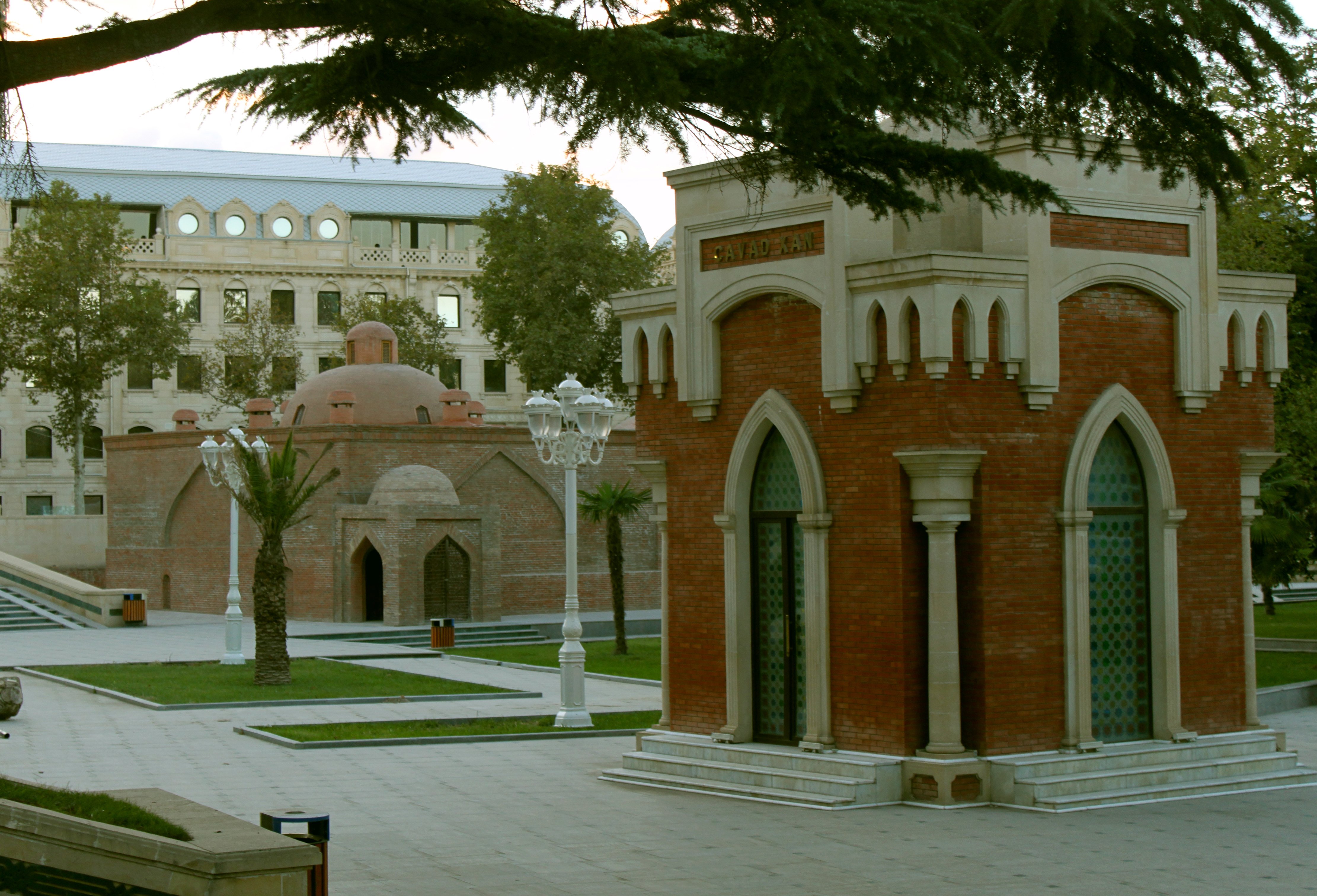
Ganca (also spelled Ganja; pronounced roughly as 'Ganja') is Azerbaijan's second-largest city, with a population of around 335,000. It sits in a fertile agricultural valley south of the Kura River, about 300 kilometres west of Baku, and has one of the richest histories of any city in the Caucasus.
Founded in the fifth century, Ganca was destroyed by earthquakes, rebuilt, sacked by Mongols, ruled by the Persians as the capital of a khanate, annexed by Russia in 1804, and briefly served as the provisional capital of an independent Azerbaijan in 1918. It went by the name Elisavetpol under the Russians, then Kirovabad under the Soviets, reverting to Ganca only in 1989. All that history has left visible traces: the Shah Abbas Mosque with its twin minarets, the remains of the Ganca Fortress, and a scattering of Russian Orthodox churches and nineteenth-century mansions.
What distinguishes Ganca from other Azeri cities is its architectural variety and a certain civic pride. The main square is grand in a Soviet way, but the Bottle House — a private residence built from 50,000 glass bottles — is the kind of local oddity that could only exist somewhere with a genuine sense of character. The city also has a strong literary identity as the birthplace of the twelfth-century poet Nizami Ganjavi, whose mausoleum is both a pilgrimage site and a work of monumental architecture.
Outside the city, the Kapaz mountain and the seven lakes in the area — particularly Göygöl — are among the most scenic landscapes in Azerbaijan.