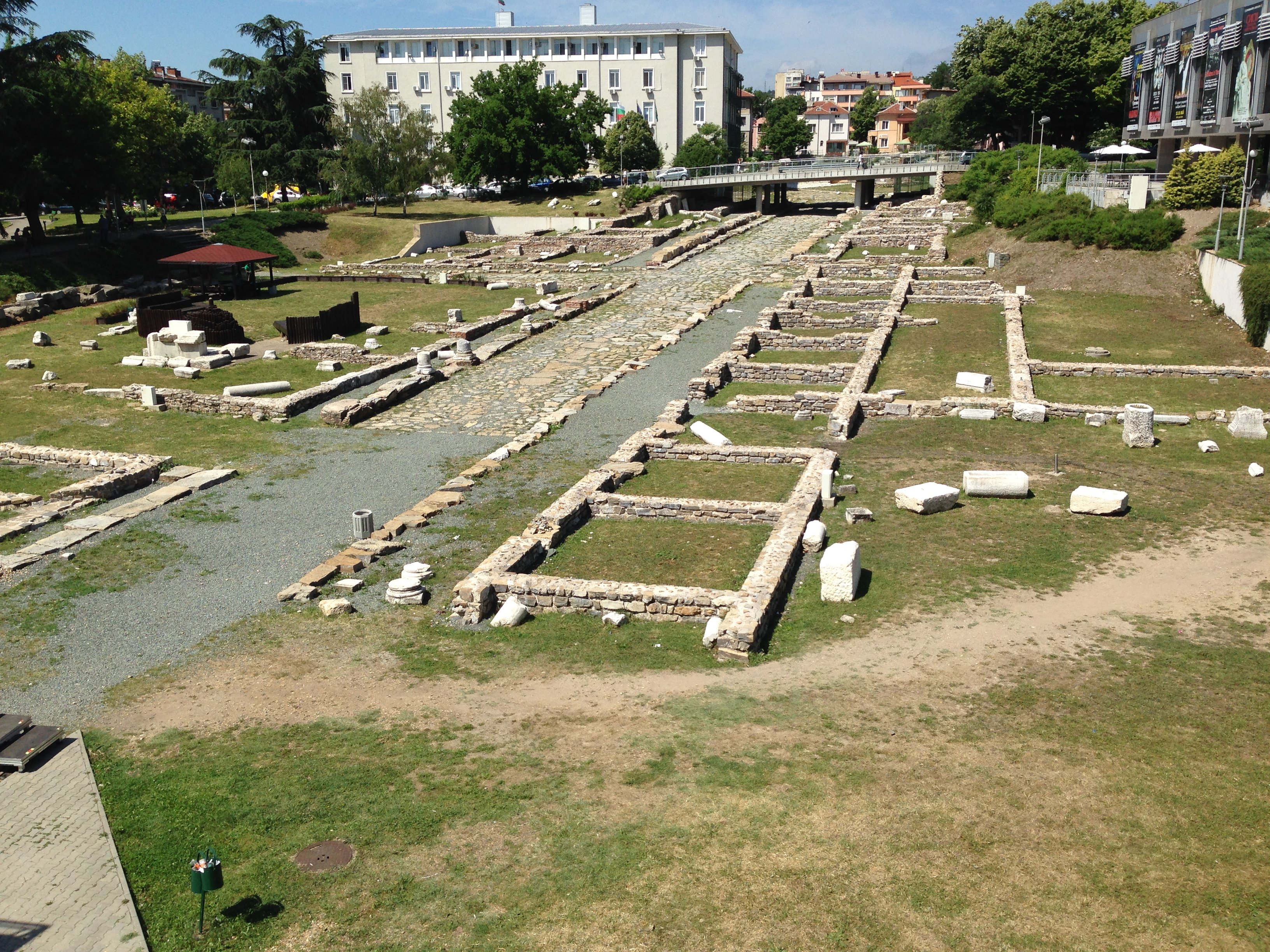
Stara Zagora is a mid-sized Bulgarian city of about 180,000 people in the upper Thracian plain, between the Sredna Gora mountains to the north and the Sarnena Gora to the south. It is one of the oldest continuously inhabited cities in Europe — Neolithic dwellings dating back 8,000 years have been excavated in the city centre and can be visited in situ.
The city was almost entirely destroyed during the Russo-Turkish War of 1877–78 and was rebuilt on a modern grid plan, giving it a more orderly feel than many Bulgarian cities. Roman ruins, including parts of the ancient forum of Augusta Traiana, are scattered through the centre. The Stara Zagora Opera, founded in 1928, is Bulgaria's first provincial opera company and still stages regular performances.
Ayazmoto Park, covering a large wooded hillside on the city's northern edge, is one of the finest urban parks in the country — nearly 400 hectares of mature trees, walking paths, an observatory, and an open-air theatre that hosts the annual Festival of Romani Music and Songs each summer.
Stara Zagora makes a practical base for visiting the nearby Valley of the Roses, where the annual rose harvest takes place in late May and early June. The Rose Festival in Kazanlak, about 40 kilometres north, is the region's biggest celebration.