Medieval Bulgarian capital built above the Yantra River, dominated by the hilltop Tsarevets fortress.
Veliko Turnovo (also spelled Tarnovo or Trnovo) was the capital of the Second Bulgarian Empire from the 12th to 14th centuries, and it still feels like it. The town is built on steep slopes above a horseshoe bend in the Yantra River, with old houses cascading down the hillsides and the Tsarevets fortress rising on a rocky promontory at the centre of it all.
Tsarevets is the main reason to come: the ruins of the medieval royal palace and the Patriarchal Cathedral, with reconstructed walls and towers, cover the entire hilltop. Across the river, Trapezitsa — the nobility's fortress — is less visited but equally rewarding. The views over the Yantra gorge from either hill are excellent. In summer, a sound-and-light show is projected onto the Tsarevets walls in the evenings — touristy, but genuinely dramatic.
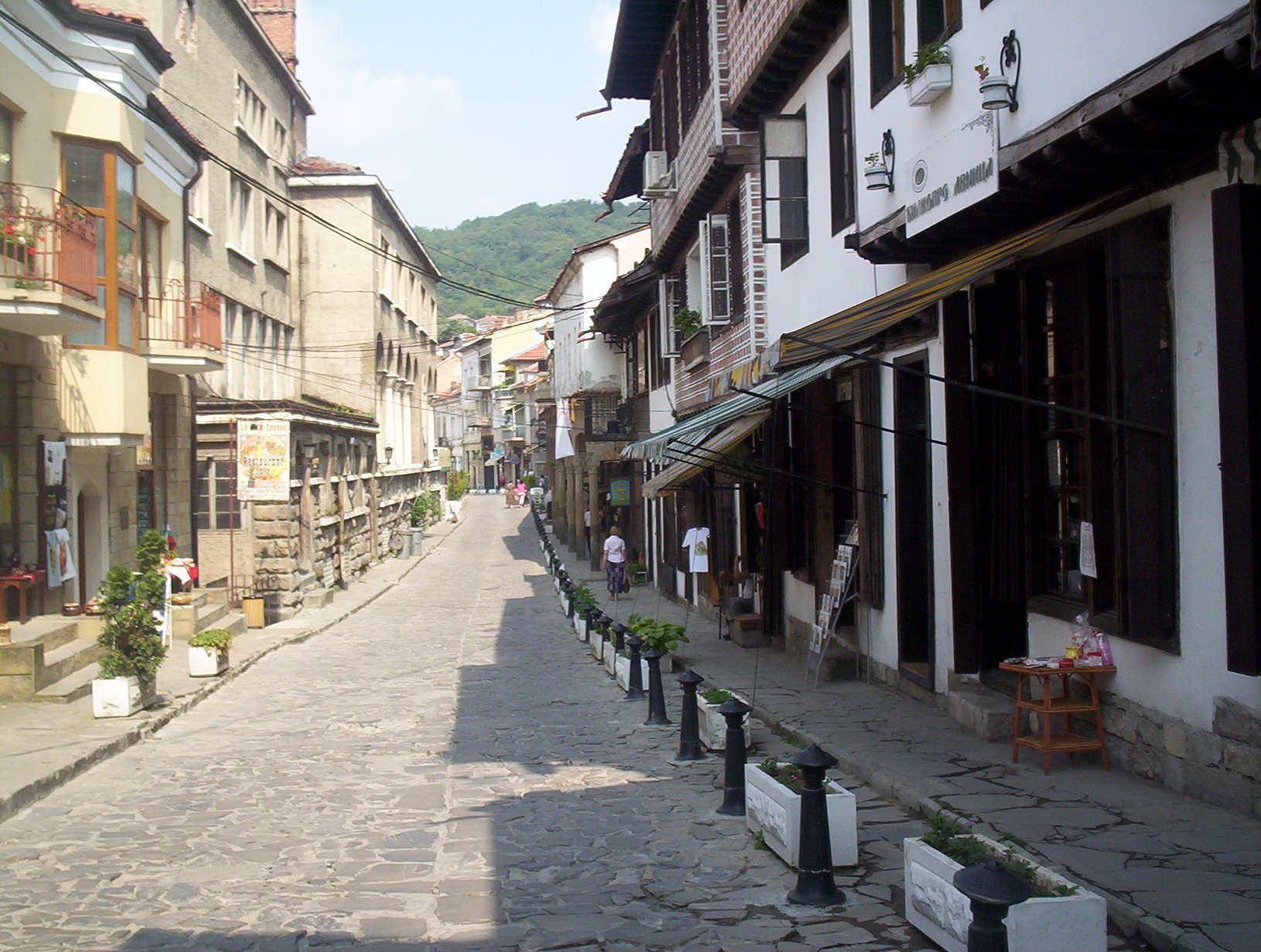
The old merchants' quarter of Samovodska Charshia has been partially restored, with craft workshops selling pottery, woodcarving, and leatherwork. The Church of the Holy Forty Martyrs in the Asenov quarter is a 13th-century church built to commemorate a Bulgarian military victory, with inscribed columns that are among the most important medieval texts in the Bulgarian language.
Veliko Turnovo is a university town, which keeps it lively out of season. It's a good base for the surrounding region — Arbanasi village 4km away has spectacular frescoed churches from the 17th century, and the monastery circuits around the Yantra valley are worth a day or two. About 240km from Sofia by road; 4–5 hours by bus or train.
Guide
Eating Out
Veliko Turnovo has a good concentration of restaurants for a city its size, many of them occupying old Revival-period buildings with terraces overlooking the river gorge. The view from a table above the Yantra at dusk is one of the better meals you can have in Bulgaria regardless of what is on the plate.
Bulgrian food is the thing to eat here: grilled meats (kebapcheta, kavarma), salads (shopska salata is the standard starter, a simple combination of tomatoes, cucumber, peppers, and white cheese), and dishes based on the local sirene (white brine cheese). Prices are low by Western European standards. The student population keeps the café culture lively year-round.
Guide
Getting Around
Getting around Veliko Turnovo is easy. There are metered taxis everywhere, and the fare from one end of town to the other is about $1 USD. There are also city buses.
It's a great city for walking, and you can go almost anywhere in about half an hour if you have your mountain legs on.
Because the city is built on, in, and around a series of hills, you can see the lay of the land quite easily.
Guide
Getting There
Veliko Turnovo is accessible by train and by road. There are direct trains from Bucharest and Istanbul. Trains from Sofia and Varna connect at Gorna Oryahovica, which is also a short shuttle-bus ride away.
Buses leave the bus park next to the main railway station in Sofia for Veliko Turnovo and continue on to Turgovishte, Shumen, Varna, and other locations in eastern Bulgaria.
If you arrive in Sofia by plane, the bus park next to the main railway station is a fifteen-minute ride from the airport.