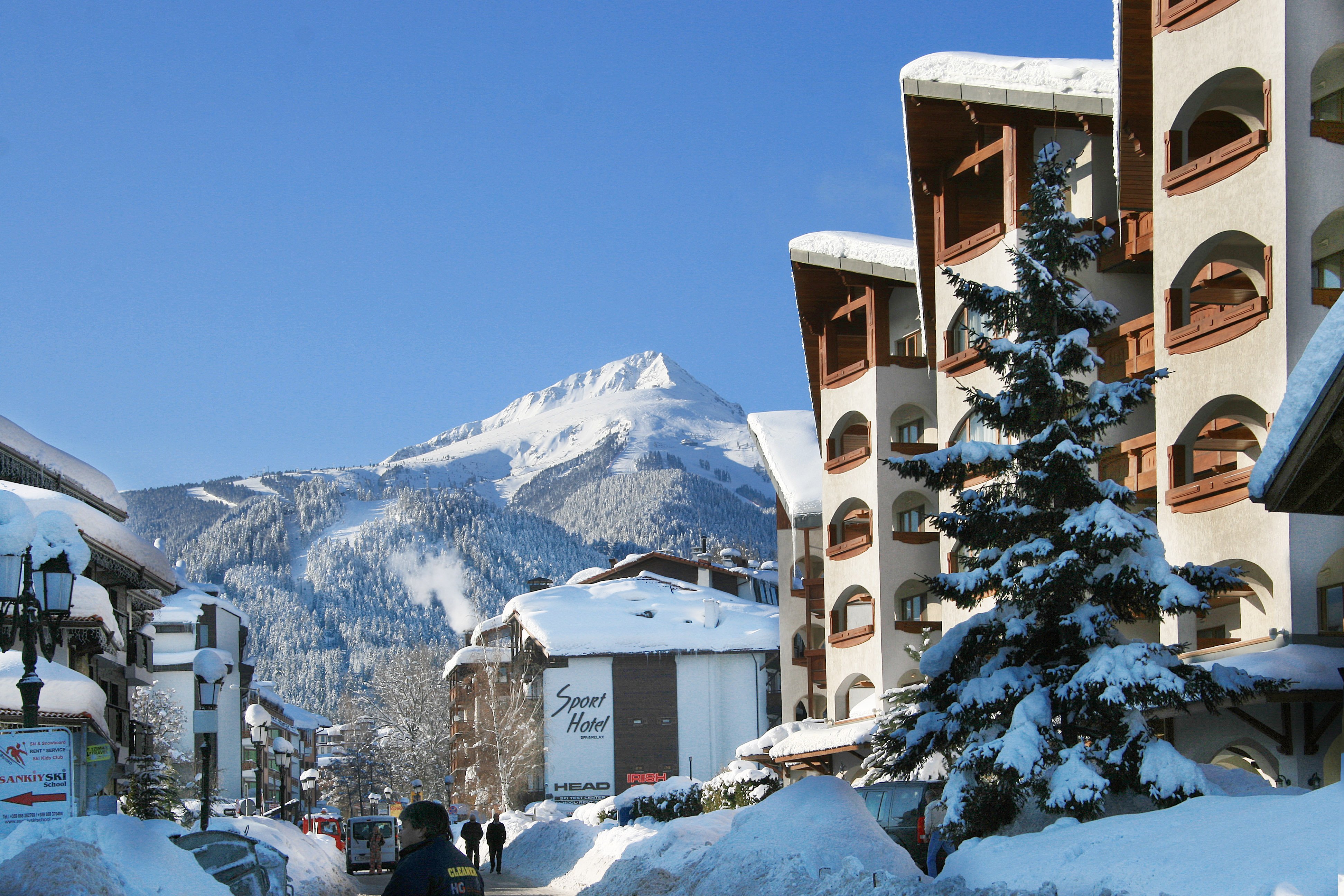
Bansko is the rare Bulgarian town that does two completely different things well. From December to April it is the country's biggest and most serious ski resort, with the Bansko Gondola lifting skiers from a sleepy stone town into a 75-kilometre marked-piste network on the slopes of Todorka and Vihren. From June to October it turns into the gateway for Pirin National Park — a UNESCO World Heritage Site full of glacial lakes, granite peaks and old-growth forest, with some of the best mountain hiking anywhere in the Balkans.
The town itself is the other reason to come. The Varosha old quarter is a tight grid of high-walled stone houses and cobbled lanes that survived the Communist era largely intact, anchored by the great Holy Trinity Church and its bell tower. Bansko was a centre of the Bulgarian National Revival in the eighteenth and nineteenth centuries, and the Bansko Icon Painting School was one of the most distinctive in the country. The houses of the painter Velyan Ognev and the poet Nikola Vaptsarov are open as museums and worth an hour each.
The dining is excellent and surprisingly cheap. The traditional mehana tavern — long wooden tables, open fire, copper pots — is more or less invented in Bansko, and the local cooking leans heavily on grilled meat, beans, kapama (a Pirin specialty of layered meats and sauerkraut), and aged sheep's cheese. The mehana on Pirin Street and a dozen others are easy to find. The town also hosts the Bansko International Jazz Festival every August, which fills the cobbled main square with free open-air concerts for a week.
Bansko is roughly two and a half hours from Sofia by car (the motorway makes it shorter than it used to be) and is reached most easily as a day or weekend trip — or longer if you ski or hike. Nearby Dobrinishte has thermal baths and a smaller ski area; Razlog is a short hop with its own slopes and a much quieter town centre.