Plovdiv is Bulgaria's second city and, for most travelers, the more rewarding of the two. It sits in the southern Thracian Plain, built across seven ancient hills, with the Maritsa River running below. The city claims to be the oldest continuously inhabited city in Europe — settled since at least 6,000 BC — and the layering of Thracian, Macedonian, Roman, Byzantine, Ottoman, and Bulgarian history is visible in every quarter.
The old town (Staria Grad) is the main draw: a steep hilltop neighbourhood of 19th-century National Revival houses with overhanging upper floors, painted in deep indigos, ochres, and greens. Many have been turned into house-museums — the Ethnographic Museum in the Koiumdjioglu house, the Regional Historical Museum in the Georgiadi house — or converted into galleries, restaurants, and guesthouses. The Hisar Kapia gate marks the entrance to the old quarter, and the Church of Saints Constantine and Helena is the finest of its National Revival churches. It's a working neighbourhood as well as a tourist one, which keeps it from feeling like a theme park.
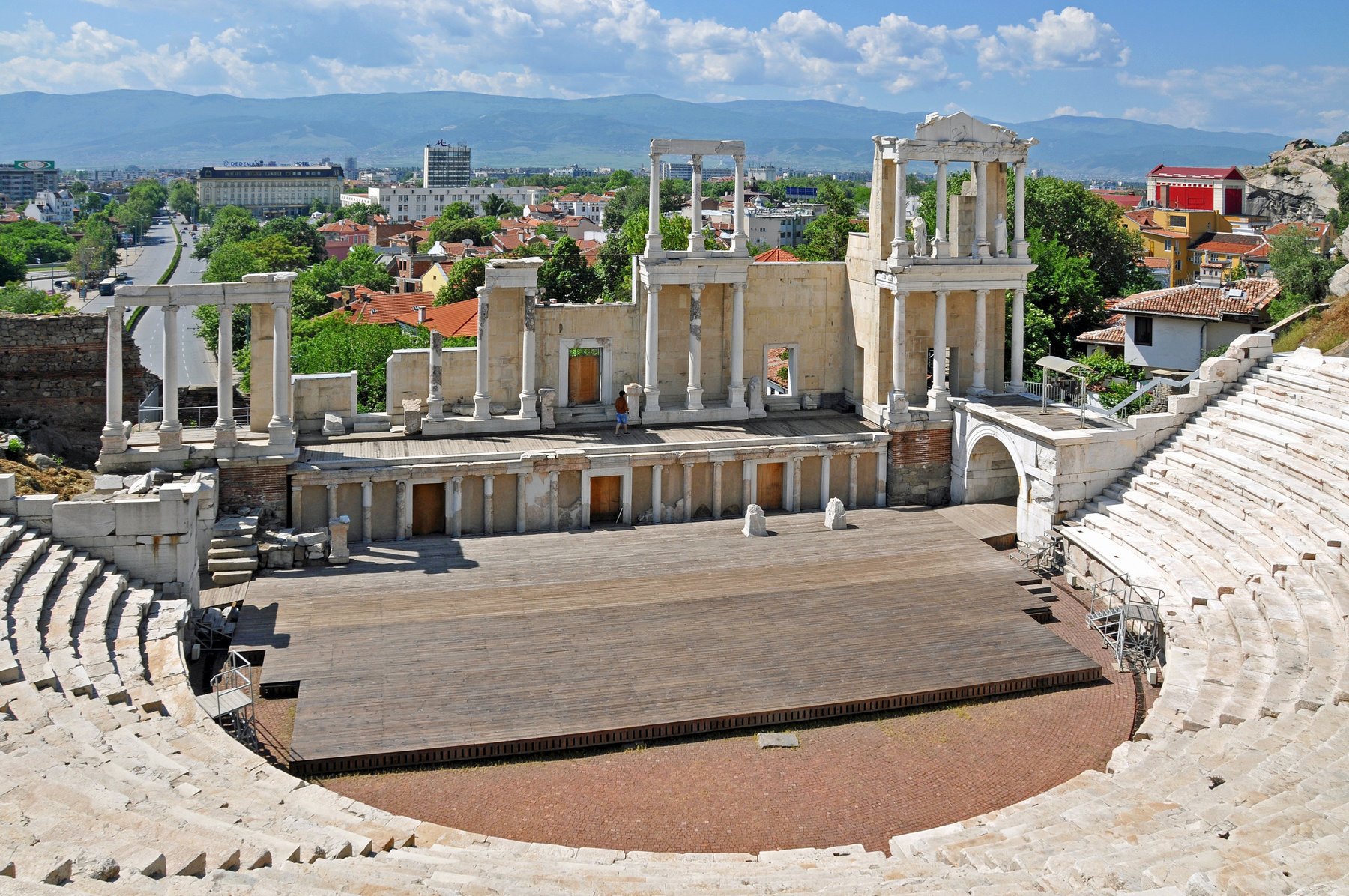
At the foot of the old town, the Roman theatre (2nd century AD) is exceptionally well preserved and still used for concerts and performances. The Plovdiv Philharmonic performs there in summer. There are also substantial remains of the Roman forum and Roman stadium buried under the modern city centre — the stadium is partially visible through glass sections in the pedestrian street. The Great Basilica and Dzhumaya Mosque round out an extraordinary concentration of historical layers in a compact area.
Kapana ("The Trap"), the former artisans' quarter, has become Plovdiv's creative district — independent galleries, studios, craft coffee shops, and small restaurants in a network of narrow streets just west of the main square. It's the best area for eating and drinking in the city. For the best view over all of it, climb to the Alyosha monument on the highest of Plovdiv's hills.
Plovdiv was European Capital of Culture in 2019, which accelerated a lot of development and renovation. The city now has a more polished infrastructure than most comparable Bulgarian towns. There are direct bus and rail connections to Sofia (about 2 hours), and to Stara Zagora, Asenovgrad, and the Greek border.