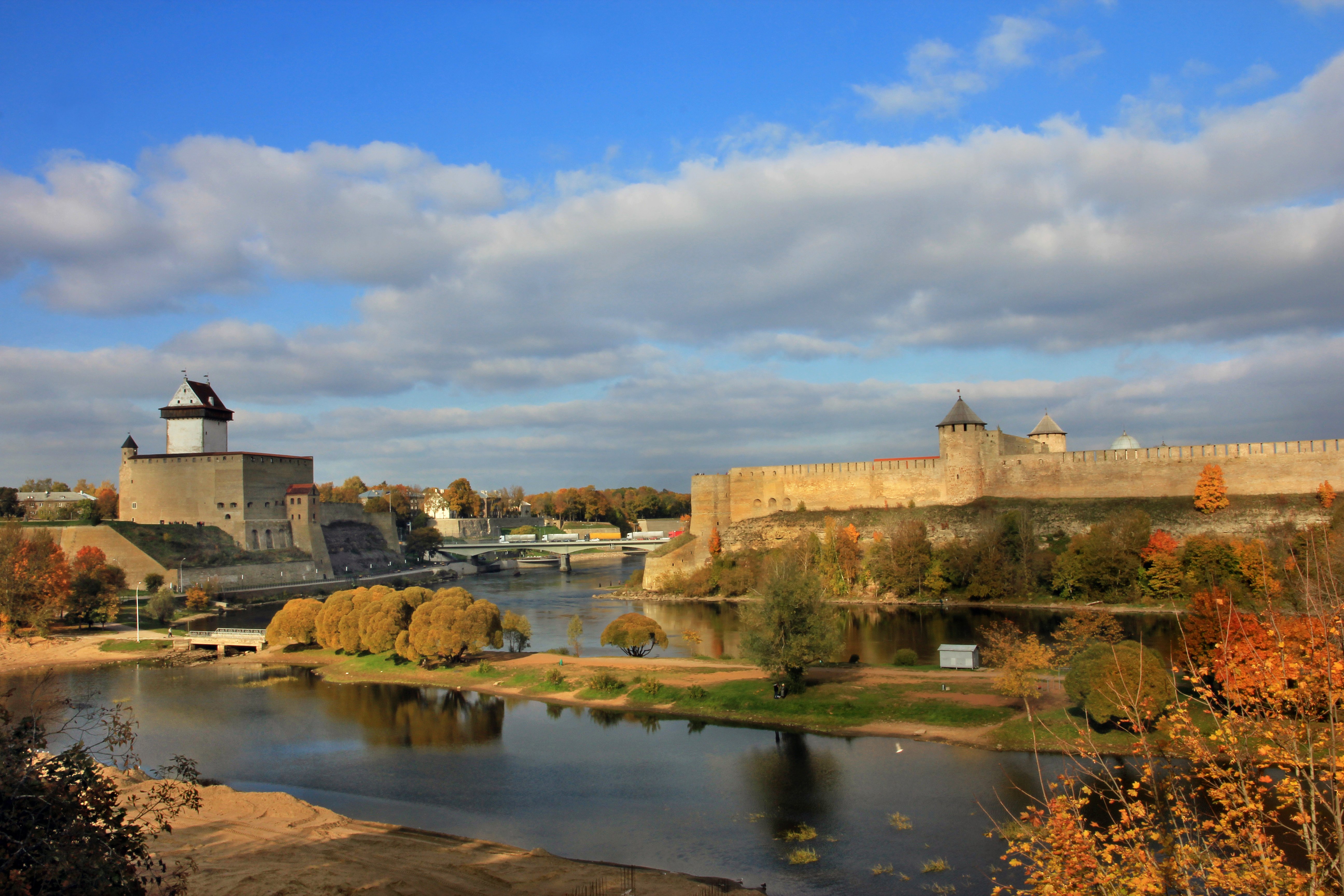
Narva is Estonia's easternmost city and one of the most compelling border towns in Europe. The Narva River divides it from Russia so sharply that you can stand below Narva Castle and look straight across to Ivangorod Fortress on the opposite bank. Few places make geography feel so political.
The city itself is not conventionally pretty. Much of old Narva was destroyed in 1944, and the post-war rebuild left broad streets, Soviet blocks, and a largely Russian-speaking population. But that roughness is part of its interest. The restored Town Hall, the bastions, the castle, and the churches stand like fragments of older Narva poking through a twentieth-century city.
South of the centre, the vast red-brick Kreenholm Manufacturing Company is the other reason to come. It was once one of the largest textile factories in the Russian Empire, built around the power of the Narva waterfalls. Today it is half industrial monument, half sleeping giant, best seen on a guided tour or from the surrounding streets. Narva is also the natural base for Narva-Jõesuu, the beach resort at the river mouth.