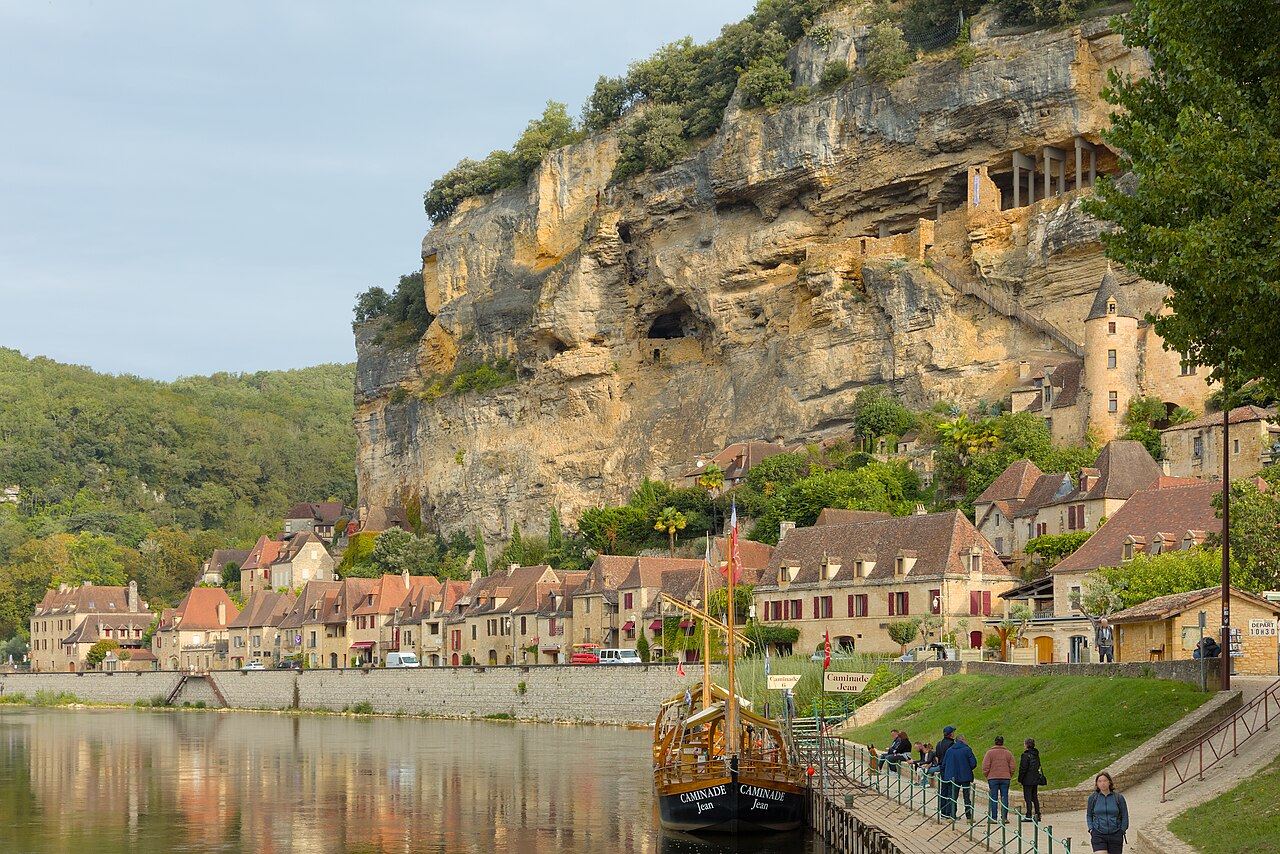
Dordogne riverside village wedged between limestone cliffs, golden houses, and troglodyte dwellings.
La Roque-Gageac is regularly cited as one of the most beautiful villages in France, and it is hard to argue. The village is wedged between a towering limestone cliff and the Dordogne River, its golden stone houses and slate roofs reflected in the water below. A tropical garden clings to the south-facing cliff face, warmed by the microclimate the rock creates.
The Château de la Malartrie, a 19th-century pastiche of a medieval castle, sits at one end of the village and adds to the fairy-tale quality of the scene. Above, troglodyte dwellings and a 12th-century fort are carved into the cliff itself. Gabares — traditional flat-bottomed boats — depart from the riverbank for gentle cruises along the Dordogne, passing walnut groves and other clifftop villages.
Within a few kilometres sit three exceptional châteaux: the Château de Marqueyssac with its 150,000 hand-trimmed box hedges and a spectacular belvedere over the valley, the medieval fortress of Château de Castelnaud housing a fine museum of medieval warfare, and Château de Beynac perched dramatically on the north bank cliff. Together they make this stretch of river one of the most concentrated medieval landscapes in France.
La Roque-Gageac is tiny and gets crowded in high summer, when the single road through the village can feel overwhelmed. Visit early in the morning or in the shoulder season for the best experience. The village sits between Sarlat and Domme, making it an easy stop on a Dordogne tour.
Guide
Getting There
La Roque-Gageac has no train station and limited public transport. The most practical way to visit is by car, arriving along the D703 which follows the south bank of the Dordogne between Sarlat-la-Canéda and Beynac. Sarlat, 12 kilometres to the north-east, is the nearest town of any size and has the closest rail connection (SNCF trains from Bordeaux and Périgueux).
In July and August a seasonal bus service connects Sarlat with several Dordogne villages including La Roque-Gageac; check with the Sarlat tourist office for current schedules. Cycling is an excellent option in the shoulder season: the D703 is relatively flat along the riverbank and passes through some of the finest scenery in France, though the road carries fast traffic in summer. Parking in the village is extremely limited — a small car park sits at the western end; in peak season it fills quickly and visitors park on the roadside verges.
Guide
When to Go
The Dordogne has warm, sunny summers and mild springs and autumns. La Roque-Gageac's microclimate — created by the south-facing cliff trapping heat — means the village is noticeably warmer than the surrounding countryside, and the exotic plants in the clifftop garden thrive because of it.
July and August are the busiest months by far. The single road through the village becomes genuinely congested, gabare queues stretch back from the landing stage, and parking is difficult. The village is still magical, but you share the magic with a great many people. May, June, and September are considerably calmer and the light is excellent — the golden limestone glows particularly well in the lower sun of early morning and late afternoon. October brings autumn colour to the walnut groves along the river and is arguably the most beautiful month of all, though some boat services may have reduced hours.
December to February is quiet to the point of dormancy: most restaurants and tourist facilities close. A midwinter visit gives an extraordinary sense of the village returned to itself, the cliffs dramatic in rain or frost, but you'll need to plan carefully to eat or find accommodation.