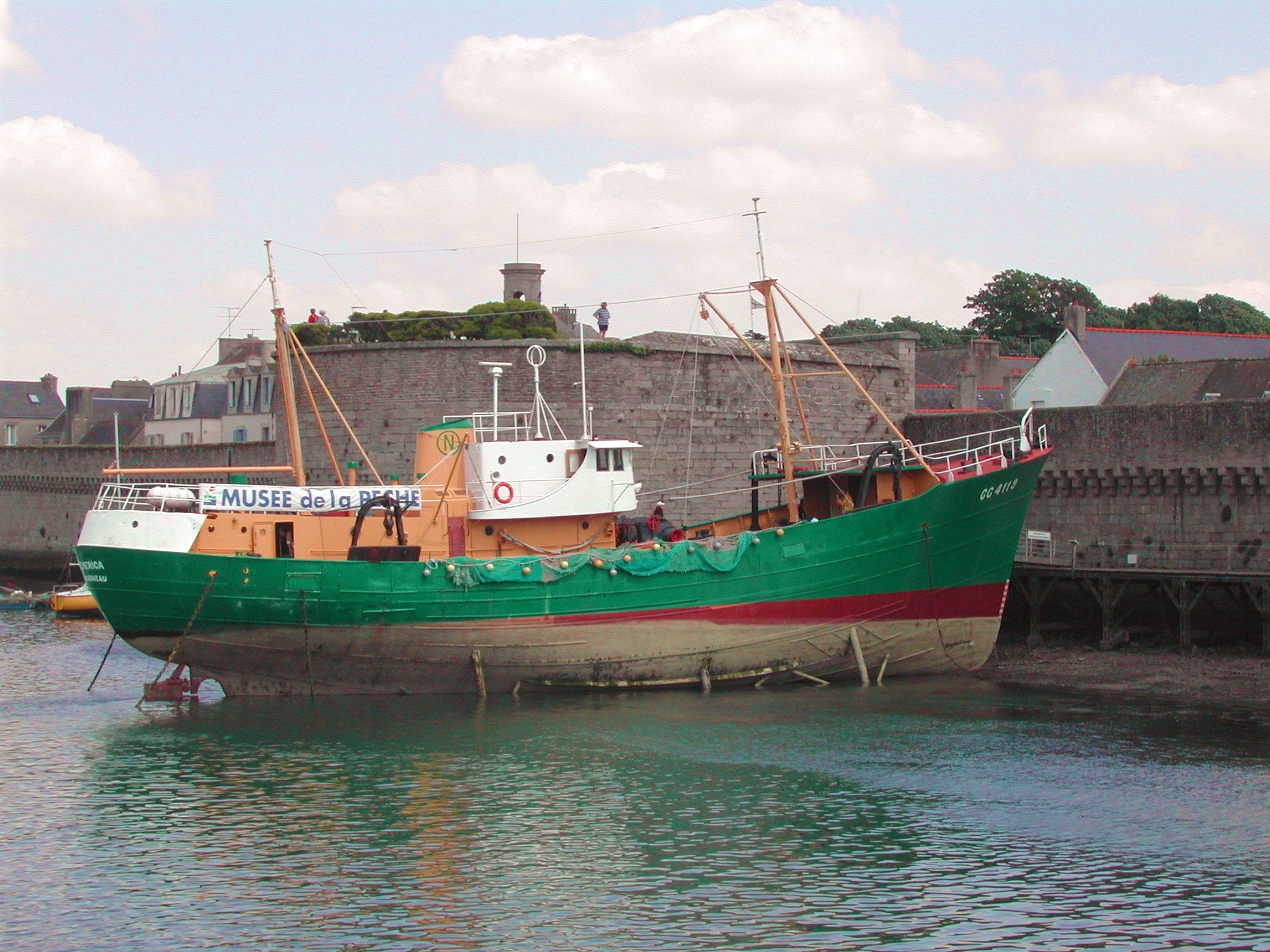
Concarneau
©
Concarneau

Concarneau

Breton fishing port wrapped around the Ville Close, a medieval walled town in the harbour

Concarneau is a working fishing port in southern Finistère, one of the largest in Brittany and one of the few French coastal towns where the trawlers still outnumber the pleasure yachts. The town is dominated by the Ville Close — a medieval walled town set on an island in the harbour, connected to the mainland by two short bridges — which is one of the best-preserved fortified settlements in France and the main draw for visitors.

The Ville Close is compact enough to walk in an hour, but rewards more time. The granite walls, mostly 14th to 17th-century, run all the way around the island and still contain the bulk of the old buildings. Within, the lanes are narrow, the shops and restaurants are aimed squarely at summer tourists, and the crowds can be formidable in July and August. Come in the off-season and the place has a different character: quieter, a bit melancholy, and more real. The fishing boats unload on the quays just outside the walls, and the smell of the sea is omnipresent.

The fish here is excellent and reasonably priced: the covered fish market near the fishing harbour sells to retail customers, and the restaurants around the port do good moules-frites, grilled langoustines, and the local speciality cottriade — a Breton fish stew. Quimper, the regional capital, is twenty kilometres to the northwest and easily reached by bus or car.

Guide

Eating Out

Concarneau eats well from the sea. The fishing harbour unloads daily catches of tuna, sardines, sea bass, turbot, and shellfish; the restaurants around the port serve them simply, with butter and good Breton bread. The Breton fish stew cottriade — made with whatever fish came in that morning, with potatoes and onions — is the local speciality and worth ordering when it appears on a menu. Crêpes and galettes (savoury buckwheat pancakes) are the standard cheap option everywhere in Brittany.

The restaurants inside the Ville Close are mostly tourist-oriented and prices reflect this; better value is usually found in the streets around the fishing harbour just outside the walls, where the clientele is more local.

Guide

Getting There

Concarneau has no train station; the nearest is at Rosporden, 13 kilometres inland, with connections to Quimper and Brest. Buses run from Quimper to Concarneau several times daily and the journey takes about 40 minutes.

By road, Concarneau is 25 kilometres south of Quimper on the D783. From Brest, the journey takes about an hour and a half. Driving is the most practical option if you want to explore the surrounding coastline and the Château de Kériolet.

Guide

Things to Do

The Ville Close is the obvious starting point and most people never get much further, but Concarneau also has good beaches to the east of town and the Château de Kériolet a few kilometres inland. The Musée de la Pêche in the Ville Close gives a well-organised account of the fishing industry that has shaped this town, and is one of the better maritime museums in Brittany.