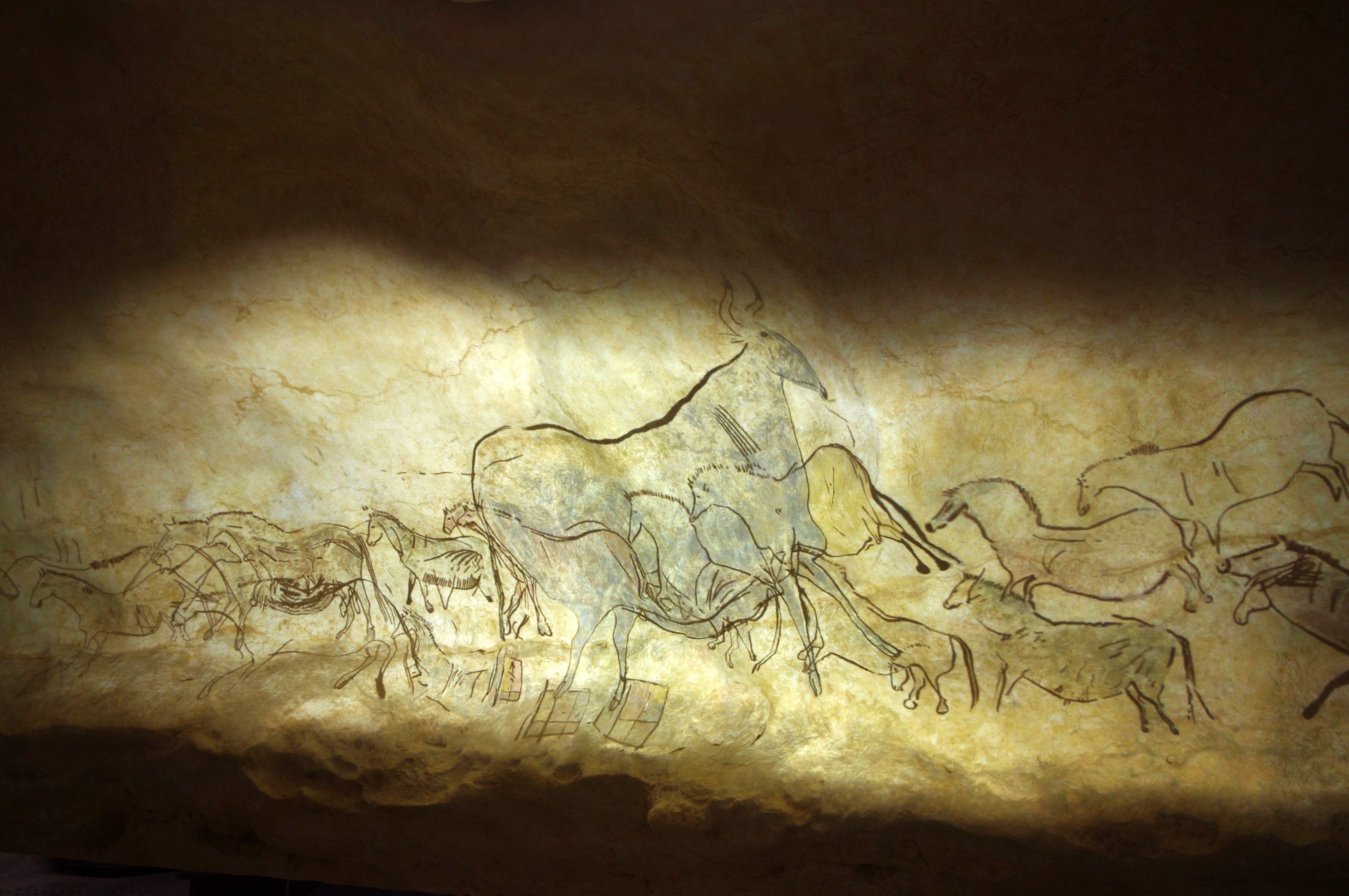
The original Lascaux cave, near Montignac in the Vézère Valley, contains some of the most extraordinary Palaeolithic paintings in the world — 17,000-year-old images of bulls, horses, aurochs, and deer covering every surface in vivid ochre and manganese black. It has been closed to the public since 1963 to protect the paintings from the damage caused by visitor breath and light.
Lascaux IV, which opened in 2016 in Montignac (about 25 km north of Sarlat), is a full-scale replica of the entire cave system built using digital scanning and reconstruction. It is significantly better than the earlier Lascaux II replica — you see the whole cave, not a selection, and the interpretation is modern and thorough. The site also includes a museum of Palaeolithic art and a digital lab.
It takes most of a half-day to do properly. Book tickets in advance in summer.