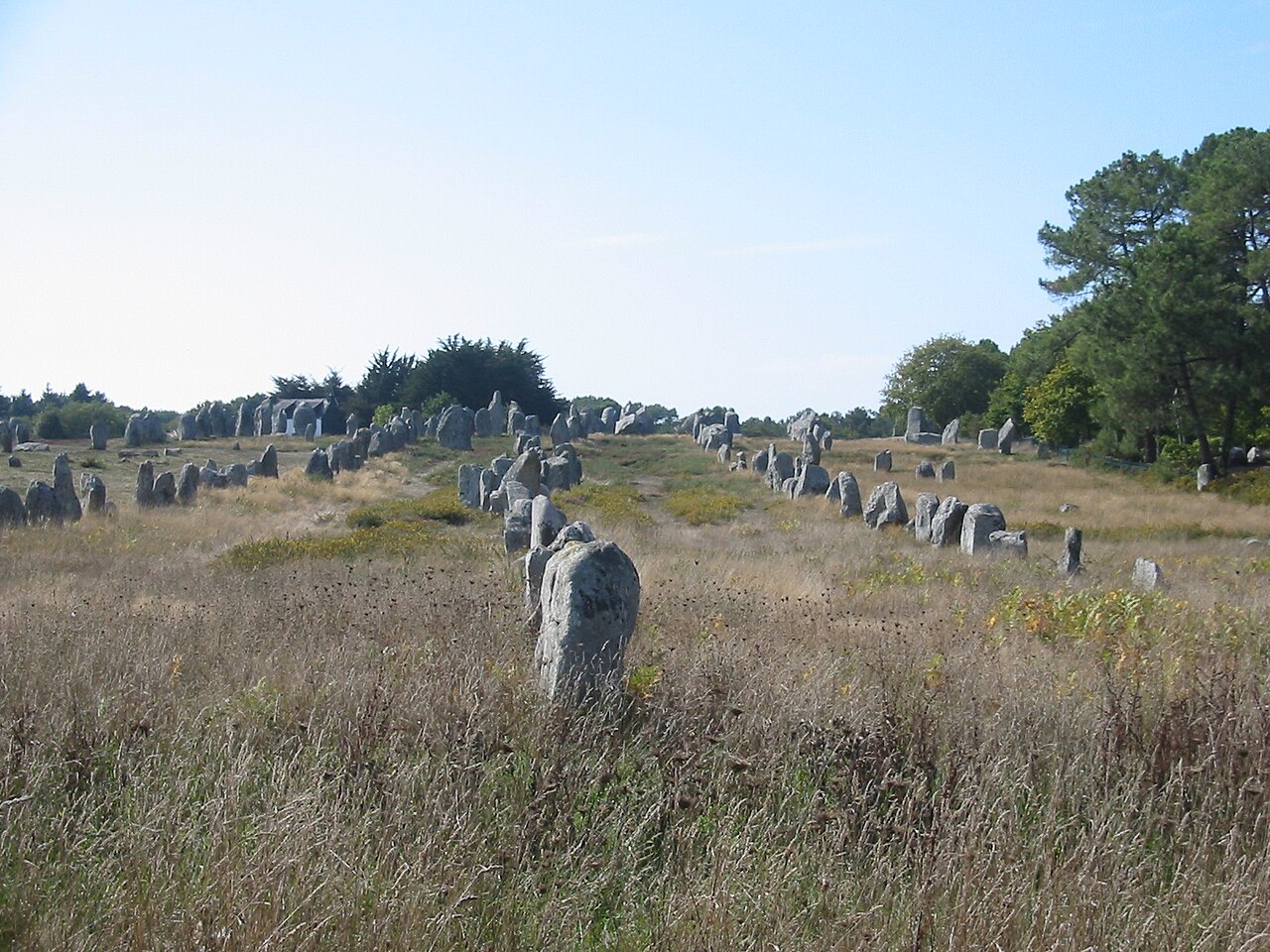
Carnac is home to the most extraordinary collection of standing stones in the world. Over 3,000 menhirs arranged in 13 parallel rows stretch for several kilometres across the Breton countryside — and nobody knows with certainty why they were put there 4,000 years ago. Theories range from astronomical observatories to religious procession routes, but the honest answer is that the purpose remains a mystery. The Musée de Préhistoire in the town centre is the best place to absorb what is known before you walk out to the alignments themselves.
The alignments are a major draw in Brittany and can get crowded in summer. Parts of the site are now fenced off to prevent further damage from visitors who could not resist touching, climbing, or pushing the stones. You can still walk freely among some of the rows, and the views from the edges are impressive enough. The Saint-Michel tumulus — a vast Neolithic burial mound crowned with a chapel — adds to the prehistoric picture. The town of Carnac itself is pleasant — a small seaside resort with a good beach and crêperies, and La Trinité-sur-Mer just east is worth the detour for its harbour and oysters.