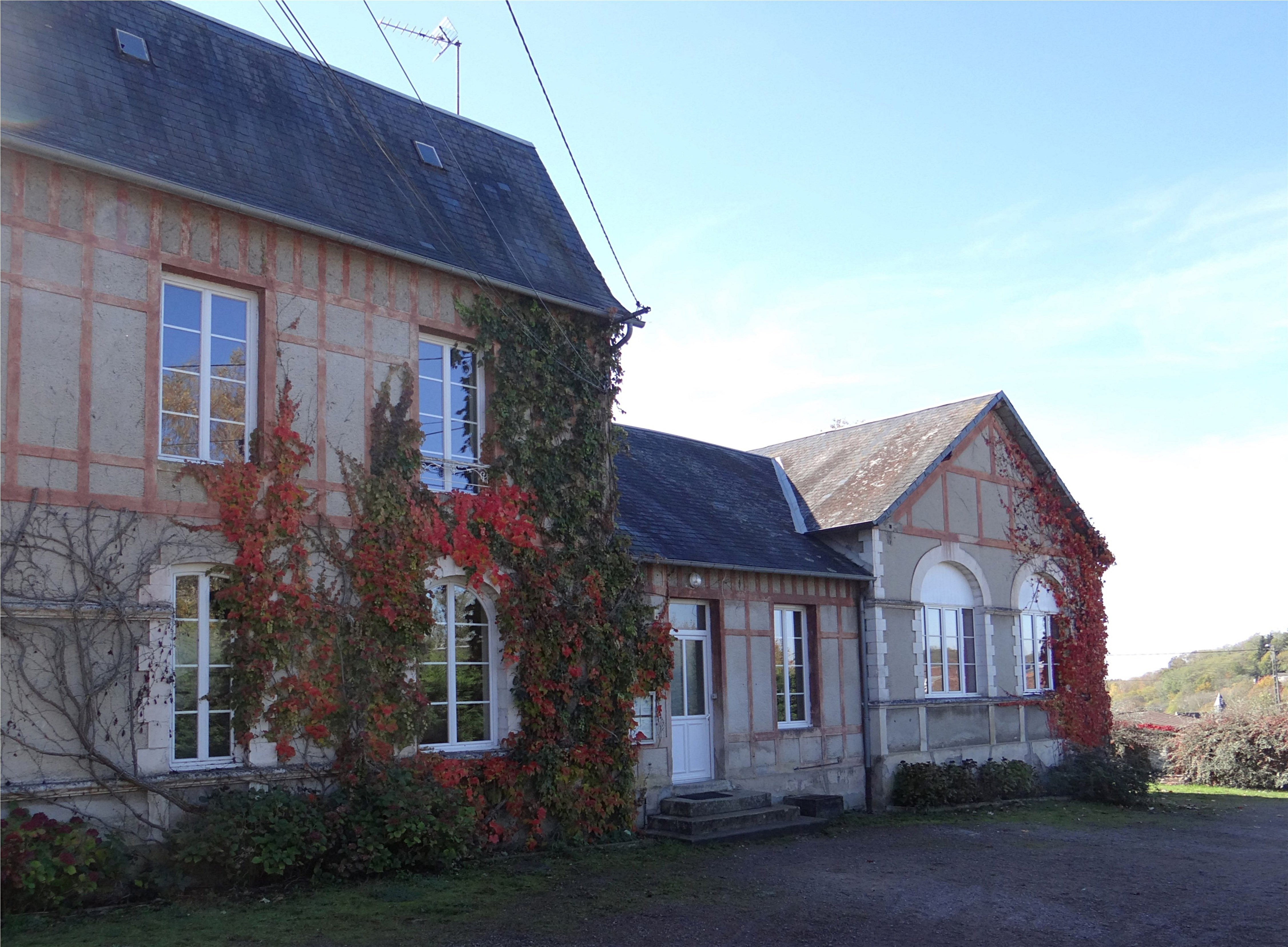
Small Nièvre hill town on the Morvan edge, with gorges, lakes, and a neo-Romanesque church.
Lormes is a small hilltop town in the Nièvre département, on the western edge of the Morvan regional natural park. Recognised as a "Cité de Caractère de Bourgogne-Franche-Comté" in 2024, it makes a practical base for exploring the Morvan's forests and lakes, or a natural stopover on the way to Vézelay, about 40 kilometres to the north.
The town is quiet and agricultural, but it has more texture than it first appears. The Église Saint-Alban — a confident neo-Romanesque building from 1865 — stands on a rise above the old centre, and the Gorges de Narvau cut through the hillside just south of town, giving walkers a surprisingly wild half-day route down to the Étang du Goulot, one of the Morvan's seven official lakes. The weekly market on Tuesday mornings is the social hub of the surrounding cantons.
The Lac de Chaumeçon, a forest reservoir about 7 kilometres east, is the nearest swimming lake and the best reason to linger for more than a night. The Château de Villemolin in Anthien, a few kilometres to the west, adds a listed historic house to the list of reasons to base yourself here rather than passing through.
The municipal campsite is cheap and well-maintained, with hot water. Lormes has a handful of shops and a couple of restaurants, enough for a comfortable two-night stay while you explore the surrounding Morvan countryside.
Guide
Getting There
Lormes has no train station. The nearest rail connections are at Clamecy (about 30 kilometres north), which sits on the Auxerre–Nevers line, and Château-Chinon (25 kilometres south-east), though services to the latter are infrequent. Neither station has useful onward public transport to Lormes itself.
In practice, the car is the only realistic way to get here. Lormes sits at the intersection of the D944 (running north-south between Clamecy and Château-Chinon) and the D17 (east toward the deeper Morvan). From Paris, the A6 autoroute to Auxerre followed by the D965 south gets you here in around three hours. From Dijon, allow about an hour and a half via Avallon. From Nevers, take the D978 northwest — about 45 minutes.
If you are arriving without a car, the best strategy is to hire one in Auxerre or Nevers and treat Lormes as part of a wider Morvan circuit rather than a standalone destination.
Guide
When to Go
Lormes sits at around 400 metres elevation on the western flank of the Morvan, which means cooler summers and harder winters than the Burgundy wine towns to the east. Late spring through early autumn is the most comfortable window.
May and June are excellent: the forest is deep green, the rivers are running well for kayaking, and the countryside is not yet crowded with summer visitors. July and August bring the warmest swimming weather for Lac de Chaumeçon and the Étang du Goulot, and the town hosts its Festival de la Chanson Française on the last weekend of July — a well-regarded event that draws nationally known performers to the town square, entirely out of proportion to Lormes' size.
Autumn (September and October) is arguably the finest season in the Morvan: the oaks and beeches turn in the gorges, the light is low and golden, and the crowds thin out sharply. Wild mushrooms are everywhere, and the weekly market fills with local produce. Winter is quiet to the point of dormancy; several businesses close and the campsite shuts. Unless you want the Morvan entirely to yourself, there are better months.
The weekly market takes place in Lormes on Tuesday mornings. If you time your visit to coincide with one of the rotating Comice Agricole fairs — an old Burgundian agricultural tradition involving costumed parades and flower-decorated floats — you'll see a side of rural French life that has changed very little in a century.