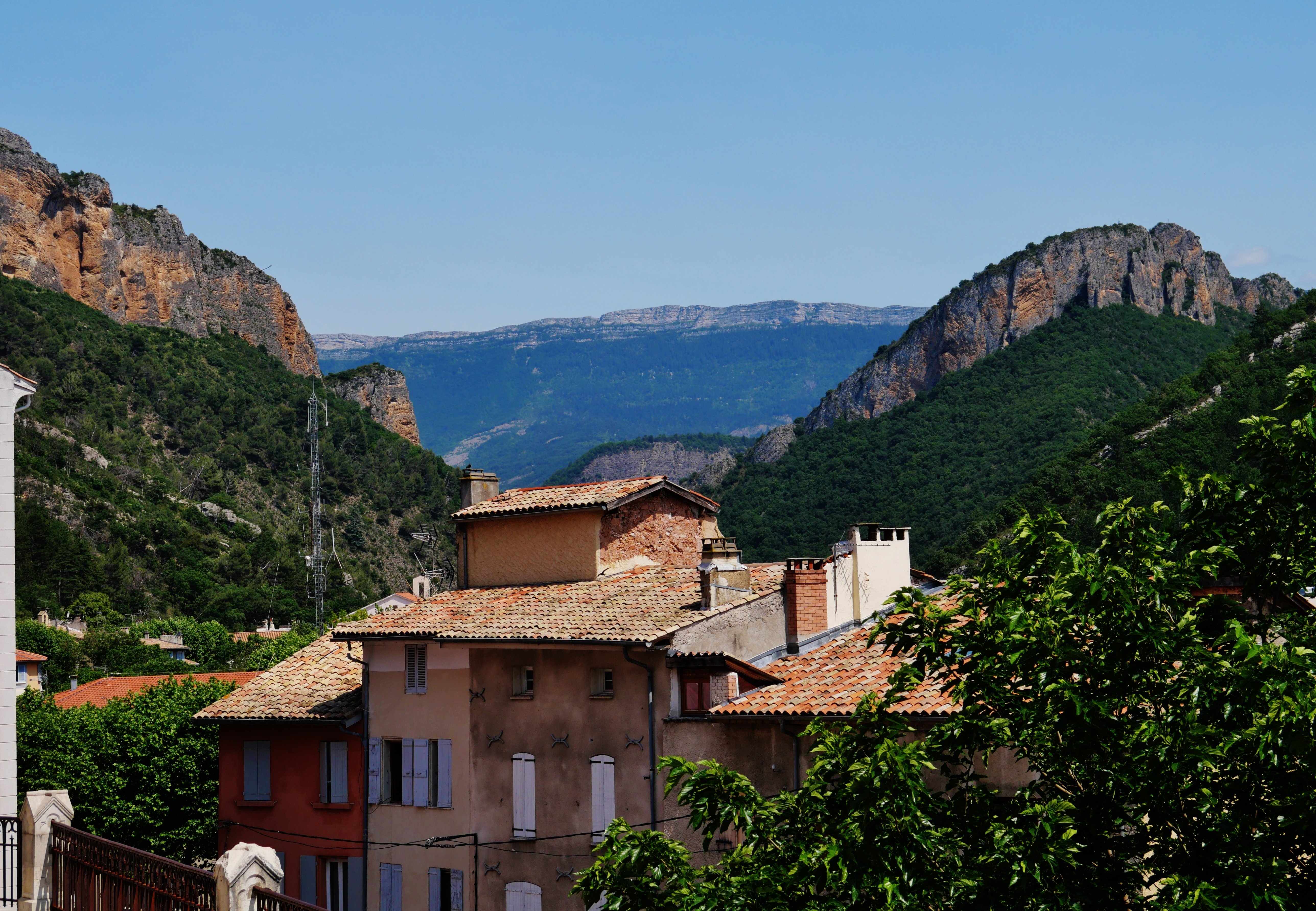
Digne-les-Bains is the quiet capital of the Alpes-de-Haute-Provence, tucked into a valley well north of the coast. It is a thermal town first and foremost — people have been coming here for the hot springs since Roman times — but it also serves as a gateway to some of the most unspoiled mountain country in southern France. In August, the Corso de la Lavande takes over the streets with lavender-scented floats and processions, celebrating the crop that turns the surrounding hills purple each summer.
The Train des Pignes is one of the best reasons to visit. This narrow-gauge railway winds 150 kilometres through gorges and mountain valleys between Digne and Nice, crossing bridges and tunnels that took 27 years to build. The journey takes about three and a half hours and the scenery is spectacular. The heritage steam version runs on summer weekends.
The town itself is small and manageable. The Cathédrale Saint-Jérôme dates from the 13th century, and the Musée Gassendi mixes local natural history with contemporary art in a surprisingly compelling way — works by Andy Goldsworthy, made from local materials, are among the highlights. The Jardin Botanique des Cordeliers in the centre of town focuses on the flora of the surrounding region.
The Réserve Géologique de Haute-Provence, one of the largest geological reserves in Europe, stretches north of town across 2,000 square kilometres of mountain country. The fossil beds — ammonites up to 70 cm across, still embedded in the hillside limestone — are openly accessible on marked trails. Good walking country with very few other people on the paths.