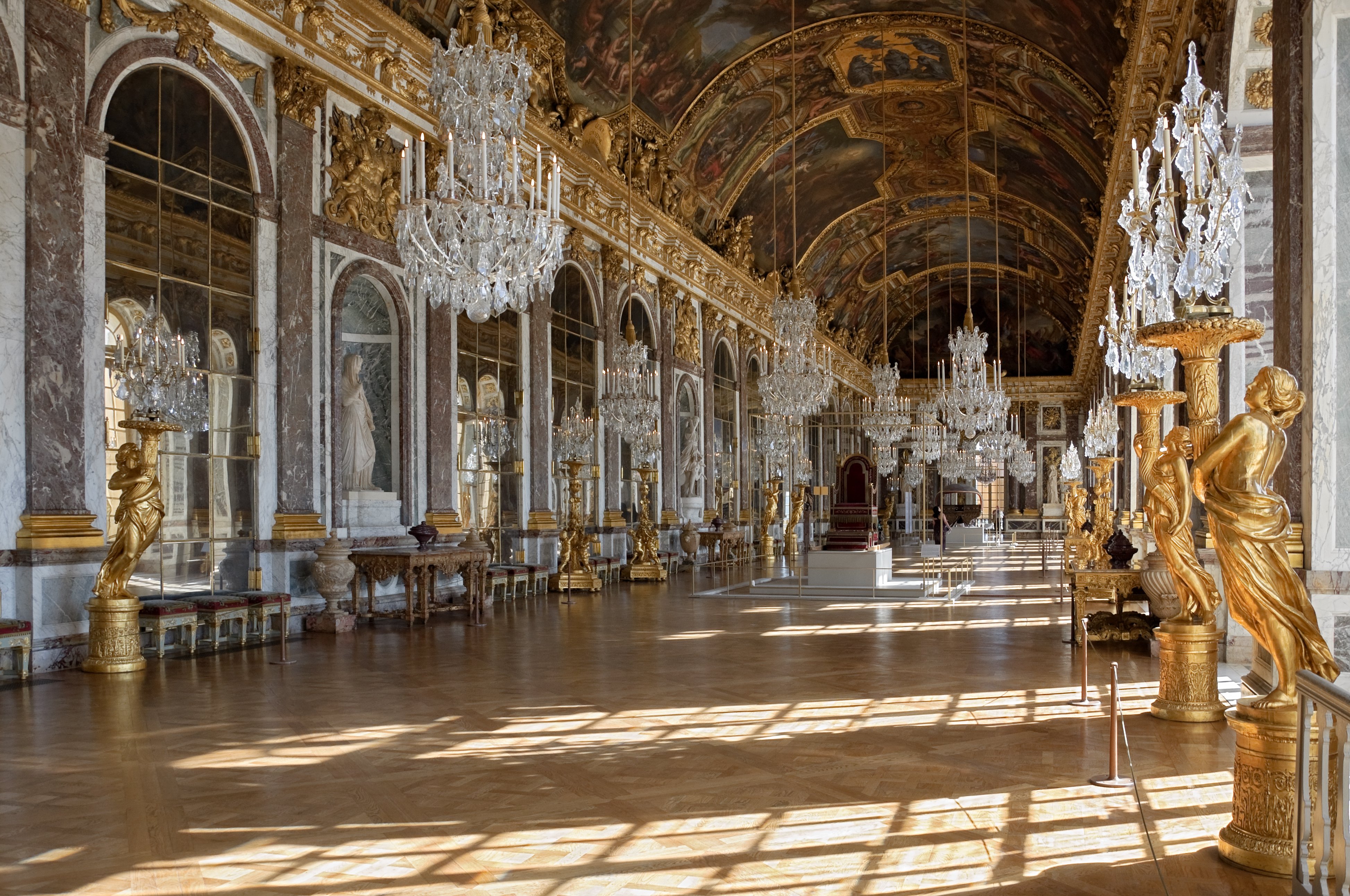
Versailles is one of those places that earns its reputation. The Château de Versailles — built by Louis XIV, the Sun King, to project the absolute power of the French monarchy — is simply enormous, and walking through it you feel the full weight of that ambition. The Hall of Mirrors alone, 73 metres of gilded grandeur, stops most visitors in their tracks.
Plan a full day, and give roughly half of it to the gardens. Designed by André Le Nôtre in the same spirit of controlled magnificence as the palace itself, they stretch for hundreds of acres with fountains, topiary, canals, and smaller garden palaces (the Grand Trianon and Petit Trianon) tucked away at their edges. On weekends in summer the fountains run to music — worth timing your visit around if you can.
The palace itself has a long building history. Louis XIII had a modest hunting lodge here; his son Louis XIV transformed it into the seat of the French court from 1682 onwards, with successive architects — Le Vau, Jules Hardouin-Mansart, Robert de Cotte — adding wings, the Chapel Royal, and eventually the Opera under Louis XV. The result is a building that grew over a century to house an entire government and aristocracy, which explains both its scale and its occasional awkwardness.
The town of Versailles that surrounds the estate is a pleasant, affluent place worth a short stroll — good for lunch before or after the château. It is about 35 minutes from Paris by RER C train, making it an easy and obvious day trip from the capital.