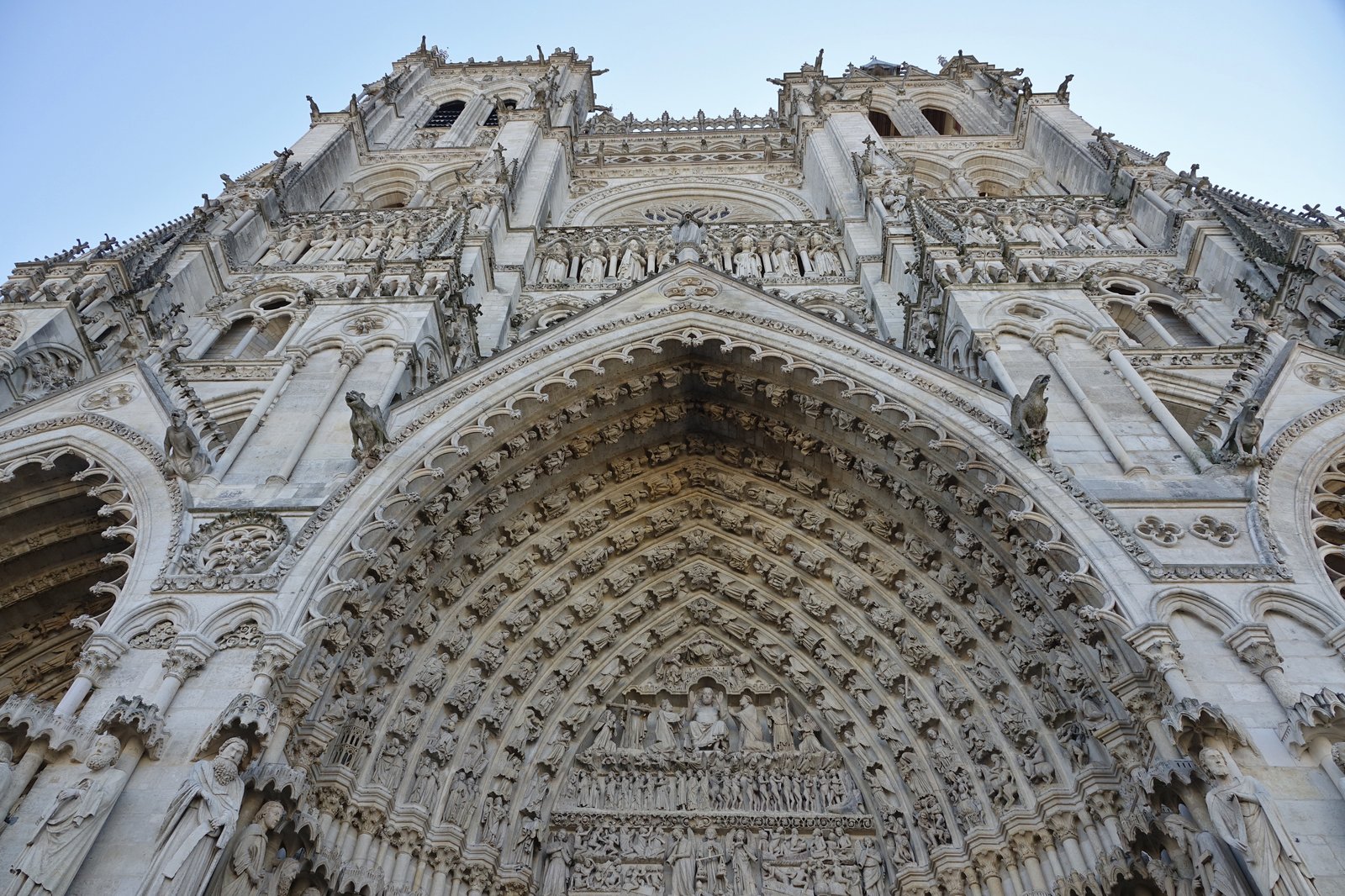
Amiens is the capital of the Somme department and the largest city in Picardie, sitting on the Somme river about 120 kilometres north of Paris. It is a city defined by two extraordinary things: its cathedral and its hortillonnages. The Cathédrale Notre-Dame d'Amiens is the largest Gothic cathedral in France by interior volume, a UNESCO World Heritage Site of breathtaking scale — its nave rises to 42 metres, making it taller than Notre-Dame de Paris. The hortillonnages are a network of market gardens threaded through channels in the river marshes east of the city, a living medieval landscape that can be explored by flat-bottomed punt.
The city is also the birthplace of Jules Verne, who lived here for most of his adult life and is buried in the town cemetery in a tomb that is itself a work of art — a marble figure of the author clawing his way out of the earth toward the stars, designed at his own request. The Jules Verne Museum in his house on Boulevard Jules Verne preserves his study, his library, and the extraordinary model theatre he used to stage plays for his friends.
Amiens suffered enormous destruction in both world wars — the cathedral was miraculously largely spared, but much of the rest of the city was not. The reconstructed centre is largely postwar, with the Tour Perret, a 1950s concrete skyscraper by Auguste Perret, standing as a deliberate monument to modern reconstruction. The St-Leu district north of the cathedral, however, is a genuine quarter of old houses along canals, and makes a pleasant place to explore and find a table.