Bayeux is a small, well-preserved Norman town whose name is synonymous with one object: the Bayeux Tapestry. This 70-metre embroidered linen strip, created in the 11th century, tells the story of the Norman Conquest of England in 58 scenes — essentially a medieval comic strip, vivid with horses, ships, feasting, and the Battle of Hastings. It is one of the most remarkable surviving artefacts of the Middle Ages, and the museum that houses it does it justice.
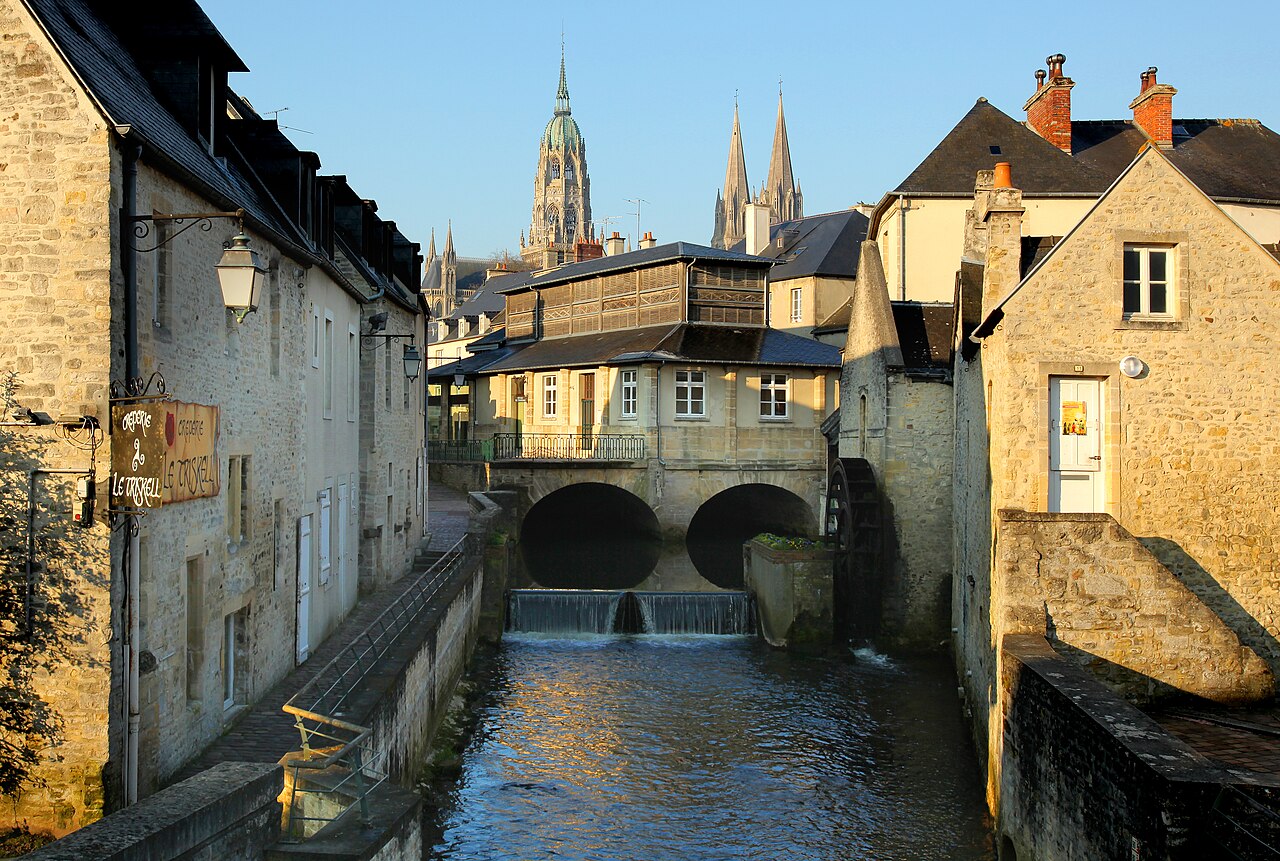
But Bayeux has more than the tapestry. The town itself was one of the first in France to be liberated after D-Day and survived the war largely intact. The Gothic cathedral dominates the skyline and is worth a visit. The old centre is compact and handsome, with half-timbered houses, a watermill on the River Aure, and good restaurants serving Norman classics — cider, Calvados, Camembert.
Bayeux is also the main base for visiting the D-Day landing beaches. Omaha Beach, the American cemetery at Colleville-sur-Mer, and the Pointe du Hoc are all within 15 km. The Musée Mémorial de la Bataille de Normandie in town gives an excellent overview before you head out to the beaches. The Bayeux War Cemetery, the largest British Second World War cemetery in France, is directly opposite the museum.