Nantes is the sixth-largest city in France, a prosperous and unexpectedly creative metropolis of about 320,000 people (650,000 in the metropolitan area) on the Loire river, 50 km from the Atlantic. Historically it was the capital of the Duchy of Brittany and for centuries the richest port in France — it made its fortune in the 18th century on the slave trade, a history the city has more recently confronted through one of the most serious memorial projects of its kind in Europe. Administratively, Nantes is no longer in Brittany (it was moved to the Pays de la Loire region in 1955, a decision locals have never entirely forgiven) but culturally the Breton identity is still strong.
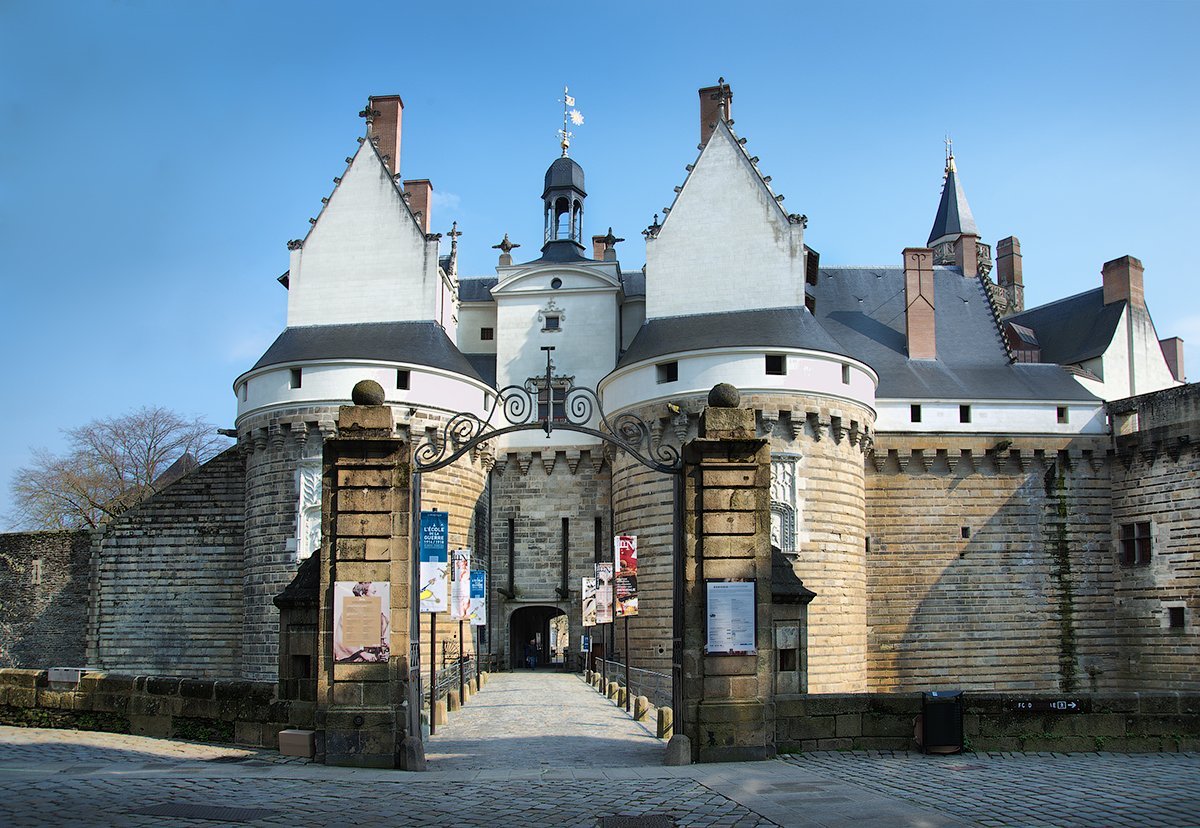
The city's great monument is the Château des ducs de Bretagne, the walled residence of the Breton dukes in the heart of the old town. Inside the fully restored castle, the Musée d'Histoire de Nantes is a serious and imaginative museum covering the city's history, with particularly strong sections on the transatlantic slave trade. A few steps away, the Cathédrale Saint-Pierre-et-Saint-Paul is one of the great late-Gothic buildings of France. Wander the adjacent Bouffay quarter for medieval lanes and good small restaurants. On the opposite side of the city centre, the Passage Pommeraye is an extraordinary 19th-century shopping arcade on three levels, widely considered one of the most beautiful in Europe. The Musée d'Arts de Nantes, recently extended and reopened, has a fine collection of 14th- to 21st-century painting.
Nantes has also become known for a quite different attraction. On a former shipyard on the Île de Nantes in the middle of the river, Les Machines de l'Île is an extraordinary urban art project that has built enormous mechanical animals — a walking elephant the size of a house, a three-storey sea-monster carousel — that visitors can ride. It is utterly strange and completely charming, and children love it. Jules Verne was born in Nantes in 1828, and the whole project is an homage to his imaginary machines. The small Musée Jules Verne in a villa overlooking the river tells his story.
Beyond the city, the Loire estuary and the Brière marshlands are a short drive west; La Baule and the Atlantic beaches are under an hour by road. The excellent TGV high-speed train links Nantes to Paris in 2 hours.