Steingaden
©
Steingaden

Steingaden

Romantic Road village known for the rococo Wieskirche and a 12th-century monastery church

Steingaden is a small village at the point where the Romantic Road crosses the Deutsche Alpenstrasse. The village itself is quiet, but two churches make it an essential stop.

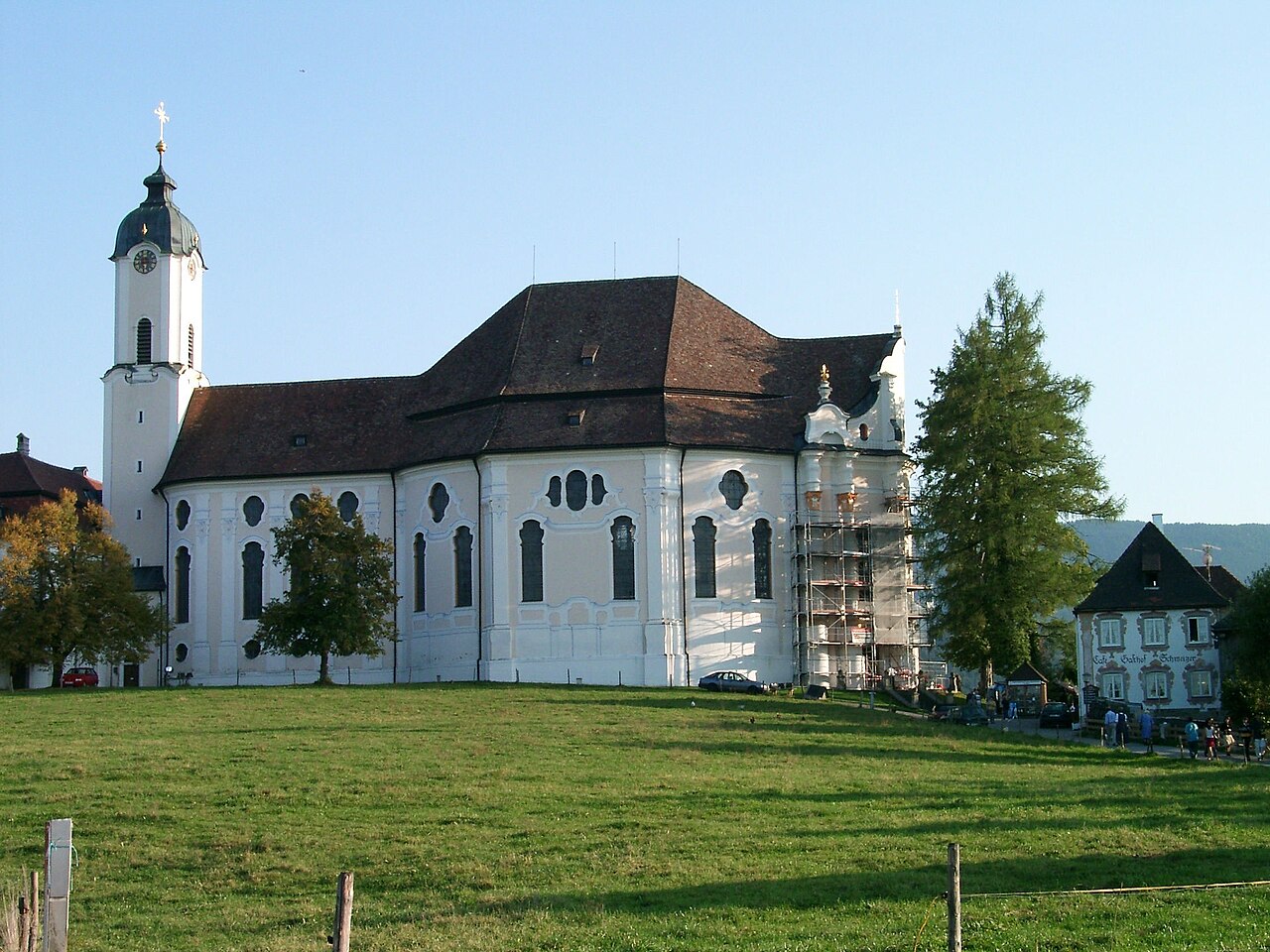
The Wieskirche, about 5 km southeast of town, is one of the finest rococo churches in the world and a UNESCO World Heritage Site. Built between 1746 and 1754 by Dominikus Zimmermann, its exterior is plain white — but the interior is an explosion of colour, gilding, and trompe-l'oeil that leaves most visitors genuinely speechless. In Steingaden itself, the 12th-century Premonstratensian monastery church of St. John the Baptist is worth a visit for its Romanesque cloister and baroque interior. Summer concerts in both churches draw appreciative audiences.

Guide

Day Trips

Steingaden sits at the junction of the Romantic Road and the Alpenstrasse, so a day in either direction opens up a great deal. South-west is Füssen and the Royal Castles of Neuschwanstein and Hohenschwangau, fifty minutes by car. North-east is the Pfaffenwinkel lake country and Landsberg am Lech. For walkers, the Ammergauer Alpen begin immediately to the south, with Oberammergau and its passion-play theatre an hour's drive away.

Guide

Getting There

Steingaden is on the B17 Romantic Road, about twenty-five kilometres north of Füssen and the same south of Schongau. The nearest train stations are at Schongau and at Peissenberg, both with infrequent regional services; there is no station in Steingaden itself. Buses run to Schongau, Füssen and Wieskirche from the village square, but service is thin outside school hours.

Most visitors arrive by car, and the village has plenty of parking. From Munich it is about ninety minutes' drive on the A95 and B23.

Guide

When to Go

The Wieskirche is open all year, but Steingaden is at its best from late May to early October, when the meadows are full of wildflowers and the Alps are reliably visible. July and August bring the coach tours; June and September are better for anyone who wants the church to themselves for ten minutes.

Winter is quiet and often very pretty, with snow on the foothills, but several of the village's restaurants and pensions close for a few weeks in November and again in early spring.