Feuchtwangen
©
Feuchtwangen

Feuchtwangen

Former Franconian imperial city on the Romantic Road, centred on a half-timbered market square.

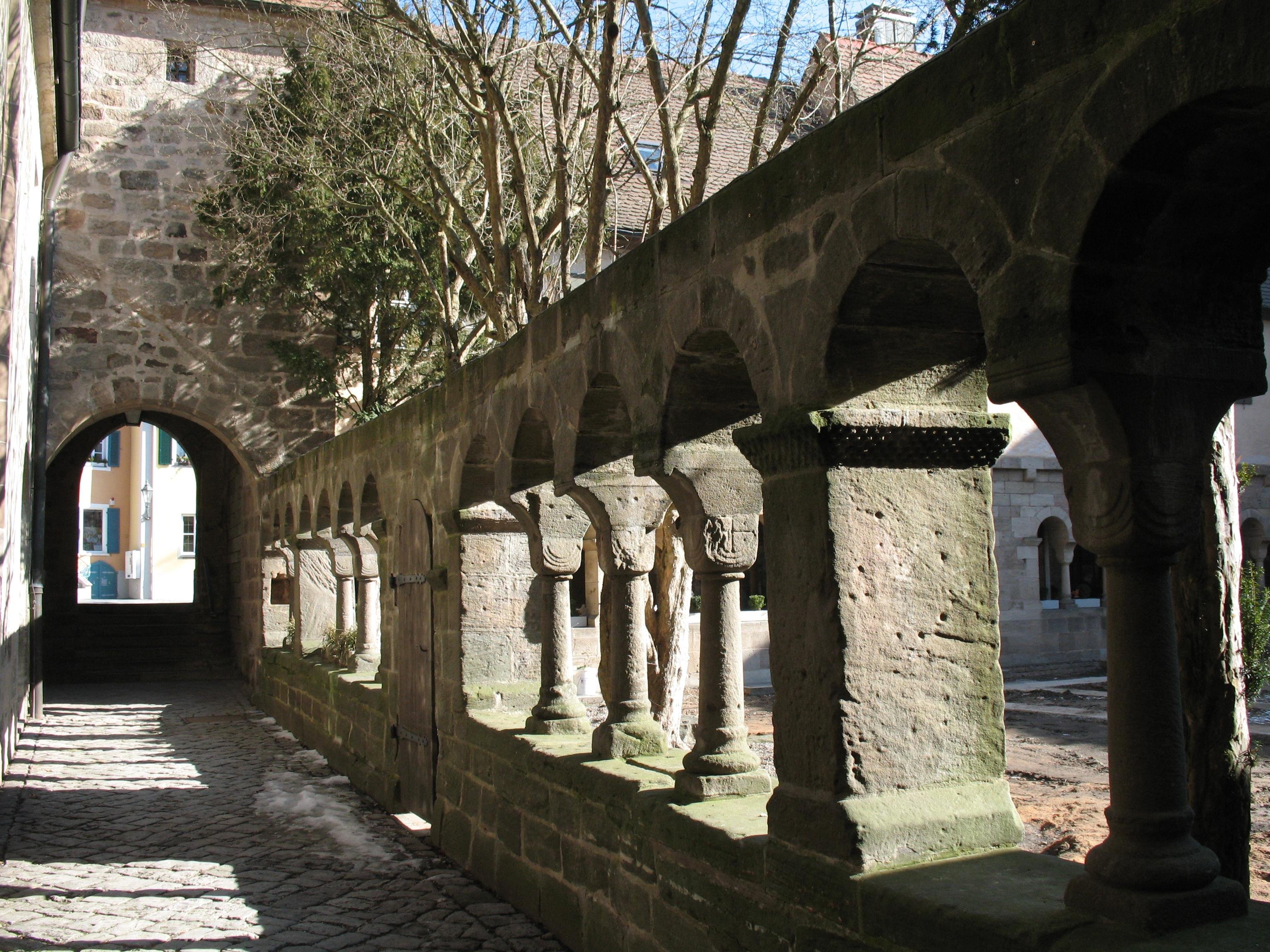
Feuchtwangen is a former free imperial city in the Wörnitz valley with a picturesque market square surrounded by half-timbered houses. The Stiftskirche contains a notable altarpiece by Michael Wolgemut, Albrecht Dürer's teacher, and next door the Romanesque cloister hosts open-air theatre and concerts in summer — the Kreuzgangspiele have been running since 1949.

The Fränkisches Museum, housed in a row of old buildings on the market square, gives a good introduction to Franconian folk art and rural life. Feuchtwangen is a quiet stop, easily combined with nearby Dinkelsbühl, which is just 15 km to the south.

Guide

Day Trips

Dinkelsbühl, 15 km south, is the obvious half-day trip: an exceptionally well-preserved walled medieval town that escaped serious damage in the Second World War. It is widely considered one of the most beautiful small towns in Germany, on a par with Rothenburg but less overrun with tour buses.

Rothenburg ob der Tauber, 35 km northwest, is the better-known walled town further up the Romantic Road. It deserves the visit despite the crowds.

The Frankenhöhe Nature Park stretches west from town, with quiet rolling country, beech woods, and a network of marked walking trails. Several routes start within walking distance of the marketplace.

Guide

Getting There

Feuchtwangen sits on the Romantic Road between Rothenburg ob der Tauber and Dinkelsbühl, about 50 km southwest of Nuremberg and 15 km north of Dinkelsbühl. The town is on the A7 autobahn, with its own exit, so it is easy to reach by car.

The nearest railway stations are at Dombühl (12 km) and Ansbach (30 km), with regional services from Nuremberg and Würzburg. Buses from Dombühl run into Feuchtwangen several times a day; outside school terms the schedule thins out, so check before relying on public transport.

The Europabus along the Romantic Road, a summer-only coach service, stops in Feuchtwangen — useful for travellers without a car.

Guide

Things to Do

The compact medieval centre of Feuchtwangen — basically the marketplace and the streets immediately around the Stiftskirche — is the main attraction. Half a day is plenty for the church, the cloister, and the Franconian Museum. In summer add an evening at the Kreuzgangspiele open-air theatre in the cloister.

Guide

When to Go

Feuchtwangen is at its best in summer, when the Kreuzgangspiele open-air theatre runs in the abbey cloister from late May to mid-August. Performances are mostly in German, but the setting under the floodlit Romanesque arcades is worthwhile in itself.

Winters are cold and the town is quiet — but it does host a small and pretty Christmas market on the marketplace, with the customary mulled wine and gingerbread stalls clustered around the fountain.

Spring and autumn are pleasant for walking the surrounding countryside, a gentle landscape of fields and woods at the edge of the Frankenhöhe Nature Park.