Pforzheim
©
Pforzheim

Pforzheim

Black Forest gateway city known as Goldstadt for its long jewelry and watchmaking tradition.

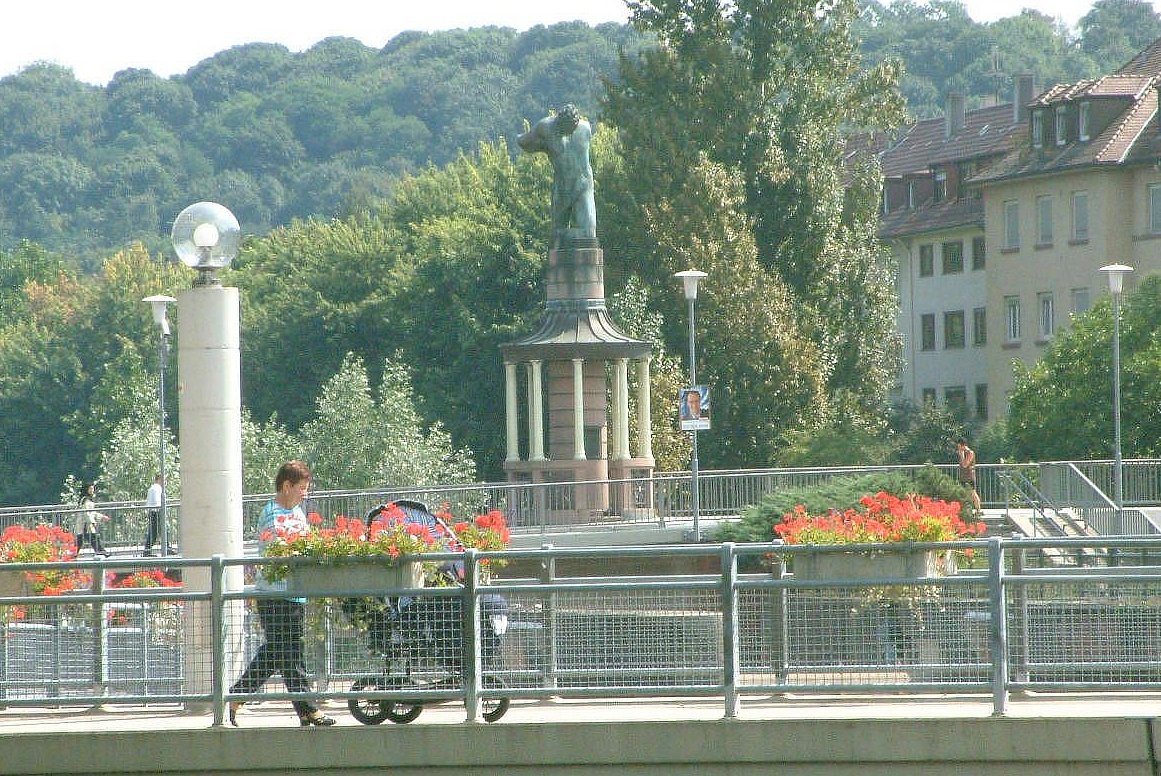
Pforzheim sits at the point where the Black Forest meets the Rhine plain, at the confluence of three rivers, and has been known for jewelry and watchmaking since the 18th century — the trade earned it the nickname "Goldstadt" (Golden City). Around a third of all European jewelry is still designed and made here, and the Schmuckmuseum (Jewelry Museum) in the Reuchlinhaus is one of the finest of its kind in the world, with a collection spanning 5,000 years from Egyptian scarabs to contemporary pieces.

The city was almost entirely destroyed in a British bombing raid on 23 February 1945 — one of the most devastating attacks of the war relative to city size — and was rebuilt in the 1950s. The rubble was piled into the Wallberg, now a memorial hill on the southern edge of the centre. There's not much old architecture left — the Schlosskirche is the rare survivor — but the museum is outstanding, the Gasometer panorama on the eastern edge is striking, and the town makes a good gateway into the northern Black Forest. The Enztal valley running south from the city is particularly good walking and cycling country.

Guide

Day Trips

Pforzheim is on the northern edge of the Black Forest (Schwarzwald) and is the natural rail and road gateway into it. The Enz valley running south is the closest worthwhile outing — Bad Wildbad, with its forest-canopy walk and thermal baths, is 40 minutes by train. The Nagold valley to the south-west reaches the half-timbered towns of Calw (birthplace of Hermann Hesse) and Nagold.

Further afield, Karlsruhe (25 minutes by ICE) has the ZKM media-art centre and one of the most ambitious modern art museums in Germany. Stuttgart is the same distance the other way, with its Staatsgalerie, Mercedes Museum, and Porsche Museum. Baden-Baden is 50 minutes by car or train, for spa towns and old-money atmosphere.

Guide

Eating Out

Pforzheim's restaurants are mostly solid rather than exciting — a reasonable mix of Swabian, Italian, and Turkish, with a few standout places for serious dining. The river-bank streets between the theatre and the Schmuckmuseum have the densest cluster.

For traditional Swabian, Kupferdächle in the rebuilt old town does Maultaschen, Spätzle, and roasts at fair prices. For something more contemporary, Restaurant Silberburg has long held a regional reputation. The Wochenmarkt (Marktplatz, Wednesdays and Saturdays) is excellent for picnic provisions — Schwarzwälder ham, local cheeses, fresh bread.

Guide

Getting There

Pforzheim is on the main rail line between Karlsruhe and Stuttgart — around 25 minutes from either city by ICE, hourly. The Hauptbahnhof is a five-minute walk from the city centre.

By road, the A8 motorway runs along the northern edge of the city. The nearest international airport is Stuttgart (STR), 50 km east, served by direct S-Bahn and bus connections. Frankfurt is around 200 km north, about 90 minutes by car or ICE plus connection.

The Enztalradweg cycle route follows the Enz river from its source in the Black Forest down to the Neckar; it passes through Pforzheim and is well-signposted for self-supported touring.

Guide

When to Go

May to September is the practical visiting season — the riverside and the Black Forest hinterland are at their best, the Alpengarten is in flower, and outdoor cafés are open. July and August can be hot in the Rhine plain (28–32°C).

December brings the Pforzheimer Weihnachtsmarkt on the Marktplatz, a smaller and quieter Christmas market than Stuttgart's or Esslingen's, but pleasant for an afternoon. 23 February sees the annual commemoration of the 1945 air raid — a sombre civic occasion with church services and a procession to the Wallberg memorial.

The Schmuckmuseum and the Gasometer are good for any weather and a sensible focus on a wet day.