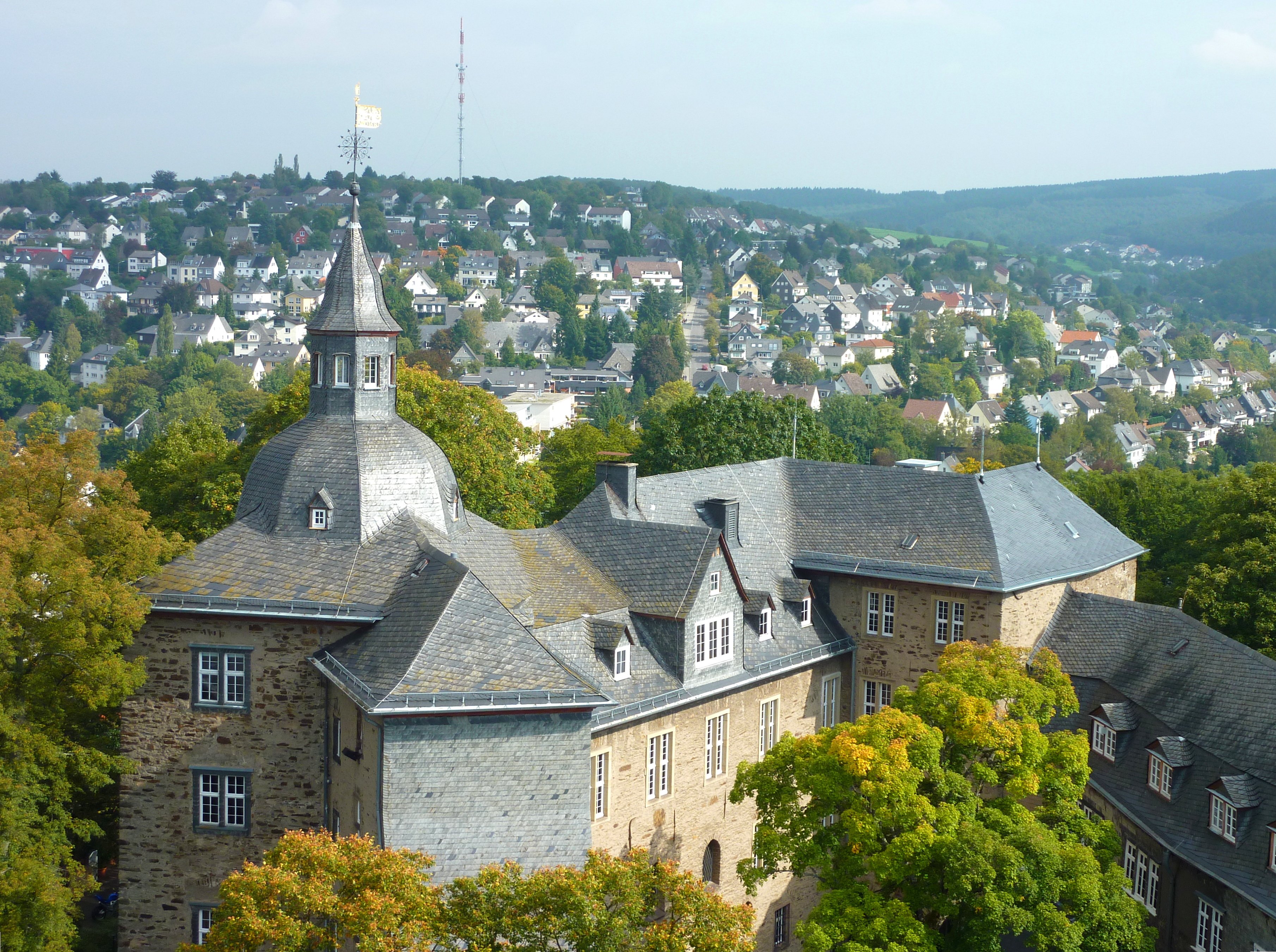
Siegen's main claim to fame is a big one: Peter Paul Rubens was born here in 1577. The city has leaned into that connection, and the Siegerlandmuseum in the Oberes Schloss (Upper Castle) holds a notable collection of Rubens paintings alongside exhibits on the region's iron-mining heritage. The hilltop castle itself, with its views over the wooded Siegerland hills, is worth the walk up.
The city sits in a valley surrounded by the densely forested hills of the Rothaargebirge, making it a good base for hiking along the Rothaarsteig trail. Below the Oberes Schloss, the Unteres Schloss (Lower Castle) anchors the old town centre with its distinctive octagonal tower. The Nikolaikirche nearby — a round church built on a Crusader model — features the golden Kroenchen crown visible from across the city.
Siegen is not a tourist town — it is a mid-sized university city with a workaday feel and limited nightlife. But the combination of the Rubens connection, two proper castles, the Hainer Stollen mine where Nazis hid artworks during WWII, and easy access to the surrounding forests gives it enough to fill a day or an overnight stop.