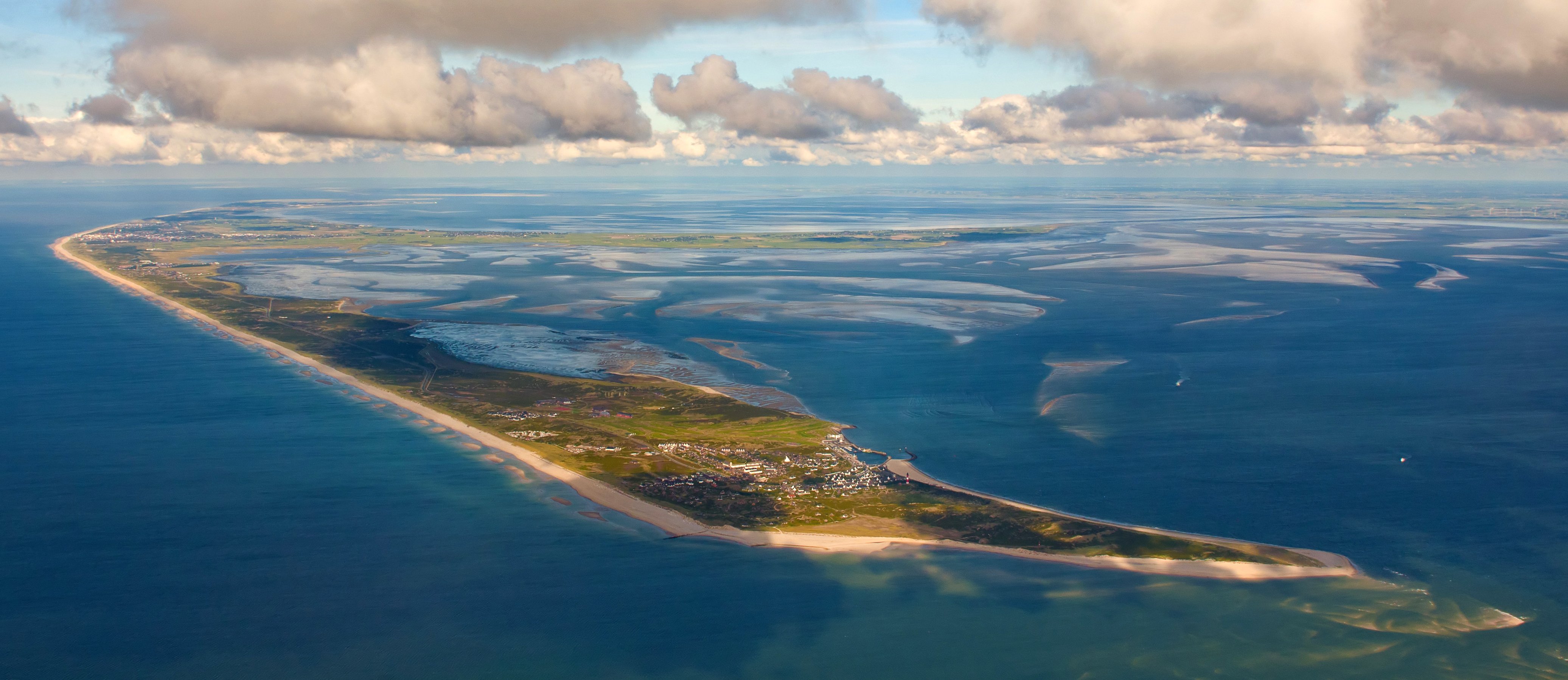
Sylt is Germany's most famous North Sea island, a long, narrow sliver of sand and dune stretching 40 kilometres off the coast of Schleswig-Holstein. Connected to the mainland only by the Hindenburgdamm railway causeway, it has been the preferred seaside retreat of Hamburg's wealthy for over a century — and the prices reflect it. Sylt is regularly called Germany's most expensive island.
The main draw is the beaches: an unbroken west coast of wide, fine sand backed by high dunes, facing the open sea and the prevailing westerly winds. Westerland, the largest town, has the boardwalk and the bustle. Kampen to the north is the fashionable end — expensive restaurants, thatched-roof houses, and the famous Rotes Kliff, a striking red cliff face that catches the evening light. List, at the island's northern tip, is windswept and quieter, with views across the tidal flats to Denmark.
The eastern side is gentler — salt marshes, mudflats, and the Wadden Sea National Park (a UNESCO World Heritage Site). Mudflat hiking tours are popular at low tide. Sylt is also one of the best windsurfing and kitesurfing spots in northern Europe, particularly around Westerland and Wenningstedt. You reach the island by car-carrying train from Niebüll or by ferry from Denmark.