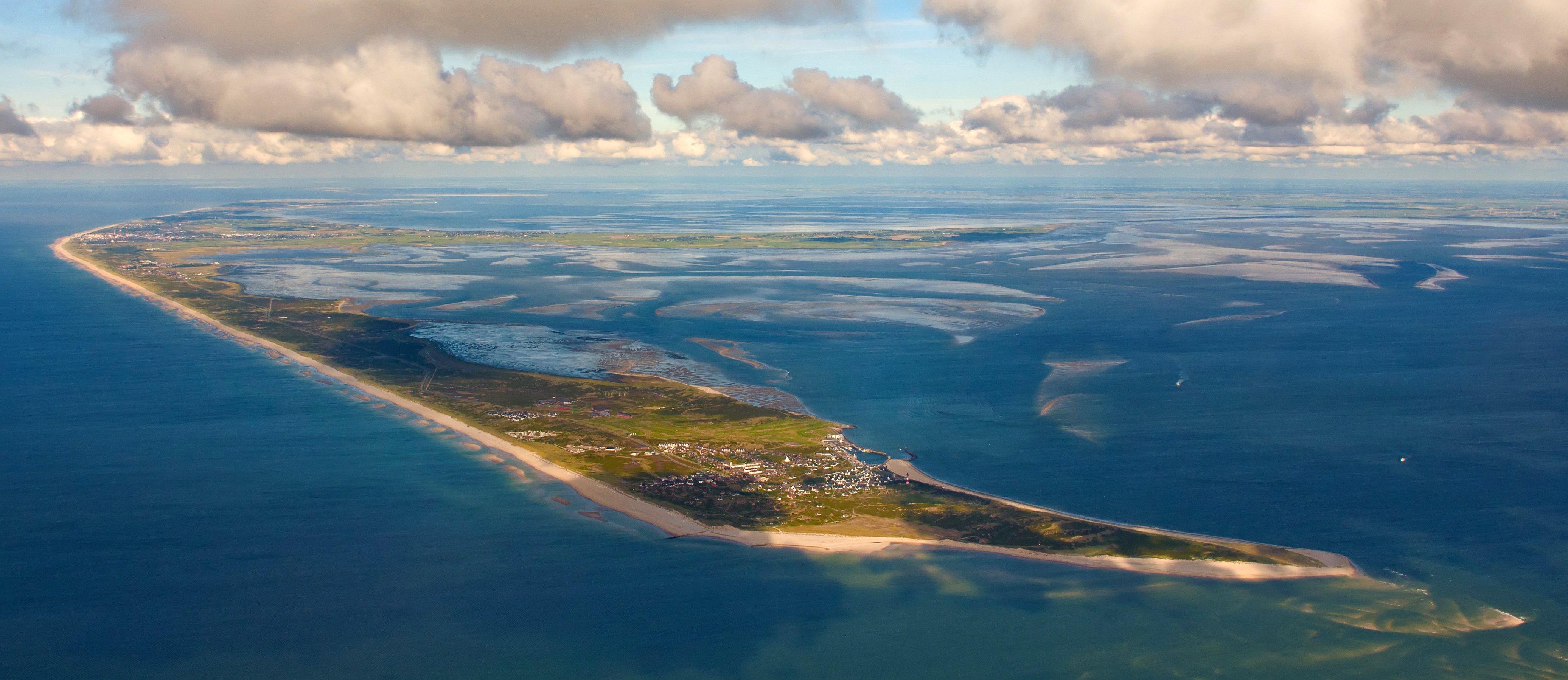
The North Frisian Islands are a chain of islands and halligen (tiny, unfenced marsh islands) off the west coast of Schleswig-Holstein, stretching from the Danish border south to the Eiderstedt peninsula. They form the heart of the Schleswig-Holstein Wadden Sea National Park, a UNESCO World Heritage Site since 2009.
Each island has its own character. Sylt is the largest and most famous — long, narrow, and fashionable, with dramatic dune landscapes and a reputation as Germany's answer to the Hamptons. Föhr is greener, quieter, and more family-oriented, with fine Frisian village churches and the excellent Museum Kunst der Westküste at Alkersum. Amrum has the Kniepsand, one of the widest beaches in Europe. Pellworm is flat farmland surrounded by sea, and Nordstrand is technically no longer an island at all, connected to the mainland by a causeway since a devastating storm surge in 1634.
The halligen are something else entirely — tiny, treeless marsh islands where a handful of farms sit on artificial mounds called warften, the only protection against winter storm surges. Visiting them feels like stepping into another century. Langeness and Hooge are the most accessible.
The Wadden Sea itself is the main attraction: a vast tidal flat teeming with birds, seals, and marine life. At low tide you can walk across the sea floor on guided mudflat hikes (Wattwanderungen), one of the most distinctive experiences in northern Germany.
The islands are part of the broader Frisian Islands archipelago, which stretches across the coasts of the Netherlands, Germany, and Denmark.