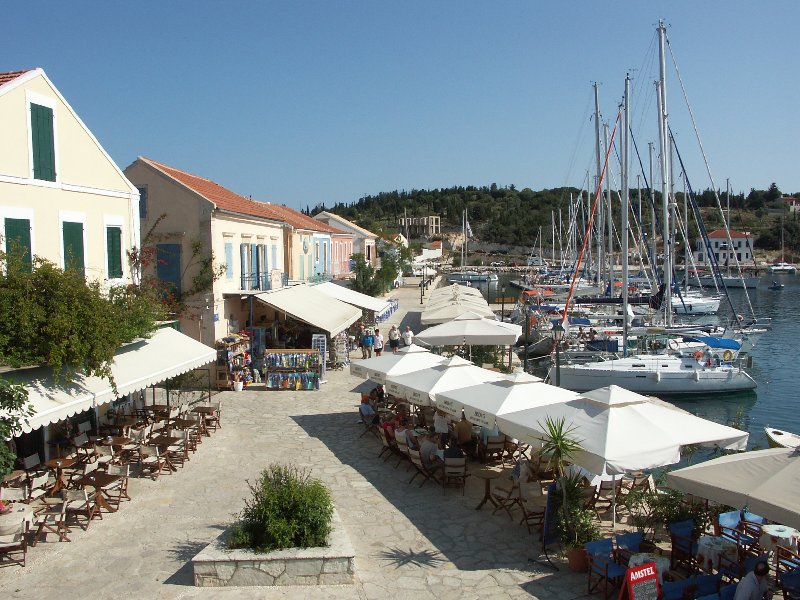
Fiskardo sits on the northernmost tip of Cephalonia, curled around a horseshoe bay. It's the island's most beautiful village, and the only settlement that came through the 1953 earthquake largely intact — its limestone bedrock absorbed the shock that destroyed everywhere else. The old stone buildings that line the Venetian harbour have been carefully restored and converted into taverns, cafes, boutiques, and small hotels.
In summer the quay fills with yachts; August brings serious money and serious crowds. The rest of the year it's quieter and more itself. From here you can arrange boat trips across to Ithaca, visible across the strait. A coastal path leads north from the harbour to the Norman lighthouse ruins — the village itself is named after Robert Guiscard, the Norman duke who died here in 1085. The small Byzantine Museum near the harbour is worth an hour for its ceramics and shipwreck finds. For food, Tassia is the most established name on the waterfront, serving good fish and the local Robola white wine.