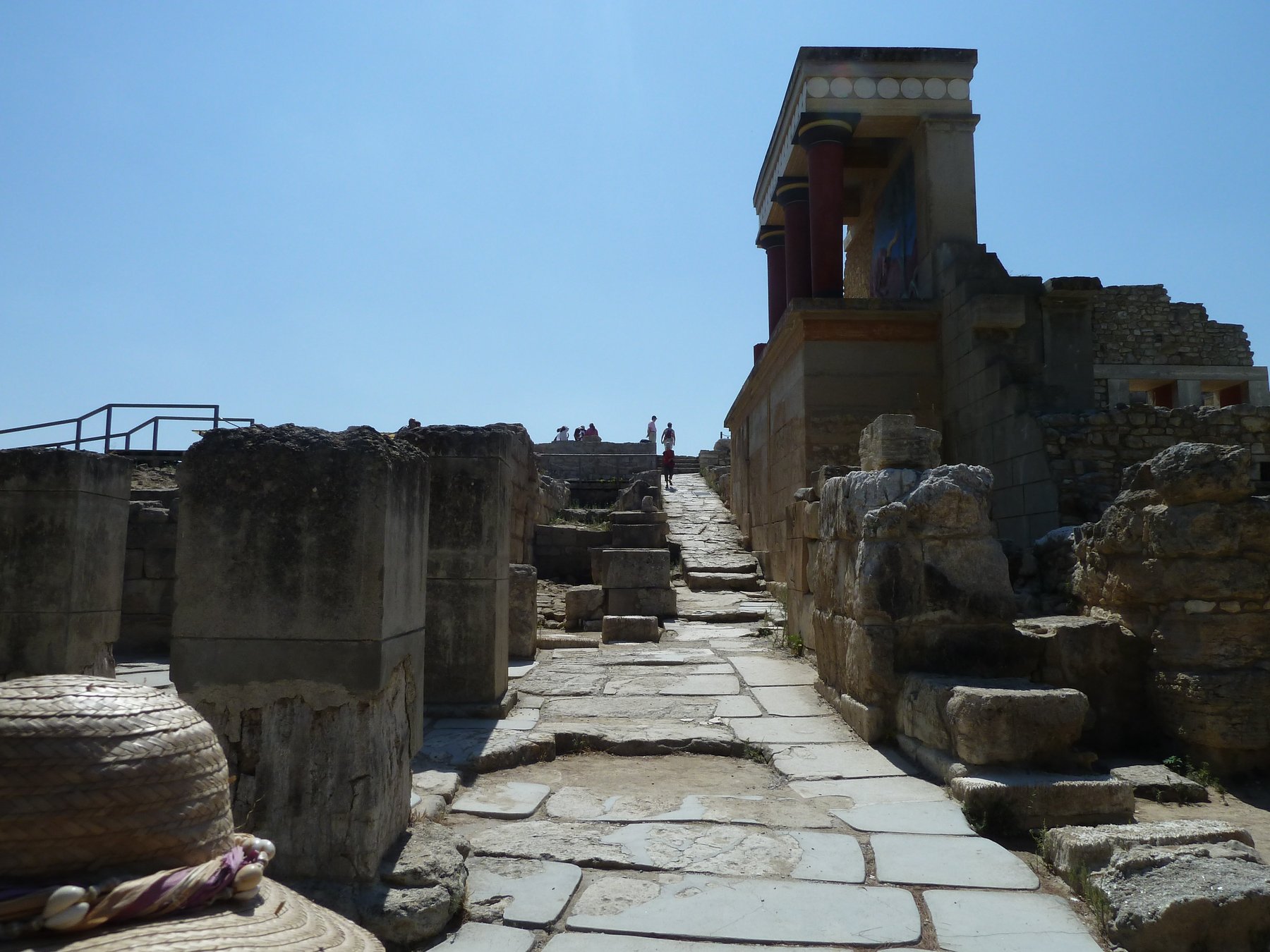
Knossos is the largest Bronze Age archaeological site on Crete and one of the most extraordinary places in the Mediterranean. This was the ceremonial heart of Minoan civilization — a culture that flourished here for roughly 1,500 years before the rest of Europe had mastered the wheel. Walking its reconstructed corridors, you get an unsettling sense of how sophisticated these people were, and how completely they vanished.
The palace complex was first built around 1900 BC and rebuilt several times after earthquakes. At its height it covered nearly 20,000 square metres, housing not just a royal family but workshops, storerooms, shrines, and an administration that tracked offerings and trade with Egypt. The sewage system — still visible — used tapered pipes to maintain water pressure, a technique not matched in Europe until the Romans. The Minoans channelled drinking water from Mount Youktas, 10km away, through an engineered system of hills and valleys.
The site you visit today is partly Sir Arthur Evans's early 20th-century reconstruction, which is controversial among archaeologists but makes the place genuinely legible to visitors. The vivid frescoes of bull-leapers and blue dolphins give the ruins a colour they would otherwise lack. Come early or late — this is among the most visited sites in Greece and the midday heat and tour groups can be overwhelming.
Knossos sits 5km south of Iraklion, easily reached by city bus from the port or the old town.