Hungarian puszta grassland of csikós horsemen, grey cattle, mirages, and the Nine-Arched Bridge
Hortobágy is the largest continuous natural grassland in Europe and a UNESCO World Heritage site. The vast, treeless puszta stretches to the horizon in every direction, broken only by mirages shimmering in the summer heat and the silhouettes of long-horned grey cattle and Racka sheep. This is where Hungarian cowboy culture lives on: the csikós horsemen still ride the plains, performing feats like the famous "Puszta Five" where a single rider stands astride two galloping horses while driving three more ahead.
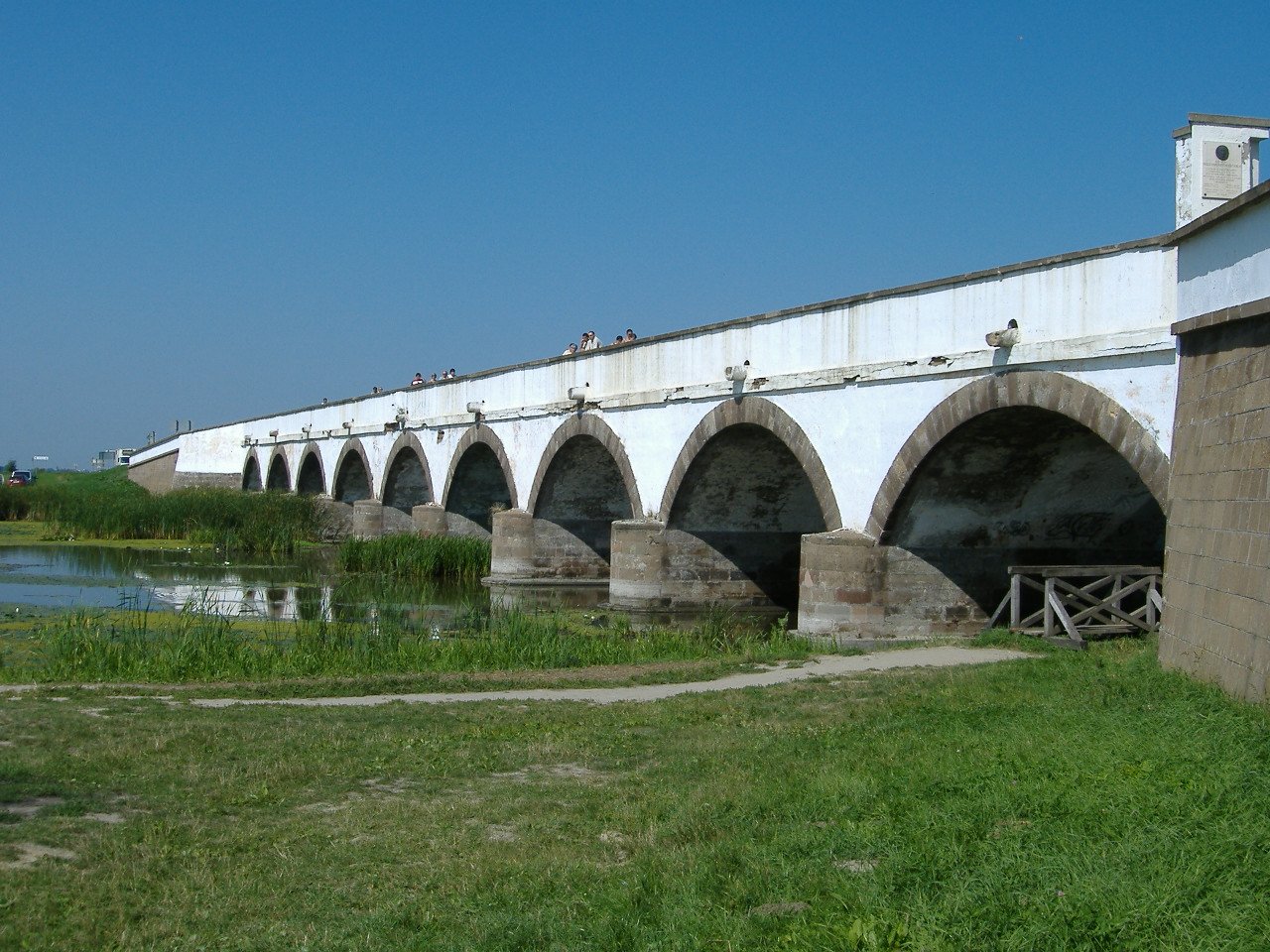
The iconic Nine-Arched Bridge, the longest stone bridge in Hungary, spans the Hortobágy River and has been the symbol of the region since the 1830s. The area around it hosts a lively annual bridge fair each August. Hortobágy National Park is one of the best birdwatching sites in Central Europe, with over 340 species recorded. In autumn, tens of thousands of common cranes gather on the fishponds before their southward migration, a spectacle that draws birders from across the continent.
Getting here is straightforward from Debrecen, about 40 kilometres to the east. There is not much in the way of a town, just a handful of traditional csárdas serving hearty stews and the national park visitor centre, which is the best starting point for exploring the grasslands on foot, by horse-drawn carriage, or on horseback.
Guide
Getting There
Hortobágy is about 40 km west of Debrecen, the nearest large city. By car, take Route 33 west from Debrecen — the drive takes about 40 minutes. From Budapest, the drive is roughly 200 km east via the M3 motorway to Debrecen, then west.
Public transport is possible but slow. Trains on the Debrecen–Füzesabony line stop at Hortobágy station, with several services a day from Debrecen (about 1 hour). The station is a short walk from the village centre and the bridge.
Guide
When to Go
Hortobágy rewards different visits at different times of year. Summer (June–August) is the peak season, when the horseman demonstrations run daily and the national park visitor centre is fully staffed. The heat on the open puszta can be intense — carry water and sun protection.
Autumn (October–November) is the best season for birdwatchers, particularly those chasing the common crane migration. Peak crane numbers at the Hortobágy fishponds typically occur in late October, with counts routinely exceeding 100,000 birds on good evenings. The landscape turns golden in September, and the heat of summer has passed.
Spring (April–May) brings the first horseman shows of the year and breeding bird activity on the grasslands. Winter is cold and windy, and most visitor facilities close or reduce hours, but the flat landscape in frost and snow has a stark beauty that some travellers find compelling.