Szeged is Hungary's third-largest city and the unofficial capital of the Great Southern Plain. It sits on the banks of the Tisza River, close to the Serbian border, and has a distinctly different feel from Budapest -- sunnier, more relaxed, and very much a university town. The population swells by tens of thousands during term time, which keeps the cafe and bar scene lively.
The city was almost entirely destroyed by a catastrophic flood in 1879 and rebuilt from scratch, which is why it looks so uniform and grand for a provincial Hungarian city. The broad ring boulevards, the eclectic Dóm Square with its twin-towered Votive Church, and the elegant Art Nouveau buildings all date from this reconstruction. The Open-Air Festival (Szegedi Szabadteri Jatekok), held in Dóm Square each summer, is one of Hungary's premier cultural events, with opera, theatre, and concerts performed against the backdrop of the church facade.
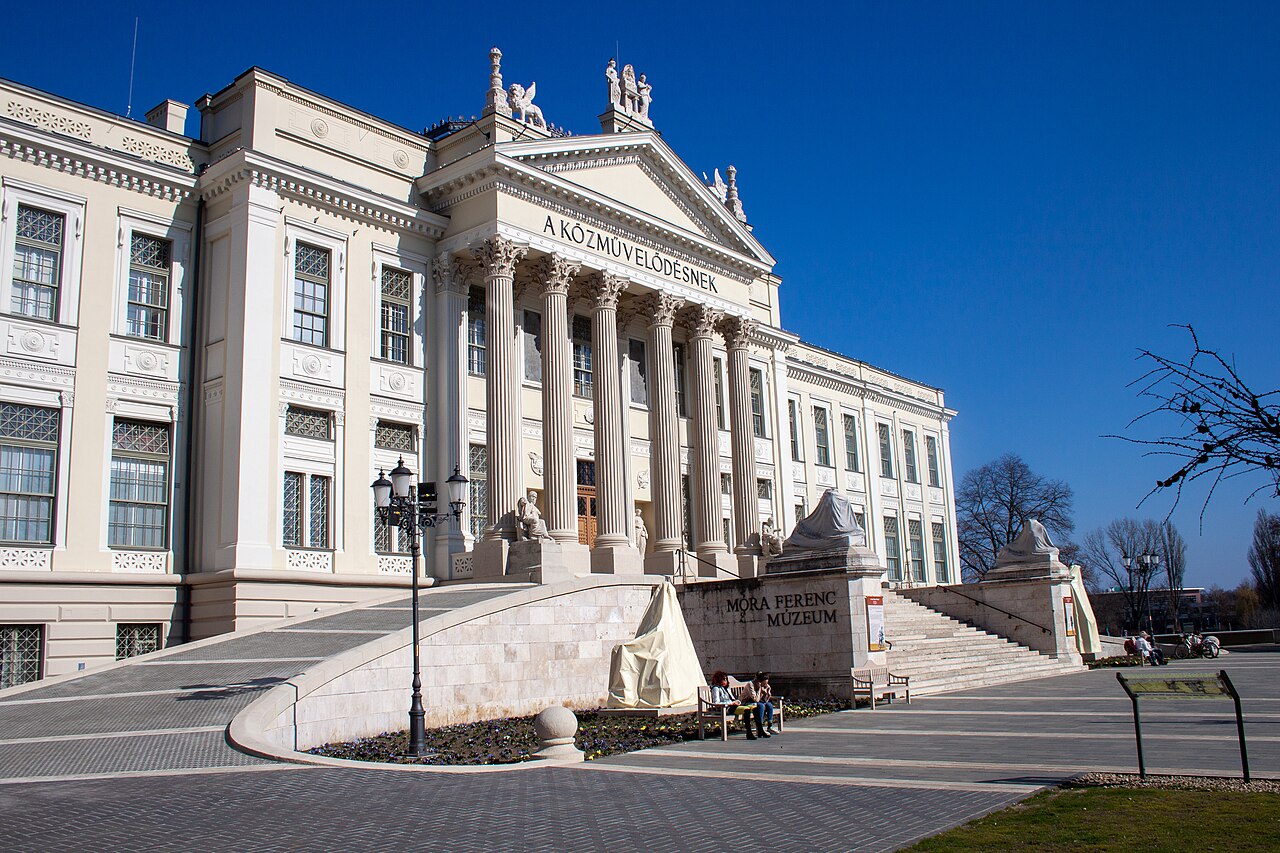
The Szeged Synagogue on Jósika utca is one of the most beautiful in Hungary, a 1903 Art Nouveau building with a remarkable interior of azure blues and gilded detail. The oldest surviving structure in the city is the Dömötör Tower, a Romanesque remnant dating to the 12th century, now incorporated into the new votive church complex. The Móra Ferenc Museum on the Tisza riverbank is the regional museum, strong on archaeological finds from the Avar period.
Szeged is also famous for two things you can eat: Pick salami, made here since 1869, and Szeged fish soup (halaszle), a fiery paprika-laden dish that is the city's culinary signature and a point of fierce local pride.