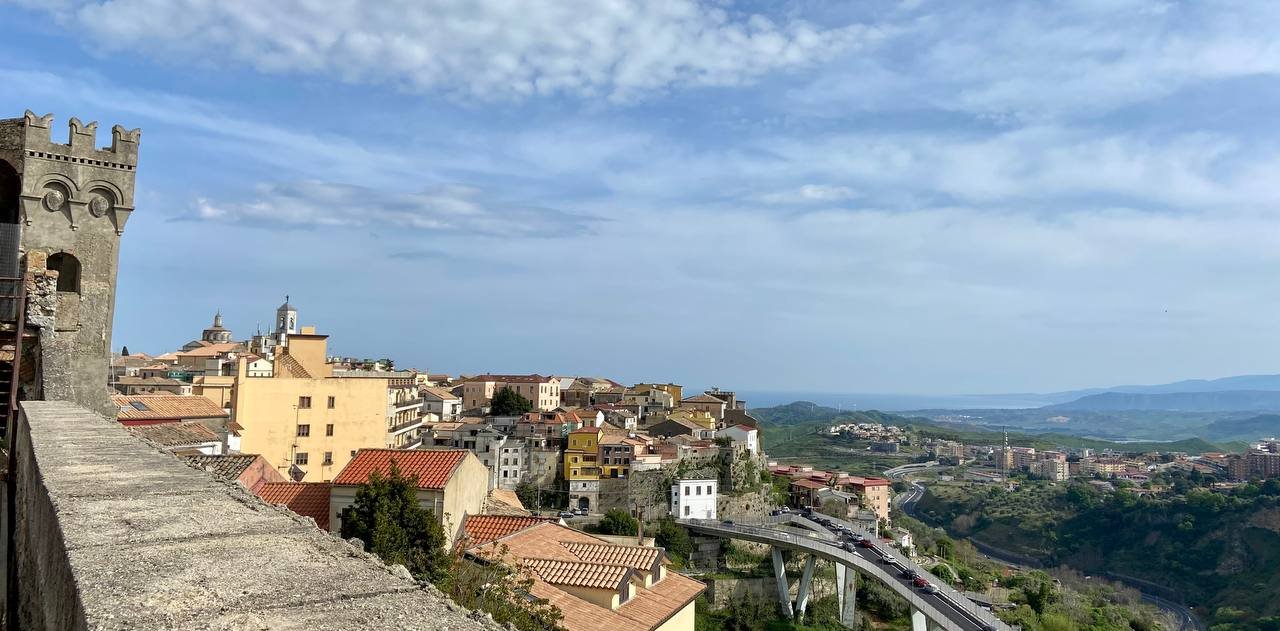
Catanzaro is the capital of Calabria, sitting on a dramatic ridge above the Fiumarella gorge in the toe of the Italian boot. The city is bisected by the deep valley and reconnected by the massive Viadotto Morandi — one of the highest concrete viaducts in southern Italy, completed in 1960. A funicular railway dating from 1929 still carries residents between the upper historic centre and the lower commercial quarter, one of the few surviving urban funiculars in the south.
The old town was built over three hills in Byzantine times. From the 11th century Catanzaro was the lace capital of Europe, producing the finest silk and linen for the Vatican and for merchants who came from across the continent. A devastating earthquake in 1783 wiped away most of the ancient buildings; a second in 1832 completed what the first had started. The Cathedral was rebuilt in the 1950s but retains important paintings and silver from the earlier church. The Museo Provinciale holds Magna Graecia archaeology and Byzantine religious art that explain the region's deep, layered history.
Catanzaro is the birthplace of Nobel Prize winner Renato Dulbecco (medicine, 1975) and of Mimmo Rotella, the artist who invented décollage. The beach town Catanzaro Lido, five kilometres south, has a long promenade on the Ionian Sea.