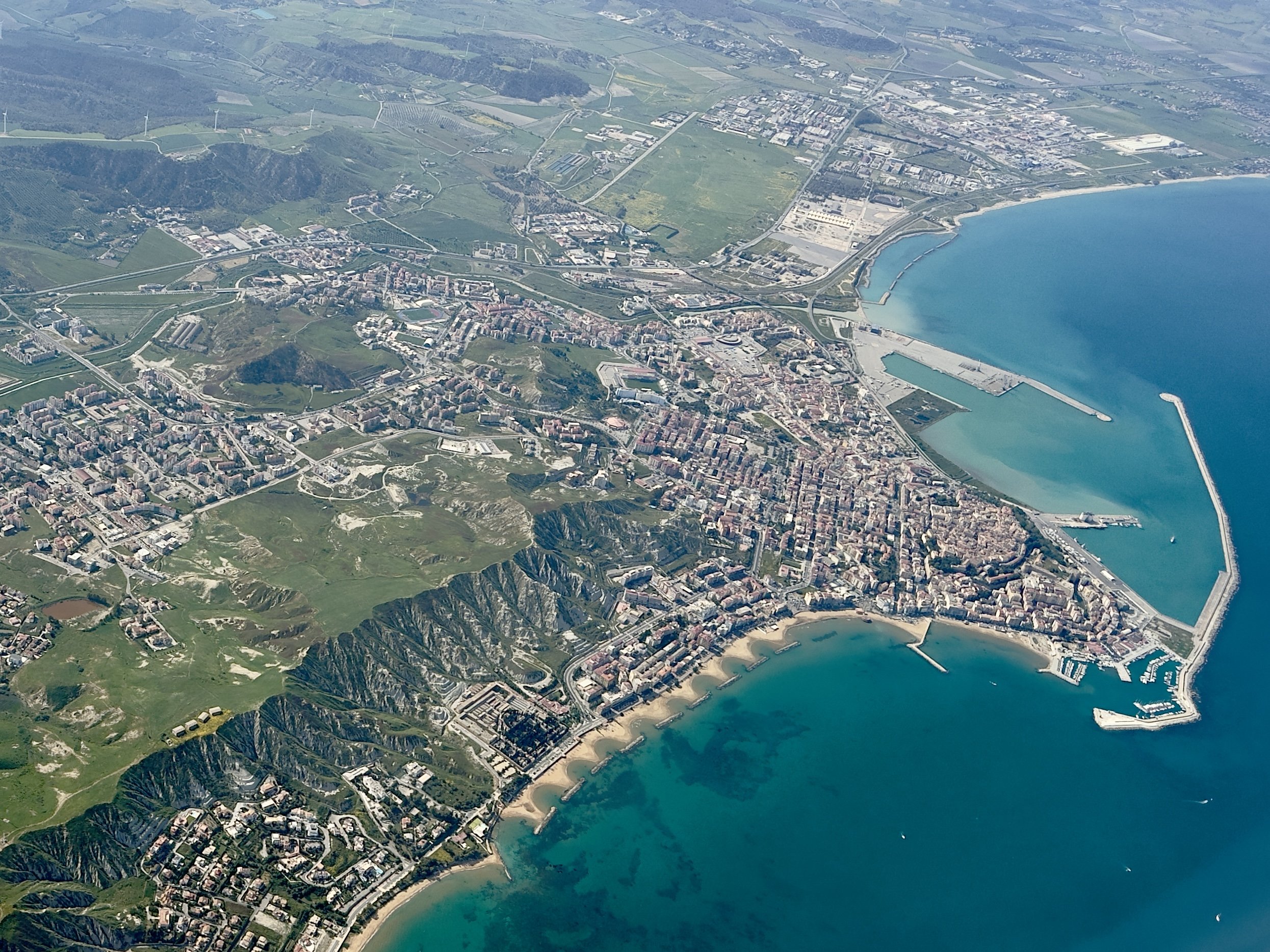
Crotone sits on the ball of Italy's boot, facing the Ionian Sea in a part of Calabria that most travellers skip entirely. That is their loss. The city was founded around 710 BC as the Greek colony of Kroton, and for two centuries it was one of the most powerful cities of Magna Graecia — a place where the mathematician Pythagoras ran his philosophical school and where Olympic athletes were trained to an almost fanatical degree. The ancient city produced more Olympic champions than any other Greek colony, a fact the locals have not forgotten.
Modern Crotone is a working city of around 65,000 people, rough around the edges but with an honest, unpretentious character. The old town climbs a headland above the port, its Spanish-era castle visible from a long way out to sea. There is a genuinely excellent archaeological museum, one of the best in southern Italy, that puts the scattered fragments of the ancient world back into context.
Ten kilometres south of the city, Capo Colonna is the real reason to come. A single Doric column stands on the promontory — the last remnant of a vast temple to Hera Lacinia that once had 48 columns and was the religious centre of all Magna Graecia. Hannibal came here to engrave a record of his campaigns in bronze. The walk to the cape along the coast is beautiful, and the marine protected area just offshore has clear water and good snorkelling.
Crotone is not set up for tourism in any slick sense, which is part of its appeal. The food is straightforwardly Calabrian — 'nduja, swordfish, cipolla di Tropea onions, and strong red wines from the surrounding hills.