Paestum
©
Paestum

Paestum

Ancient Greek city in Campania where three Doric temples stand almost complete in open fields.

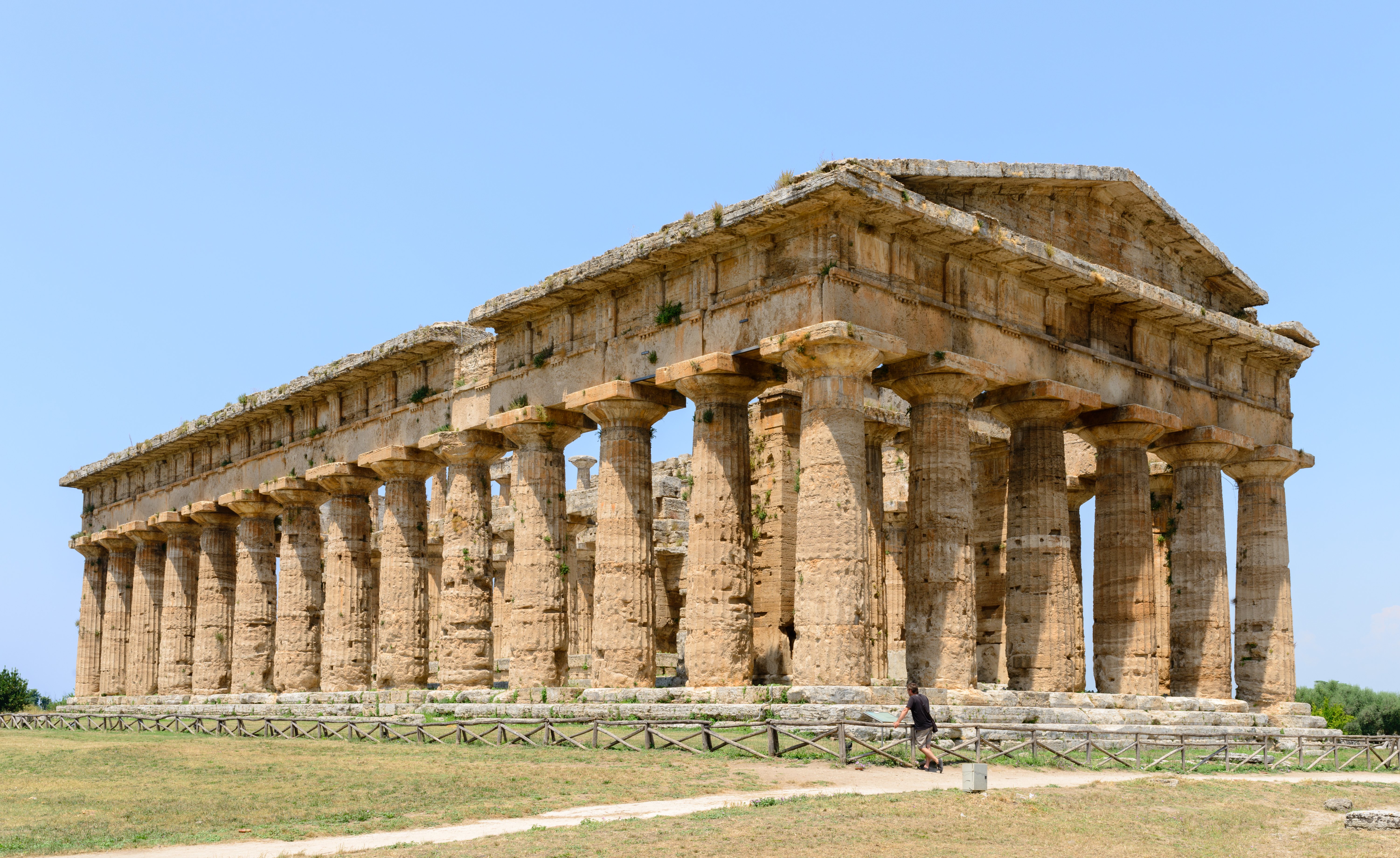
Paestum is an ancient city in the southern Campania plain, about 85 km south of Naples. It was founded as a Greek colony around 600 BC (originally called Posidonia), flourished under Rome, and was then gradually abandoned as the surrounding plain became malarial. The result is that three remarkably complete Doric temples survive in open fields, with little around them to obscure the view.

The temples are among the finest Greek structures outside Greece itself. The Temple of Neptune (actually dedicated to Hera, despite its name), built around 460 BC, is the best preserved — its columns and entablature are almost complete, and the interior is accessible. The Basilica (530 BC), the oldest, stands alongside it, its squat proportions and heavy capitals dating it to the early Archaic period. The Temple of Ceres (510 BC) stands separately to the north and was used as a Christian church in the early medieval period, which may explain its better preservation.

The site museum, across the road from the temples, holds the extraordinary Tomb of the Diver (480 BC) — a set of painted tomb slabs with a unique figurative scene, the only surviving Greek fresco of this period in Italy.

Paestum sees fewer visitors than Pompeii and the experience is correspondingly more peaceful. Combine it with a night on the Cilento coast if you can.

Guide

Getting There

By train: Trenitalia runs trains from Salerno to Paestum station (about 45 minutes). From Naples, take the train to Salerno first (about 40 minutes from Napoli Centrale), then change. The station at Paestum is a short walk from the archaeological site.

By car: From Naples take the A3 motorway south towards Salerno, then follow signs for Battipaglia and Paestum. The drive is about 1 hour 30 minutes. From Salerno, about 40 minutes south along the SS18.

By bus: CSTP buses from Salerno serve Paestum and the Cilento coast. Check schedules locally as frequency varies by season.

Guide

Things to Do

Three Doric temples standing in open fields with no city around them — that is Paestum's core experience, and it is unlike almost anything else in Europe. When you arrive, the scale takes a moment to register. These are not ruins in the usual sense: the columns are upright, the entablatures largely intact, and in the case of the Temple of Neptune you can walk between the columns into the interior. The plain around them is flat and quiet, with mountains to the east and the sea just out of sight to the west.

Visitor numbers here are a fraction of what you'd find at Pompeii. On a weekday morning in April you may have the southern temple complex — the two great temples side by side — nearly to yourself. The museum across the road deserves at least two hours on its own; it holds the Tomb of the Diver, one of the most remarkable objects in all of Italian archaeology, along with the metopes, sculpture, and painted tomb slabs that give the temples their fuller context.