Europe > Italy > Campania > Naples
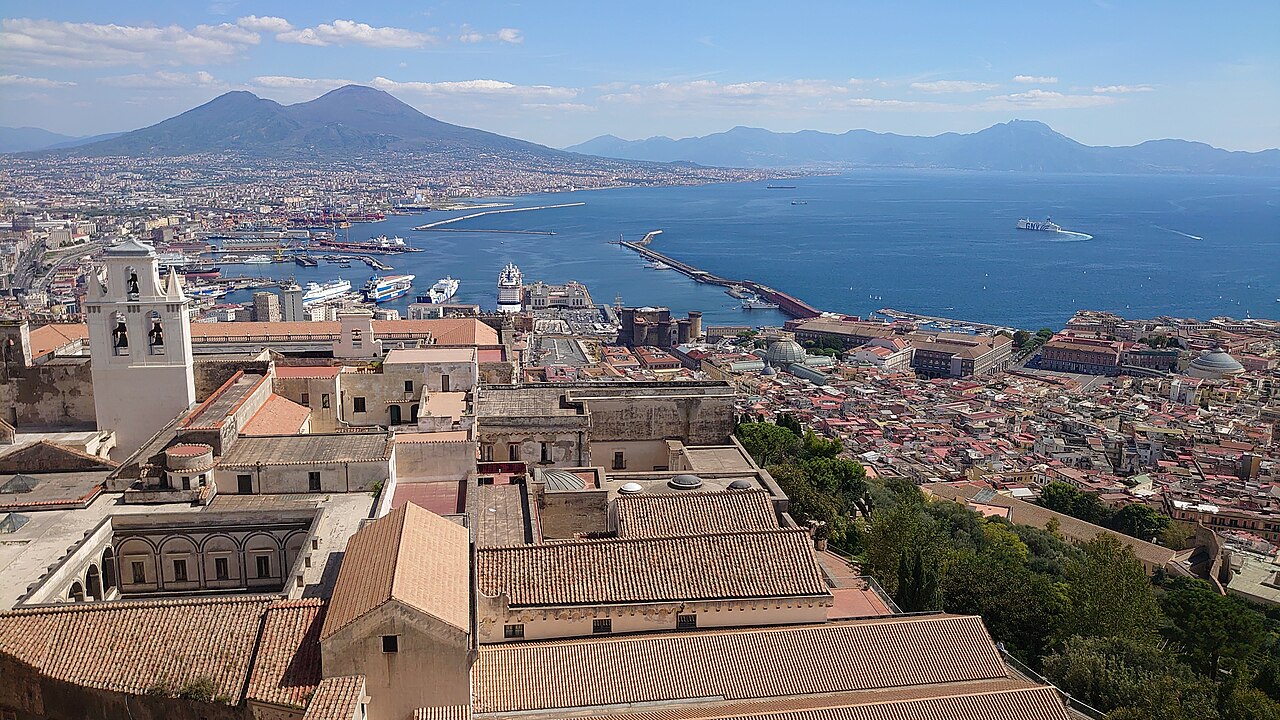
Naples is Italy's most overwhelming city — chaotic, filthy in patches, extraordinarily beautiful, and unlike anywhere else in the country. It sits on one of the most spectacular natural settings in the Mediterranean: a great bay framed by Mount Vesuvius to the east and the volcanic hills of the Phlegraean Fields to the west. The city has been inhabited continuously for nearly three thousand years and it shows, in layers.
The historic centre is dense with churches, palaces, and underground Greek-Roman streets. Neapolis was founded as a Greek colony around 600 BC, conquered by Rome in 327 BC, and coveted by every subsequent power in the Mediterranean — Byzantine, Norman, Angevin, Aragonese, Spanish, Bourbon. This succession left the city with an improbable concentration of medieval churches, baroque chapels, and Bourbon palaces. The centre is a UNESCO World Heritage Site, and it rewards wandering: turn into a side street and you might find a 14th-century church, a shrine made of street lamps and plastic flowers, or a man selling sfogliatelle from a crate.
The National Archaeological Museum holds the greatest collection of Roman artefacts in the world, most of it excavated from Pompeii and Herculaneum. It is the single most important reason to spend time in Naples. The Sansevero Chapel contains the Veiled Christ, one of the most technically astonishing sculptures ever made. Castel dell'Ovo at the harbour and Castel Nuovo near the port are both worth walking through for the views alone. Below Via dei Tribunali, the Naples Underground offers 40 metres of Greek and Roman tunnels. The Pio Monte della Misericordia on the same street houses Caravaggio's greatest painting. The Fontanelle Cemetery in Materdei and the Catacombs of San Gennaro at Capodimonte represent the city's extraordinary relationship with its dead. Castel Sant'Elmo and the Certosa di San Martino on the Vomero hill offer the best views in the city.
Naples is also the birthplace of pizza, and Neapolitan pizza is a serious thing — made with a specific dough, cooked in a wood-burning oven, eaten immediately. Any pizzeria with a queue of locals is probably doing it right. The street food is excellent too: fried pizza, fried fish, pastries from the pasticcerie on every corner.
The city's crime reputation is somewhat overstated but not entirely unfounded. Pick-pocketing in the historic centre and on public transport is common. Leave flashy jewellery at home, keep your bag closed, and be alert around Piazza Garibaldi. Most visitors experience nothing worse than aggressive souvenir vendors.
Pompeii and Herculaneum are both accessible by the Circumvesuviana rail line from Piazza Garibaldi. The Amalfi Coast, Capri, and Ischia are all reachable by ferry from Molo Beverello.