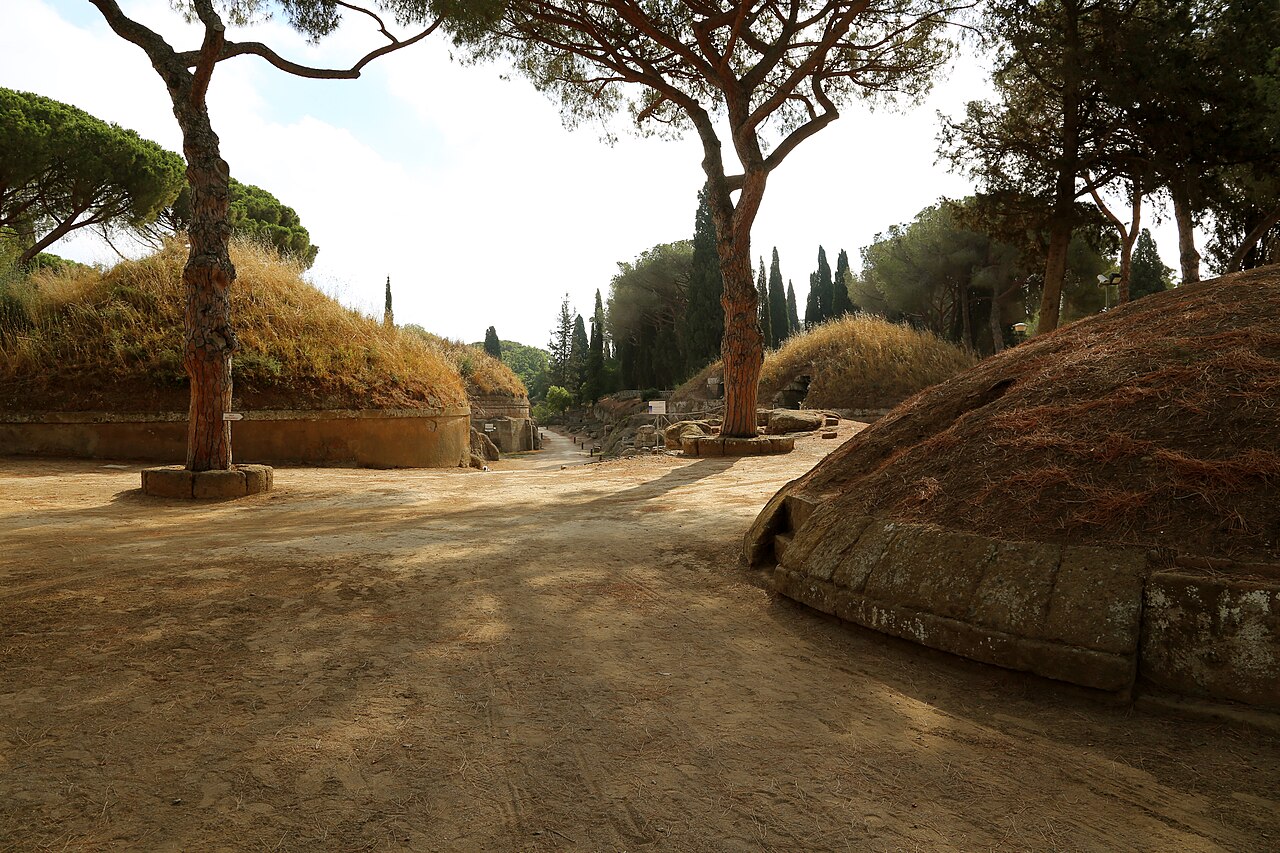
Cerveteri, ancient Caere, is one of the most important Etruscan sites in Italy and well worth the short detour from Rome or Tarquinia. The Necropoli della Banditaccia — a vast city of the dead — is where most of the Etruscan objects now filling the museums of Rome and beyond were excavated.
The necropolis is unlike any other ancient site in Italy. It was planned on the same principles used by the Etruscans for their cities of the living: laid out in streets, with tomb-houses that have doorways, windows, and rooms carved from the tufa rock. Walking through it with a torch is an extraordinary experience — the chambers are cool and quiet, the carvings remarkably intact. Several hours can easily pass. The site covers about three kilometres and involves a fair amount of climbing.
The Regolini-Galassi tomb, one of the most significant Etruscan burial discoveries ever made, is within the necropolis, though its extraordinary contents — golden jewellery, bronze furniture, a ceremonial chariot — were taken to Rome and the Vatican after the 1836 excavation. The National Archaeological Museum in the town's Castello Ruspoli holds what remained.
Bring a good torch. The site has no artificial lighting inside the tombs.