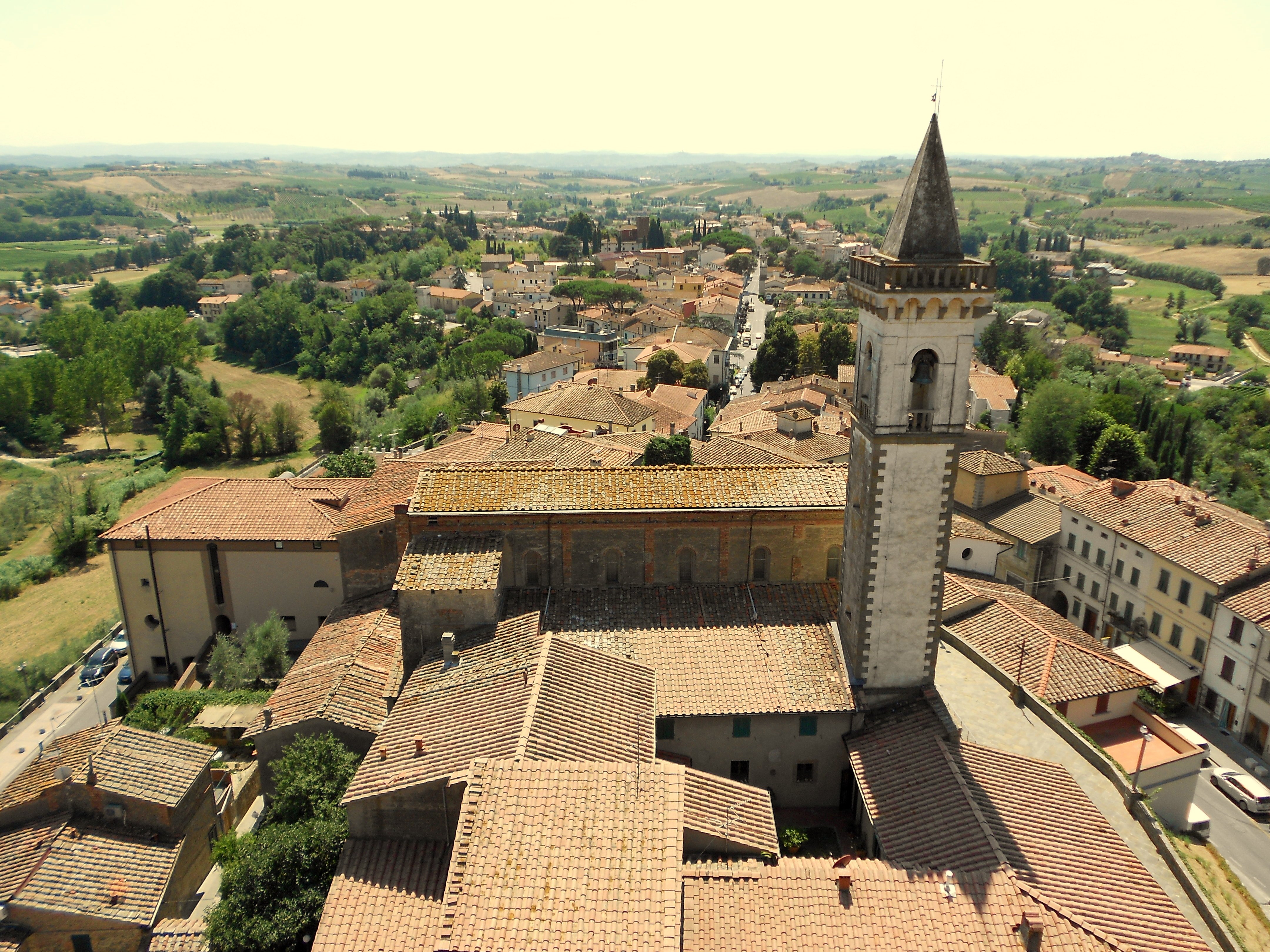
Vinci is a small hilltop town in the Empolese Valdelsa, about 40 kilometres west of Florence, and it owes its fame entirely to one man: Leonardo da Vinci was born here on 15 April 1452. The town has embraced this legacy with two dedicated museums — the Museo Leonardiano in the medieval castle and the Casa Natale di Leonardo at the actual farmhouse where he was born — and together they make a compelling half-day stop for anyone traveling between Florence and Pisa or Lucca. A third option, the private Museo Ideale Leonardo da Vinci, approaches him more broadly as thinker and artist and is worth combining with the others.
Beyond Leonardo, Vinci sits on the southern slopes of Montalbano, a forested ridge that separates the Arno valley from the Valdinievole. The agricultural landscape around the town has changed little in centuries: terraced olive groves, Chianti vineyards, and small hilltop villages connected by a network of footpaths and cycle tracks. Path 14 (the Strada Verde) runs from the town center up to Leonardo's birthplace in about an hour's walk through the olive trees — a genuinely pleasant way to link the two museums.
The town itself is compact and easy to explore on foot. The Castello dei Conti Guidi dominates the center, its medieval tower visible from the valley below. Around it, the streets are quiet and unpretentious — this is not a tourist trap, and most visitors come for the morning, see the museums, eat lunch, and leave. That's a reasonable plan. If you want to stay longer, the footpath network gives you reason to.