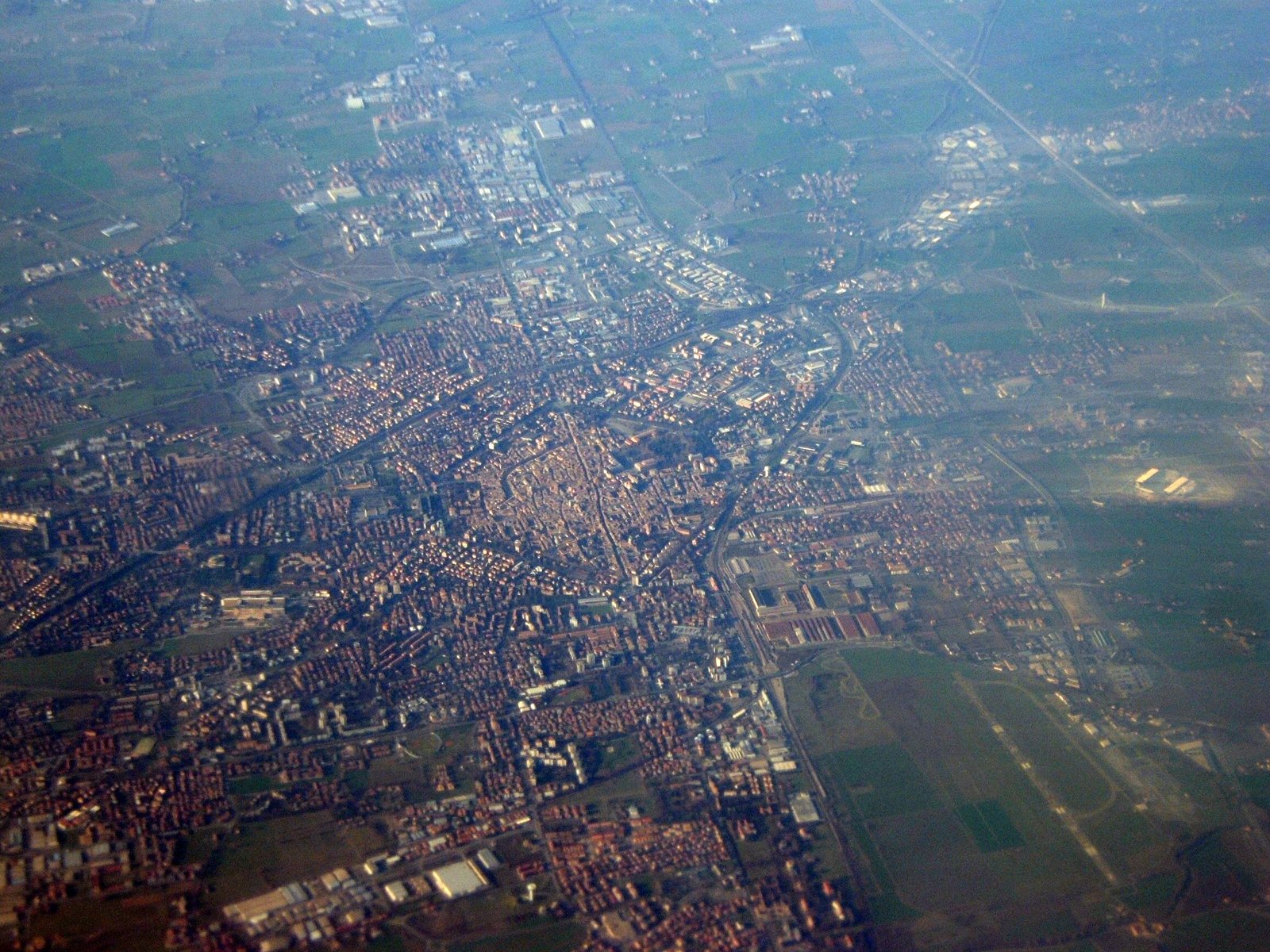
Reggio Emilia is one of the quieter triumphs of the Po Valley — prosperous, cultured, and almost entirely overlooked by tourists who rush straight from Bologna to Milan. The city claims a central place in Italian history: it was here, on 7 January 1797, that the tricolour flag was officially adopted as the symbol of a unified Italian state. The Sala del Tricolore, still in use as the city's council chamber, marks the spot.
The historic centre is anchored by a pair of interlocking piazzas. Piazza del Duomo holds the Romanesque cathedral and its detached baptistery, while Piazza del Monte, flanked by Gothic and Renaissance civic palaces, gives the city a ceremonial grandeur out of proportion to its modest size. A short walk away, the Teatro Municipale Valli — one of northern Italy's finest opera houses — faces the city's public gardens. The Basilica di San Prospero, set on its own square, is worth seeking out for its columns flanked by Renaissance lions.
Reggio Emilia is also the birthplace of an educational philosophy known worldwide as the Reggio Emilia approach to early childhood learning. The Fondazione Reggio Children Centro Loris Malaguzzi preserves the work of the educator Loris Malaguzzi, whose ideas transformed early years education globally. For contemporary art, the Collezione Maramotti — assembled by the founder of the Max Mara fashion house — is one of Italy's most serious private collections of post-war and contemporary work.
The city sits at the heart of Parmigiano-Reggiano country — the cheese is named after the two cities that share the production zone. Markets and food shops here carry the real thing aged at its source. Reggio makes a sensible base for exploring the towns of Emilia-Romagna and the Apennine foothills to the south.