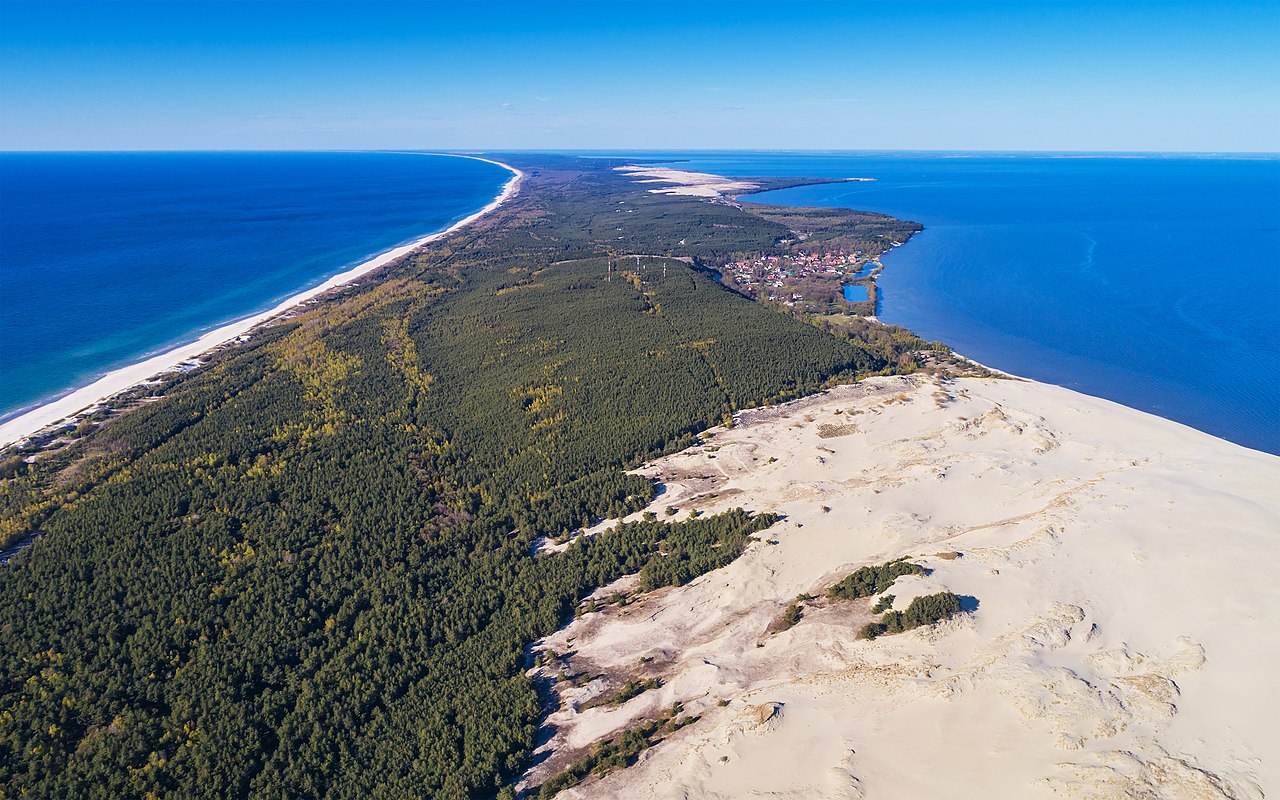
Nida is the kind of place that makes you wonder why it is not more famous. This tiny fishing village sits near the southern tip of the Curonian Spit, a UNESCO-listed sand peninsula that stretches 98 kilometres between the Lithuanian mainland and Kaliningrad. The spit itself is extraordinary, a narrow ribbon of enormous sand dunes, pine forest, and lagoon that feels like it belongs in the Sahara rather than the Baltic.
The Parnidis Dune, just south of the village, rises 52 metres above the lagoon and offers views across to Russia on clear days. Walking up at sunset, with the sand glowing amber and the lagoon spreading out below, is one of the most beautiful experiences in the Baltic states. The dune is still shifting, and the sundial sculpture near the top gives it an almost mystical quality. Be warned that the wind up there can be fierce, even in summer.
Nida itself is a village of painted wooden fishermen's cottages, most now converted to guesthouses and restaurants. Thomas Mann spent summers here in the 1930s and his house is now a small museum overlooking the lagoon. The local smoked fish is outstanding, sold from little stalls along the waterfront, and the amber you will see in every shop window is the real thing, washed up on these beaches for centuries. The village has a relaxed, slightly bohemian atmosphere that draws Lithuanian artists and weekenders from Vilnius. The old ethnographic cemetery on the village edge preserves a haunting collection of carved wooden krikštai grave markers found nowhere else.
Getting here means either driving down the spit from Klaipėda or taking the ferry across the lagoon. The spit has an entrance fee for vehicles, and parking in summer can be tight. Cycling is the best way to explore, with a paved path running most of the length of the spit through pine forest. You can easily ride north to Juodkrantė and its Hill of Witches, a trail lined with wooden folk sculptures that is strange and charming in equal measure.