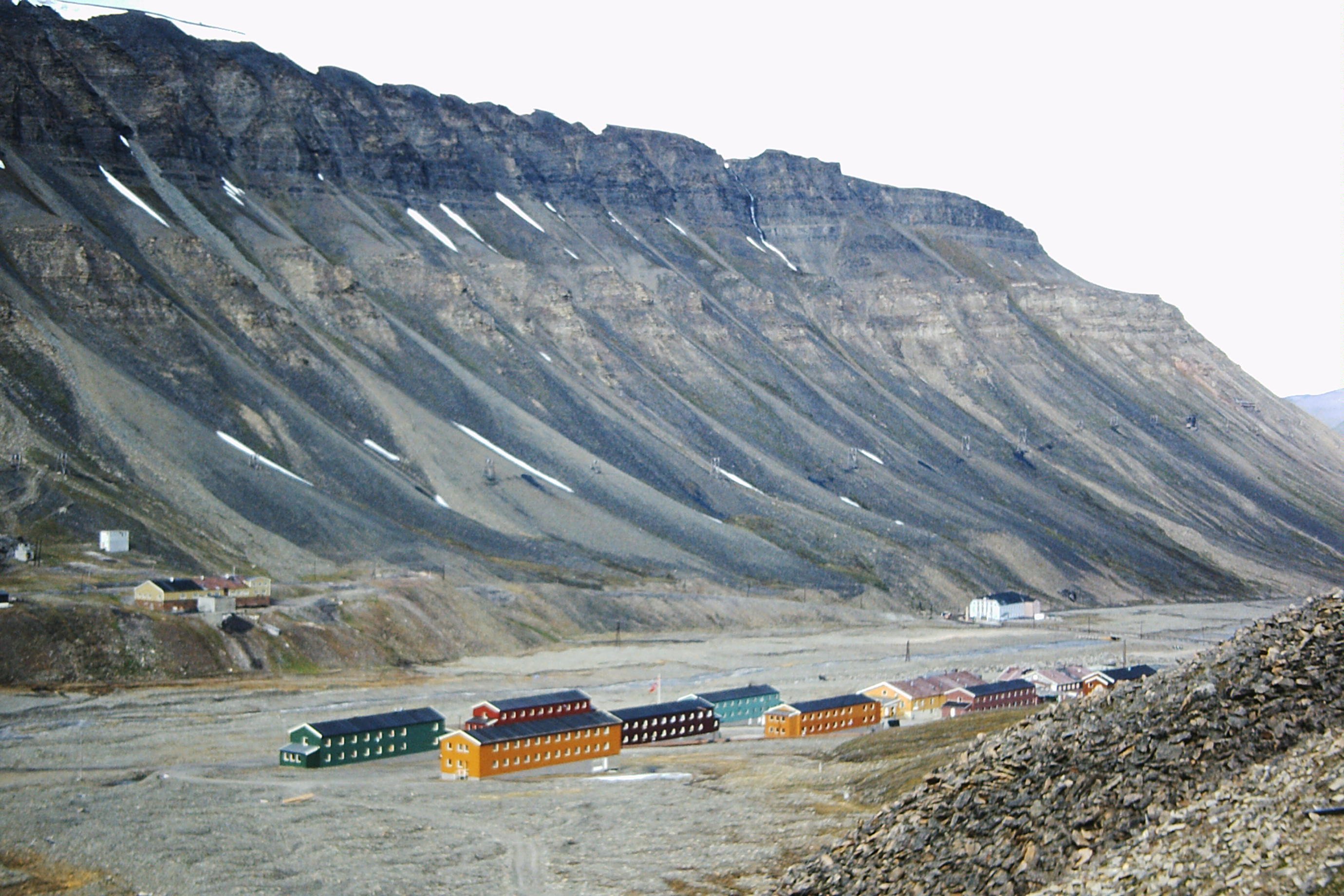
Former Svalbard mining settlement at Longyear Valley's end, a timber-house cluster below the glacier
Nybyen sits at the southern end of Longyear Valley, at the foot of the Longyear Glacier. Store Norske Spitsbergen Kulkompani built this tiny settlement after the Second World War to house its miners — eight solid timber houses, a bathhouse, a laundry, a shop, and a canteen known as Stormessa ("the big mess").
The miners have long since moved out, and today the houses serve as student accommodation for the University Centre in Svalbard (UNIS) and seasonal workers. The buildings are original, redecorated and modernised over the years but still carrying traces of their mining past. Nearby you will find Huset, a cultural venue with a cinema and restaurant, and Galleri Svalbard, which shows art inspired by the Arctic landscape. Old mining equipment still stands on the hillsides around the settlement.
Nybyen feels slightly removed from central Longyearbyen, giving it a quieter, more wilderness-adjacent atmosphere — the glacier is right there.
Guide
Getting There
Nybyen is reached from central Longyearbyen, which has the main airport with daily flights from Tromsø and Oslo. From the airport, take the shuttle bus to town and continue on foot, by local bus, or by taxi for the final 2 km up the valley. In winter the road can be icy; in summer it is a flat, easy walk.
There is no public transport out of Nybyen itself — onward travel is by snowmobile, dog sled, ski, boat, or organised tour.
Guide
When to Go
Nybyen has two seasons that matter. From late February to mid-April the sun returns, the snow is deep, and you can take long snowmobile and dog-sled trips across the archipelago — this is the busiest tourist window. From late May to August the sea ice goes and the midnight sun reigns; boats can reach the western fjords, and hiking is possible from Nybyen up to the glaciers.
October to mid-February is polar night: deep cold, no sun, occasional aurora. Quiet, atmospheric, and not for first-timers. Avoid the shoulder weeks in late April and mid-September when half-melted snow makes both summer and winter activities difficult.