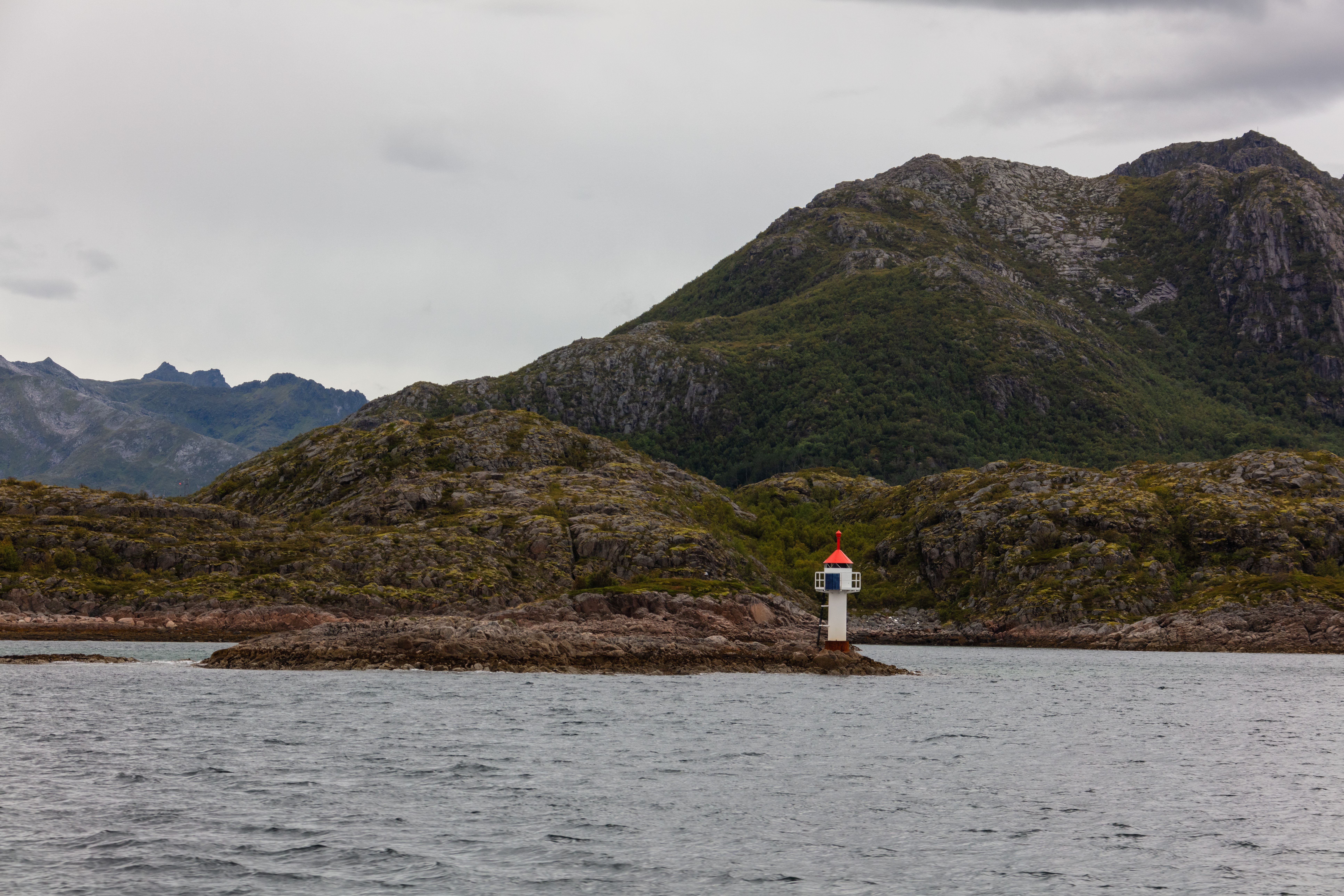
Svolvær is the regional centre of the Lofoten Islands, a small but lively town of around 4,500 people strung along the waterfront beneath dramatic peaks. It is the natural base for exploring the archipelago — the only place in Lofoten with a proper airport, and a port of call for the Hurtigruten coastal steamer and express ferry services.
The town is dominated by the Svolvær Goat (Svolværgeita), a two-pronged rock spire rising 568 metres above the town. The peak was first climbed in 1910, and the jump between its two horns — a gap of roughly two metres, with nothing below — remains one of the most famous challenges in Norwegian mountaineering.
The harbour area at Svinøya was the commercial heart of Svolvær throughout the 1800s, and several of the old rorbu (fishermen's cabin) complexes have been converted into accommodation and restaurants. The painter Gunnar Berg (1861–1893), best known for his monumental canvas of the Battle of Trollfjord, was born and worked here; his gallery at Svinøya is worth a visit. The North Norwegian Artist Centre and Dagfinn Bakke's gallery round out an unexpectedly strong art scene for a town this size.
From October to January, herds of orca follow the herrings into the fjords around Svolvær, making it one of the most accessible places in Norway for killer whale watching. In summer, daily boat trips run to the Trollfjord — a narrow, glacier-carved gorge flanked by near-vertical walls — one of the most dramatic short excursions in Norway.