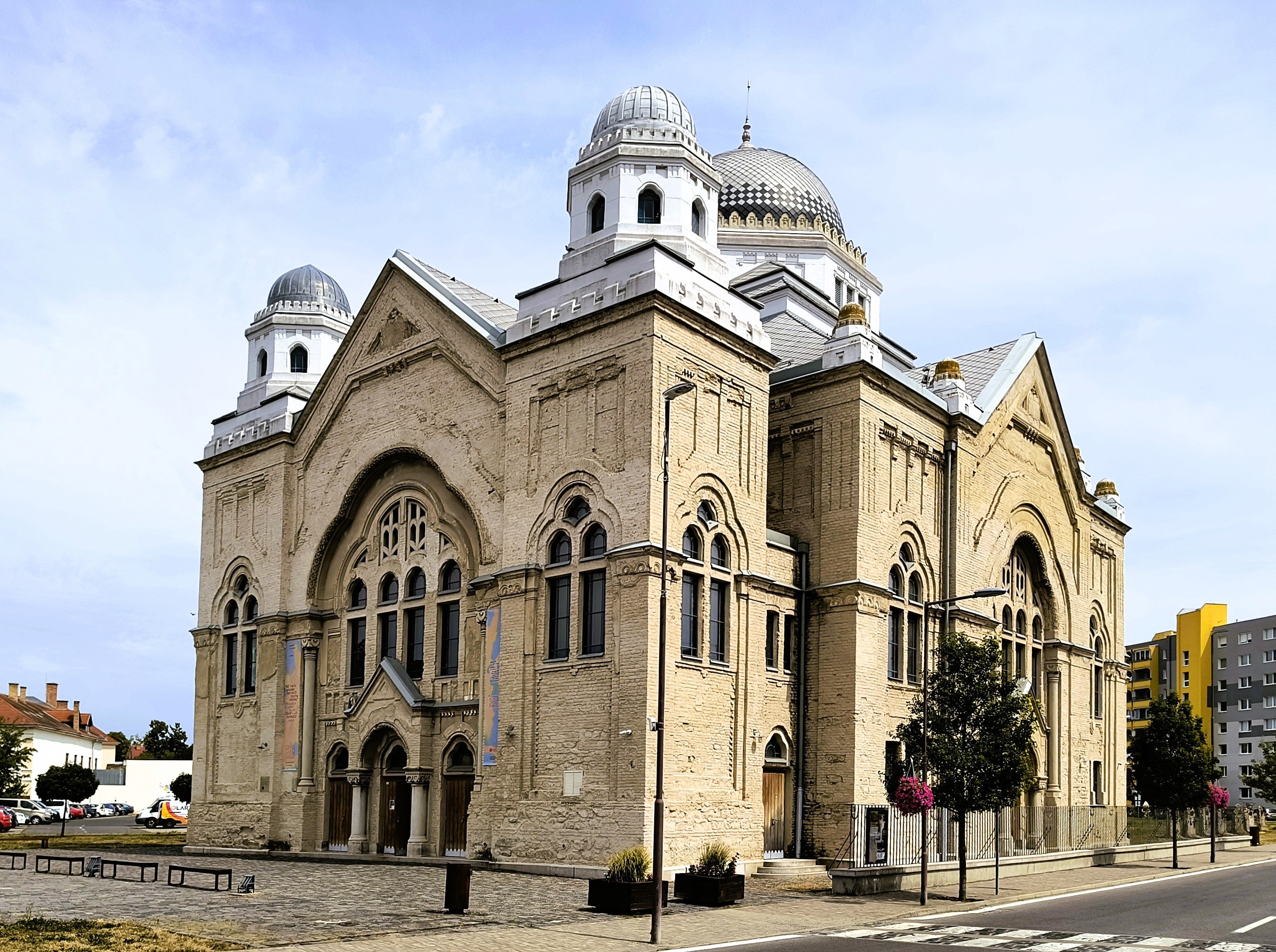
Small Novohrad town in southern Slovakia, marked by Hungarian influence and its restored Moorish-revival synagogue
Lučenec is a small town of about 35,000 people in the south of central Slovakia, roughly 250 km from Bratislava and 150 km from Košice. The town sits in the Novohrad region, with a history dating back to around 1200 AD and a strong Hungarian-speaking minority — the Hungarian border is only about 30 km away.
The most remarkable building in town is the Lučenec Synagogue, a Moorish-revival structure built in 1925 that stands as both an architectural landmark and a memorial to the Jewish community almost entirely destroyed in the Holocaust.
It is an inexpensive and friendly base for exploring the region's mix of Slovak and Hungarian culture, historic architecture, and the volcanic hills of the surrounding countryside.
Guide
Eating Out
Lučenec has a modest selection of restaurants and cafes serving Slovak and Hungarian dishes. Given the town's long Hungarian history — it was known as Losonc until 1920 — some menus reflect a blend of both cuisines. Prices are low by any European standard.
The main square and the streets around it have a few cafes suitable for a coffee or a light lunch. For a full restaurant meal, the options are spread around the town centre. Expect Slovak standards: hearty meat dishes, potato dumplings, and local beer.
Guide
Getting There
Lučenec is on a secondary rail line that connects it to Zvolen (about 1 hour) and onward to Banská Bystrica and the Slovak rail network. Trains to Bratislava require a change at Zvolen and take around 3.5–4 hours in total. Buses are often faster and more frequent for longer routes.
By car, the town is roughly 250 km from Bratislava via the R1 expressway and then regional roads through Zvolen. The border with Hungary at Šiatorská Bukovinka, about 25 km south, connects directly to Salgótarján and the Hungarian road network.