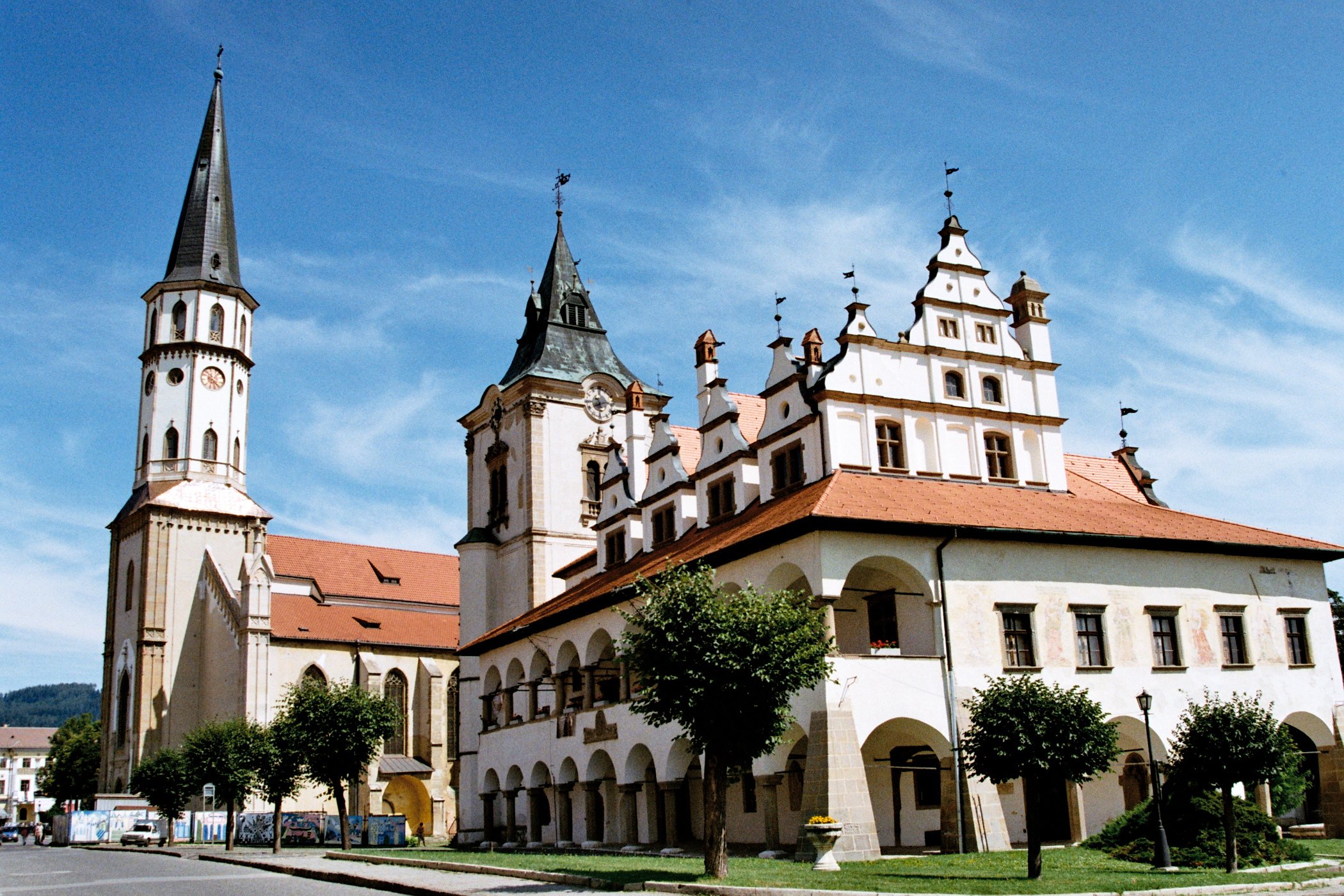
Levoča is one of the best-preserved medieval towns in Central Europe and most visitors drive right past it on the way to Spis Castle. That's their loss. The walled old town is compact, beautiful, and almost entirely intact — Gothic churches, Renaissance townhouses, and a central square that would look at home in Kraków or Bruges, minus the tourist crowds.
The town's centrepiece is the Church of St. James, which contains the world's tallest surviving Gothic wooden altar — 18.6 metres of carved limewood completed in the early 16th century by the local master craftsman Pavol of Levoča. It's genuinely extraordinary. The main square around it, Námestie Majstra Pavla in his honour, is ringed by old merchant houses like the Thurzo House and a freestanding town hall. The iron Cage of Shame, where 16th-century petty criminals were locked up for public ridicule, still stands on the square.
Levoča is a UNESCO World Heritage Site, grouped with nearby Spis Castle. It sits in the Spis region of eastern Slovakia, about 90 km from Košice and 40 km from the High Tatras — making it an easy stopover on a circuit of the region. In early July it hosts one of Slovakia's largest Catholic pilgrimages, when tens of thousands of people walk up to the basilica on Mariánska Hora (Virgin Mary's Hill) above the town.