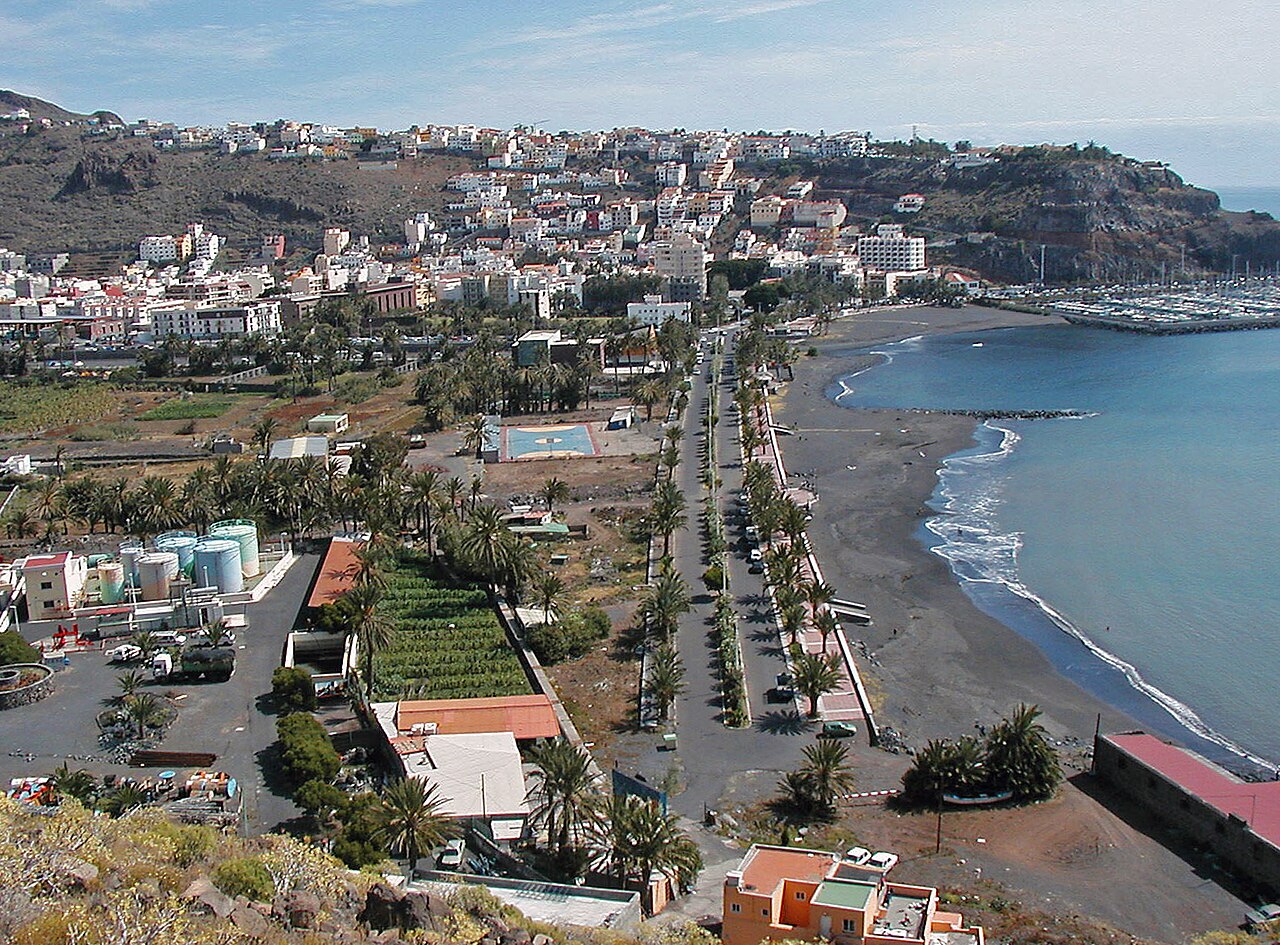
San Sebastián de La Gomera is the island's small but historically loaded capital, sitting on the east coast where the ferry from Tenerife docks. It is a quiet town — more administrative centre than tourist resort — but its connection to Columbus gives it an outsized place in history: it was the last port of call before the fleet headed into the unknown Atlantic in September 1492.
The town grew up around two focal points established by Hernán Peraza the Elder when he took possession of the island around 1440: the Peraza family house (on the site of what is now El Pozo de la Aguada, a well Columbus used to take on fresh water) and the Iglesia de la Asunción. Between them runs the Calle Real, the old royal road and the island's main avenue. The Torre del Conde, a squat 15th-century watchtower standing at the edge of the bay, is the one structure from those founding years that has survived intact.
Columbus stopped here on all three of his first voyages west, reprovisioning with food, water, and wood. The Casa de Colón museum, a short walk from the waterfront, tells that story with some care. The church of the Asunción, where he reportedly prayed before departure, still stands on its original site beside the Plaza de las Américas.
Today the town is small and relaxed, with a compact historic centre that can be walked in an hour. Most visitors pass through on their way to Garajonay National Park or the beaches of Playa de Santiago and Valle Gran Rey, but San Sebastián rewards a half-day of unhurried wandering — the plaza, the tower, the waterfront, and a long lunch in one of the restaurants near the port.