El Bierzo is a sheltered mountain valley on the north-western edge of the province of León, wedged between the Cordillera Cantábrica and the Montes de León. Administratively part of Castilla y León, it feels like something else entirely — a transition zone between the austere Castilian plateau and the green hills of Galicia, with its own microclimate, its own grape varieties, and landscapes of startling beauty.
The valley is dominated by Ponferrada, the main city — site of the great Templar Castle — but the soul of El Bierzo lies in smaller places: the historic pilgrim town of Villafranca del Bierzo to the west, and the wine town of Cacabelos to the east, both strung along the Camino de Santiago. The Sierras de Caurel and Ancares rise to the north, and the rivers Sil, Ancares and Burbia cut through the valley floor.
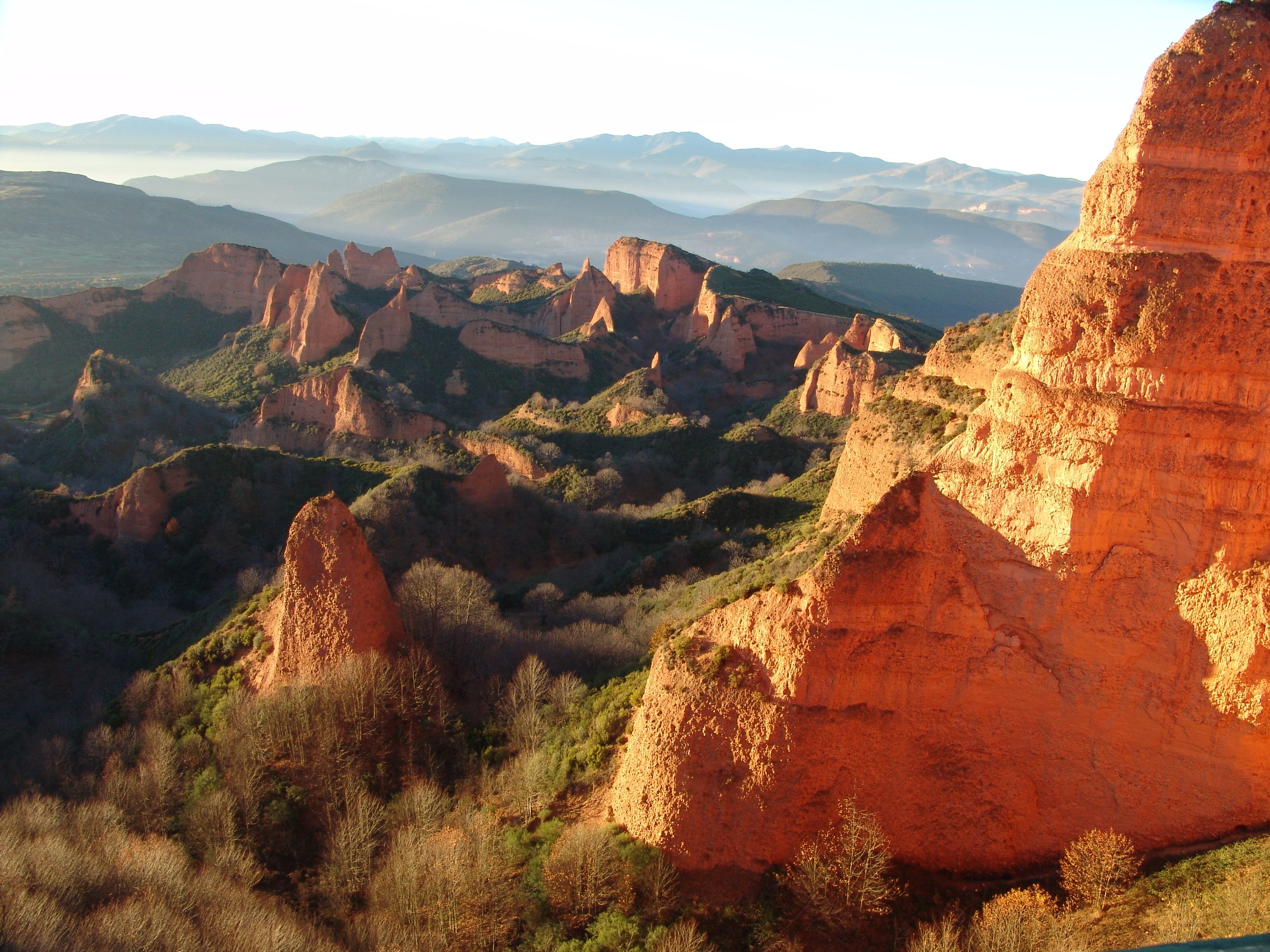
The great natural spectacle here is Las Médulas — a UNESCO World Heritage Site and one of the most dramatic landscapes in Spain. The Romans hollowed out these mountains for gold using hydraulic mining on a colossal scale, leaving behind a labyrinth of red cliffs, caves and chestnut forests that look like nothing else in Europe. Hiking trails thread through the ruins; come in autumn when the chestnuts turn gold.
Wine is the other reason to linger. Benedictine monks from Cluny introduced serious viticulture in the eleventh century, and the pilgrims of the Camino sustained it for centuries. The DO Bierzo, recognised in 1989, is built around the Mencía grape — a variety that produces wines of striking depth and fragrance when grown on the steep slate slopes here. Cacabelos and Villafranca del Bierzo are the places to taste them, either at wineries or at restaurants serving the local cuisine of roasted peppers, cured meats and river trout.
The Camino de Santiago passes through El Bierzo on its way into Galicia, crossing the valley at Ponferrada before climbing over the mountains at O Cebreiro. Even if you are not walking the Camino, the route gives this region a particular atmosphere — a steady trickle of pilgrims, a string of medieval churches and bridges, and a sense of being somewhere people have passed through for a thousand years. Add a slow morning at the ruined Monastery of Carracedo and an afternoon at the converted power station now housing the Fábrica de Luz energy museum.