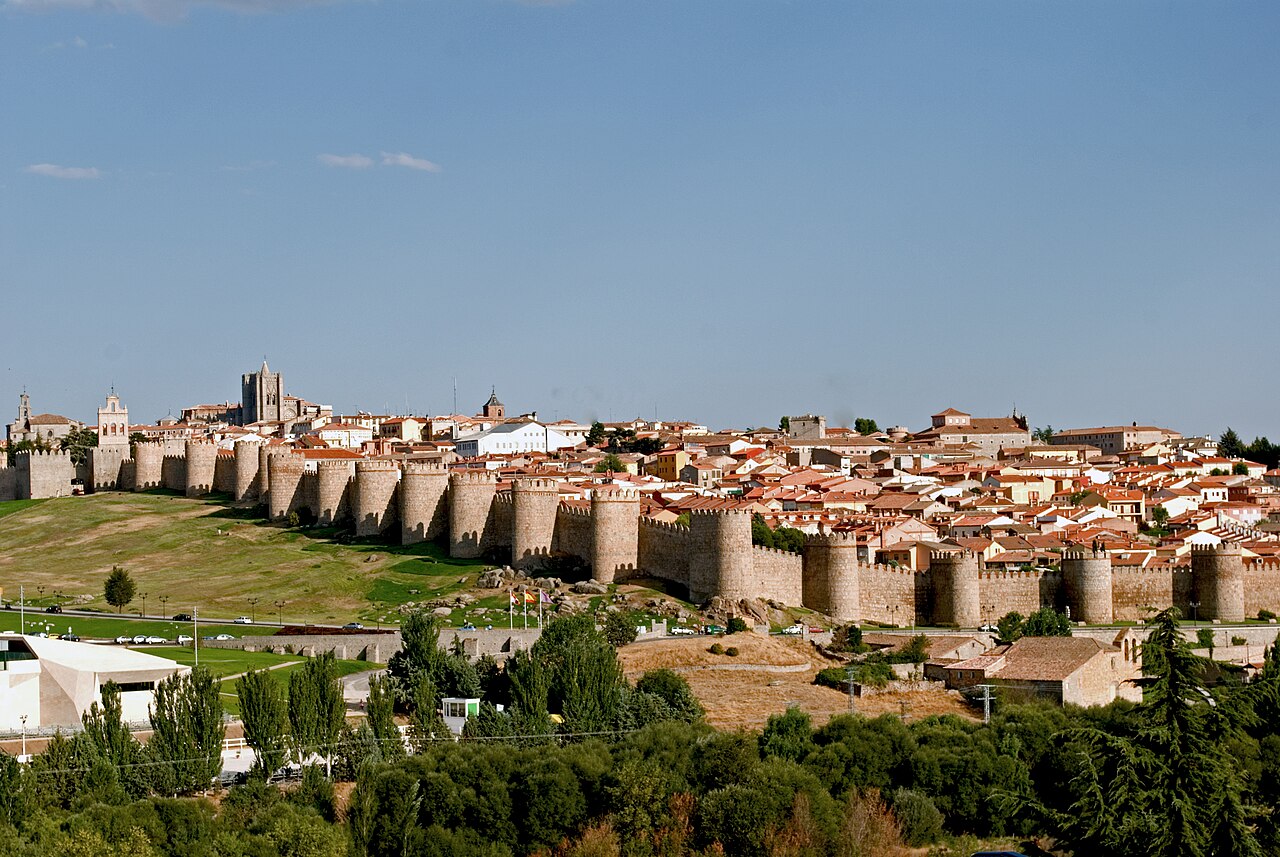
Ávila is one of the best-preserved medieval cities in Spain — a UNESCO World Heritage Site perched on a granite plateau at over 1,100 metres, making it the highest provincial capital in the country. Its defining feature is the wall: two and a half kilometres of perfectly intact 11th-century ramparts with 88 towers and nine gates, encircling the entire old town. You can walk along the top of much of it.
The city is deeply associated with Santa Teresa de Jesús, the 16th-century mystic and reformer who was born here. The Convent of Santa Teresa stands over her birthplace, and her presence is felt throughout — in churches, convents, and the local pastries (yemas de Santa Teresa) sold in every bakery.
Inside the walls, the cathedral is half church, half fortress — its apse is built into the city wall itself. The Real Monasterio de Santo Tomás, a short walk outside the walls, was the summer residence of Ferdinand and Isabella and holds a striking cloister. The Basílica de San Vicente just outside the north gate is the finest Romanesque church in Castile. The narrow streets between them are quiet and atmospheric, especially in winter when the cold keeps the day-trippers away.
Walk 20 minutes west across the river to the Cuatro Postes viewpoint for the definitive view of the walled city against the sierra. Ávila is about 90 minutes from Madrid by car or train, making it an easy day trip — though an overnight stay, particularly at the Parador built into the old city walls, is the better way to experience the place.