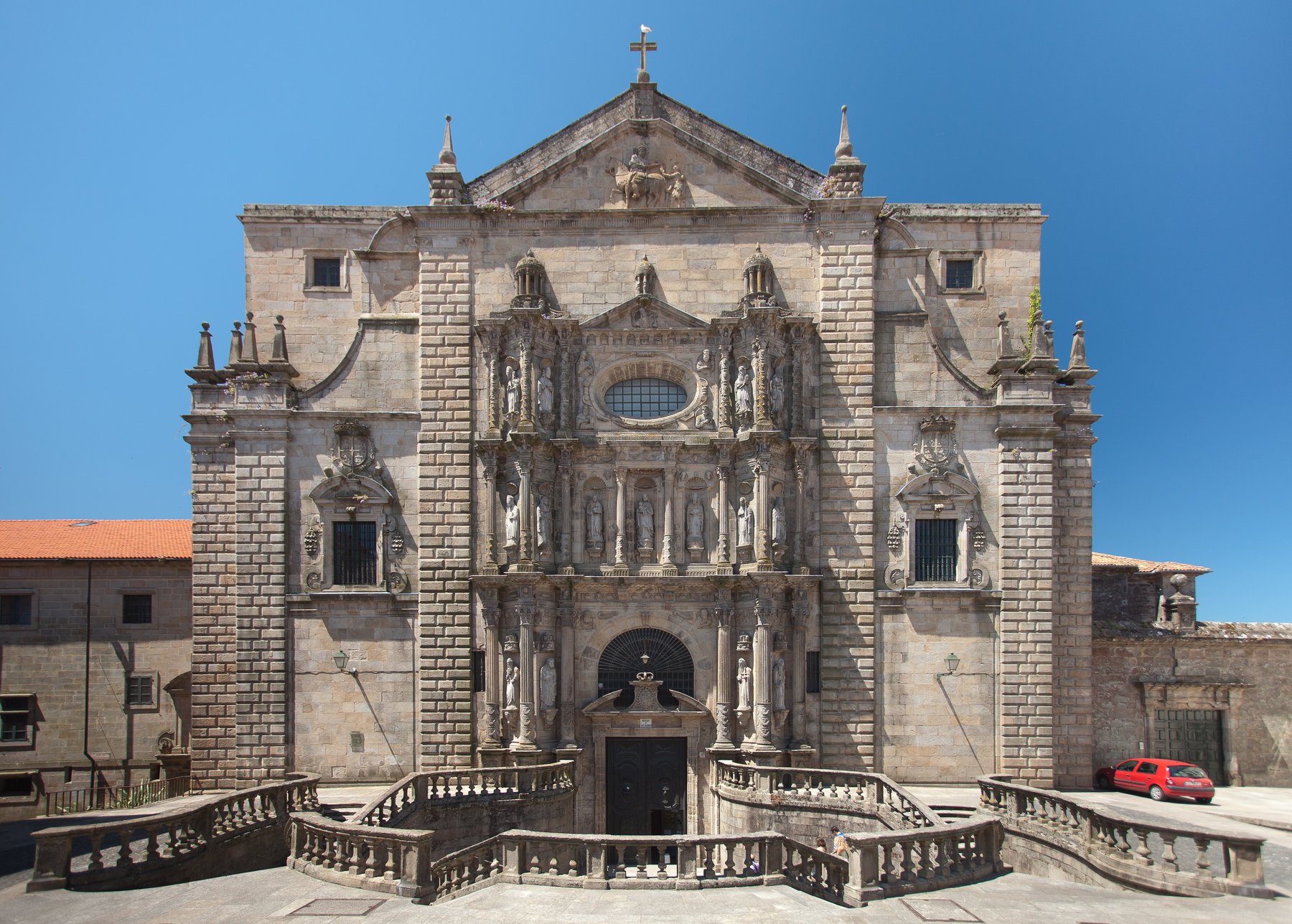
Santiago de Compostela is the capital of Galicia in northwestern Spain and the destination of one of the great pilgrimages of the Christian world. The supposed tomb of Saint James in its cathedral has drawn pilgrims for over a thousand years, and the Camino de Santiago — the network of walking routes across Europe that converge here — is one of the world's most famous long-distance trails. The old town is a UNESCO World Heritage Site and one of the finest medieval urban centres in Spain.
The Cathedral of Santiago dominates the city. Its baroque facade, the Obradoiro, is the first thing most pilgrims see as they cross the wide plaza in front of it, often in tears. Inside, the altar is extravagantly gilded and incense drifts through the stone nave from a famous giant censer — the Botafumeiro — swung by teams of priests across the transept. The Praza da Quintana, on the cathedral's eastern flank, is the best of the surrounding squares: split into levels, it frames the back of the building magnificently.
Despite its religious character, Santiago is lively. It's a university city, which keeps the bars and restaurants full year-round. The old town east of the cathedral has narrow stone streets packed with restaurants serving Galician seafood and caldos, wine bars pouring Albariño and Ribeiro, and bars where you can hear live Galician bagpipes on a good night. The Rúa do Franco and Rúa da Raíña are the main eating and drinking streets. Getting there is straightforward — Santiago has an airport, a railway station, and a bus station, though the traditional way is, of course, on foot.