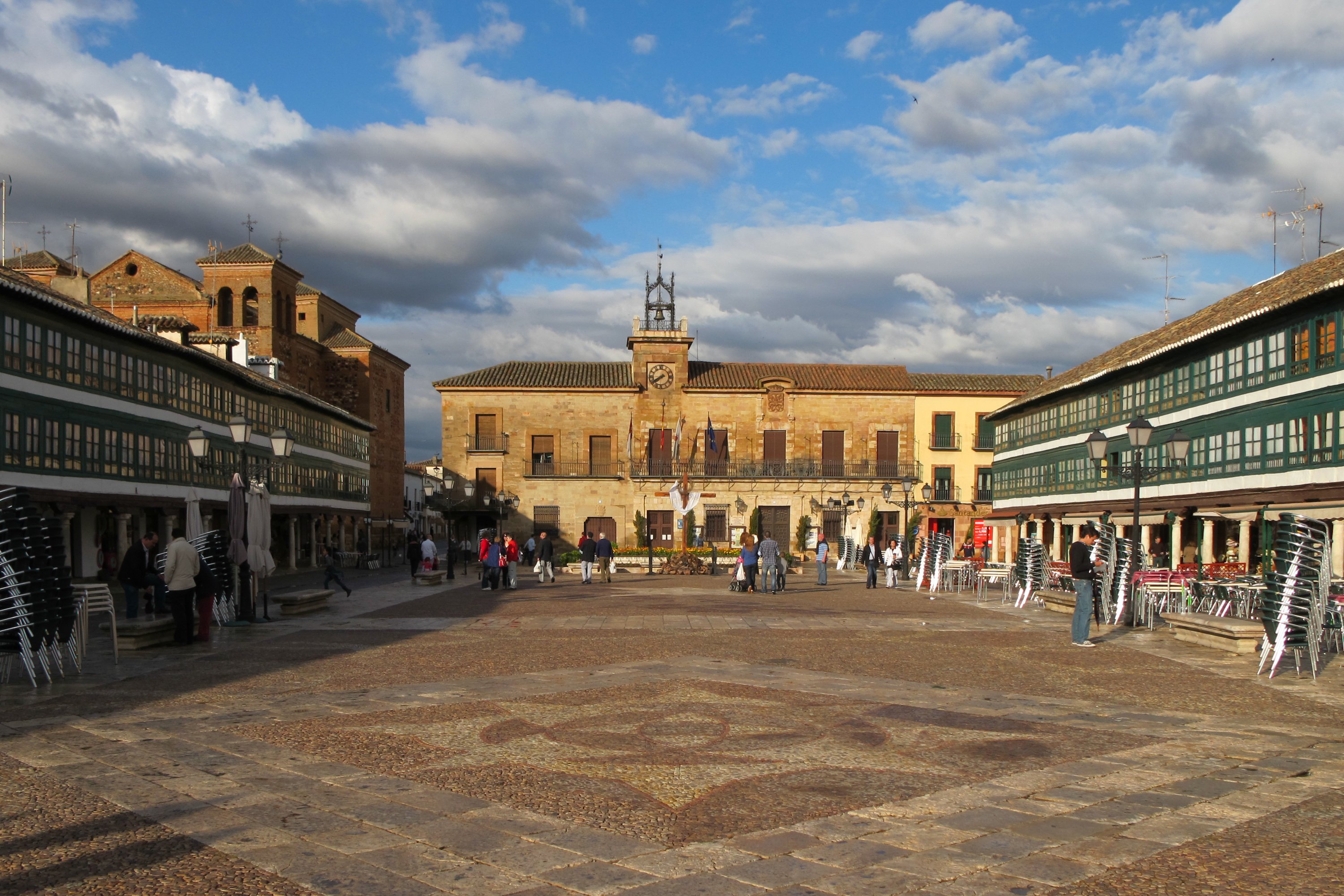
Almagro is a small Renaissance town in the heart of La Mancha, best known for its extraordinary Plaza Mayor — which at one end contains the Corral de Comedias, the only fully preserved open-air courtyard theatre from Spain's Golden Age, still in use for performances today. The arcade along both sides of the square has distinctive green-painted wooden shutters, a Flemish touch that arrived with the Habsburg connections of the Knights of Calatrava. It's the kind of place that stops you in your tracks.
The town has strong links to the Knights of Calatrava, the powerful medieval military order that once controlled this part of Castile. The Convento de la Asunción de Calatrava reflects their power; the Parador de Almagro, housed in a former Franciscan convent with 16 courtyards, is one of the best places to stay in southern Castile. The National Theatre Museum on Gran Maestre provides context on Spanish theatrical history and the corrales tradition. The whole historic centre is compact, well-preserved, and worth a full day; an overnight lets you experience the town in the evening quiet after the day-trippers leave.