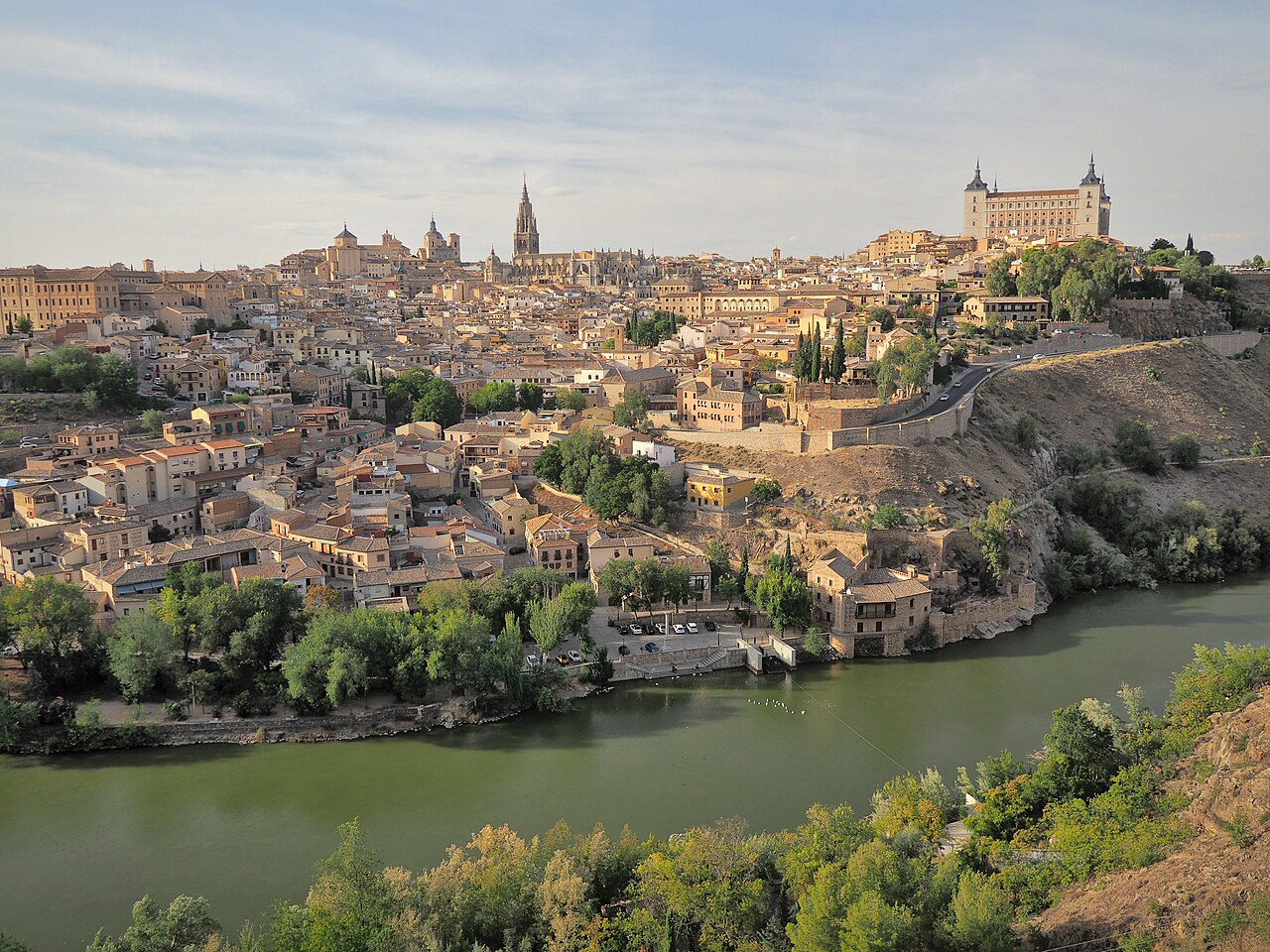
Toledo is known as the City of the Three Cultures — a name earned by the centuries of coexistence between Christian, Islamic, and Jewish communities that shaped the city's architecture, learning, and identity. It shows. Walking the old city, you pass a Gothic cathedral, a Mudéjar church tower, a medieval synagogue, and a Roman cistern within the space of a single afternoon.
Rome conquered the site in 190 BC, naming it Toletum. The Visigoths made it their capital in the 6th century, holding their great church councils here. In 712 the Moors took the city and held it for over 350 years. When Alfonso VI recaptured it in 1085, many Muslims and Jews stayed — and for several centuries the three communities built, translated, and argued alongside one another. The School of Translators of Toledo, where Arab and Jewish scholars rendered Greek and Arabic texts into Latin, was one of the great intellectual enterprises of medieval Europe.
Charles V made Toledo the imperial capital of Spain in 1519. Philip II moved the court to Madrid in 1561, beginning Toledo's political decline. But the city's religious and artistic life flourished in that same period. El Greco arrived in 1577, failed to win a commission at El Escorial, and stayed for the rest of his life. The Cathedral was completed. The Monastery of San Juan de los Reyes rose in the Jewish Quarter. UNESCO declared Toledo a World Heritage Site in 1986.
Today it is an easy day trip from Madrid but deserves more than a day. The Alcázar and Cathedral are the obvious starts; the Sinagoga del Tránsito, Santa María la Blanca, and El Greco's museum in the Jewish Quarter form a natural second circuit. Cross the river to the Mirador del Valle for the panoramic view that explains why every army that ever wanted to control central Iberia started here.