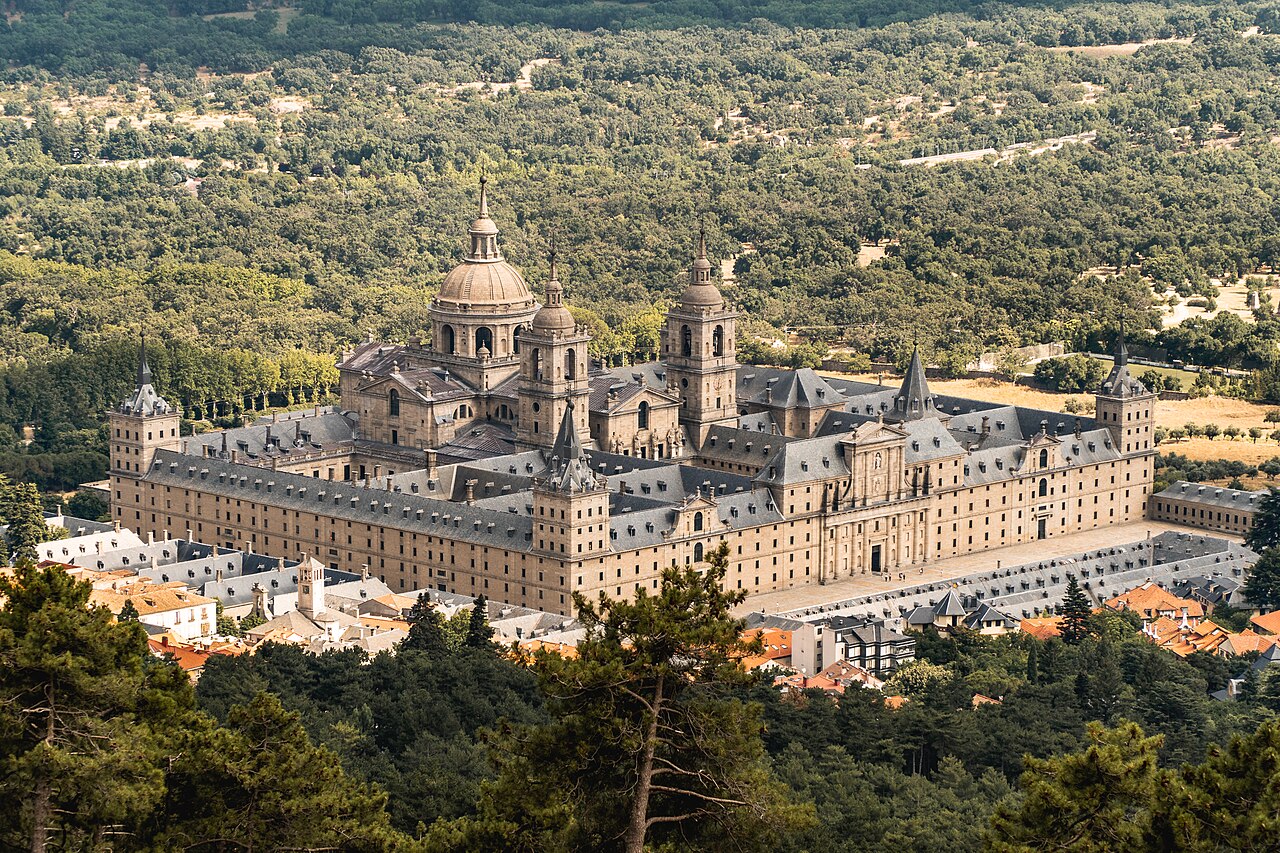
San Lorenzo de El Escorial is a small town in the Sierra de Guadarrama foothills, about 50 kilometres northwest of Madrid. It exists because of one building: the Royal Monastery of San Lorenzo de El Escorial, built by Philip II in the late 16th century as a palace, monastery, church, and mausoleum all in one.
The building is enormous and austere — a granite grid of courtyards, corridors, and chambers that reflects Philip II's famously ascetic character. Inside, it houses one of Europe's finest tapestry collections, paintings by Spanish and Italian masters, and the Royal Pantheon where every Spanish monarch from Charles V to Alfonso XIII is interred. Allow at least half a day; a rushed visit does not do it justice.
The town around the monastery is pleasant enough — a few restaurants, some antique shops, and walks in the surrounding hills. The Valle de los Caídos (Valley of the Fallen), a controversial monument built under Franco to honour Civil War dead, lies about 10 kilometres north but has been partially closed and is undergoing reinterpretation. Philip II's granite seat — a rock ledge in the hillside above the monastery where tradition says the king watched construction — is a 30-minute walk uphill and gives the best overview of the building's extraordinary symmetry.