Guadalajara is a provincial capital of about 85,000 people, an hour east of Madrid by commuter rail. It sits above a bend in the Henares river and has a quiet, unhurried character that stands in sharp contrast to the capital it effectively feeds as a commuter town. Most visitors arrive on day trips from Madrid, and the city is easy enough to see in an afternoon.
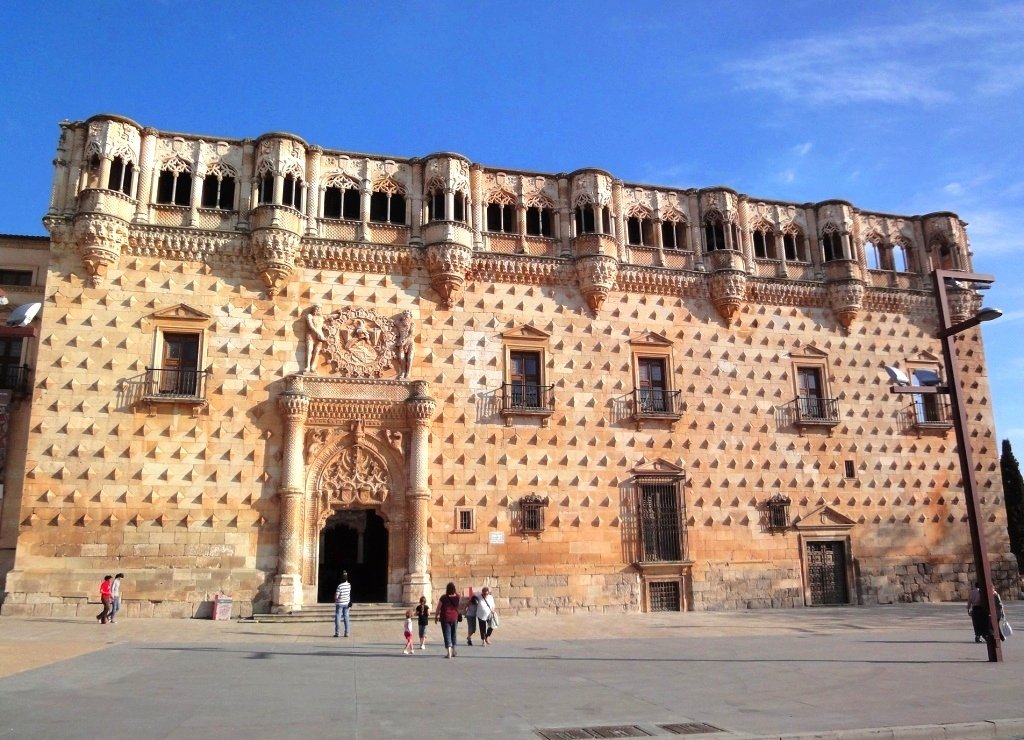
The undisputed highlight is the Palacio del Infantado, a late 15th-century palace built for the Mendoza family — the most powerful dynasty in Castile at the time. The façade is a tour de force of Isabelline Gothic decoration, covered in diamond-shaped stone bosses that catch the light at odd angles. Inside is a provincial museum with decent collections of local archaeology and fine arts, but the architecture is the point.
The old town around the palace has a handful of good churches and the remains of a medieval fortification marked by the Torre de Álvar Fáñez. San Ginés and the church of Santiago are worth a look, as is the Palacio de Antonio de Mendoza nearby. The weekly market brings the town centre to life on Thursdays.
Guadalajara is also the natural starting point for the wider province, which contains some of the most dramatic and least-visited landscape in Castilla–La Mancha. The medieval cathedral town of Sigüenza, two hours northwest by local train, is outstanding and quietly famous among Spanish travellers. The Serranía de Cuenca to the southeast offers gorges and limestone formations of unusual scale.
Note: Guadalajara shares its name with a much larger city in Mexico. The Spanish original is smaller, quieter, and — on a clear afternoon in the Palacio courtyard — rather lovely.