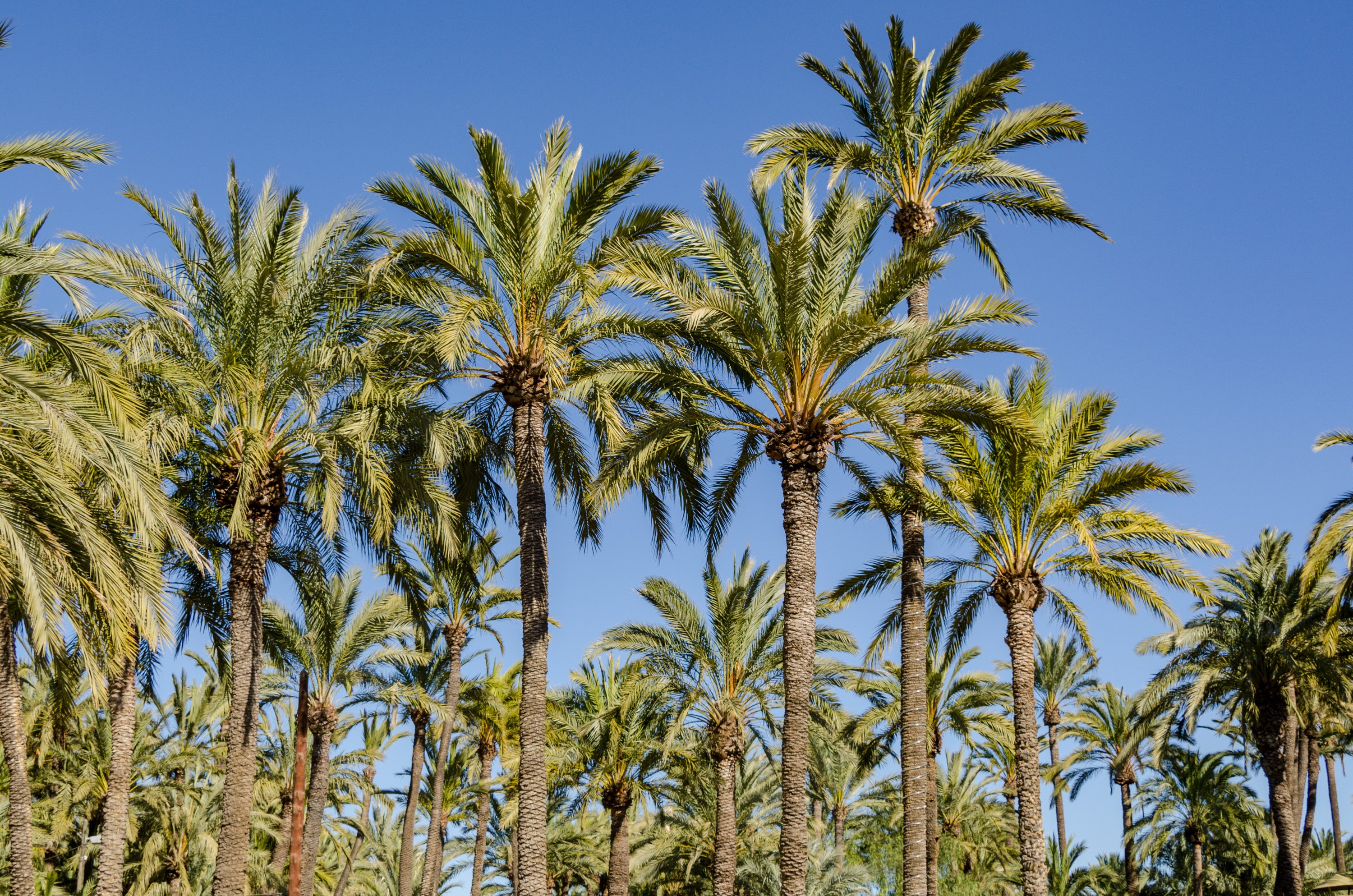
Elche is a city of palms. Its Palmeral — a grove of over 200,000 date palms planted originally by the Moors — is the largest in Europe and a UNESCO World Heritage Site. Walking through it feels nothing like the rest of Spain: the dense canopy of palms, the irrigation channels, and the dry heat belong more to North Africa than to the Costa Blanca. The Huerto del Cura, a smaller garden within the Palmeral, is the most visited section, with a famous seven-trunked Imperial Palm.
The city holds a second UNESCO distinction: the Misteri d'Elx (Mystery Play of Elche), a medieval liturgical drama performed every August in the Basilica de Santa Maria. It has been staged continuously since the 15th century and is one of the oldest surviving theatrical traditions in Europe. The basilica itself, with its striking blue-tiled dome, dominates the old town.
Beyond the palms and the play, Elche has a good archaeological museum (MAHE) built over the ruins of the old Moorish alcazaba, and the famous Dama de Elche — an Iberian bust from the 4th century BC — was found just outside town, though the original now sits in Madrid's Museo Arqueologico Nacional. The city is a 20-minute train ride from Alicante and makes an easy day trip, though the Palmeral at sunset is worth staying for.