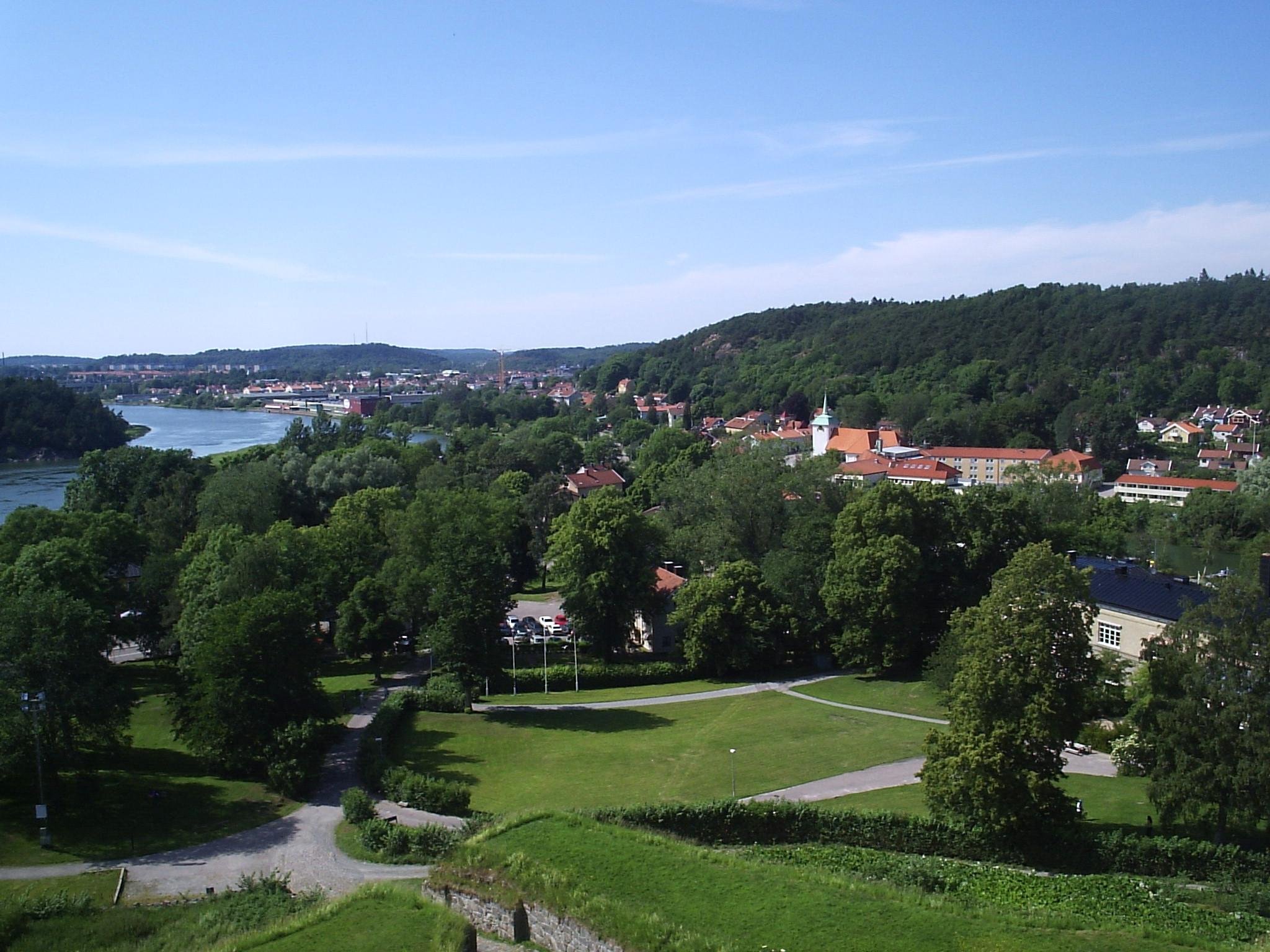
Kungälv sits on the Nordre Älv river, just 20 kilometres north of Gothenburg — close enough for a day trip, substantial enough to deserve one. The town's history goes back a thousand years, and it shows: the ruins of Bohus Fästning loom over the river from a rocky island, and the old town centre around Gamla Torget still has its cobbled streets and wooden houses painted in warm colours.
The medieval quarter is the heart of Kungälv. Östra Gatan and Västra Gatan wind between 17th and 18th-century timber buildings, and the church square anchors it all. Nytorget, the newer square, has a statue commemorating the 1101 meeting of the three Scandinavian kings — Sweden, Norway, and Denmark — a moment that shaped the region's borders for centuries. Gamla Torget is the older square at the heart of the wooden-house district, and on Thursday evenings from May to September it fills with classic cars.
The fortress itself dominates from a rocky island: Bohus Fästning, built in 1308, survived fourteen sieges without ever being taken by force. South of the modern town lie the remains of its medieval predecessor — Kongahälla, the Norse royal seat that was sacked and destroyed in 1135. Beyond the old town, Kungälv opens up to the wider west-coast landscape: the Nordre Älv delta, the Svartedalen nature reserve with trout and salmon fishing, and easy access to the Gothenburg archipelago for sailing and swimming.