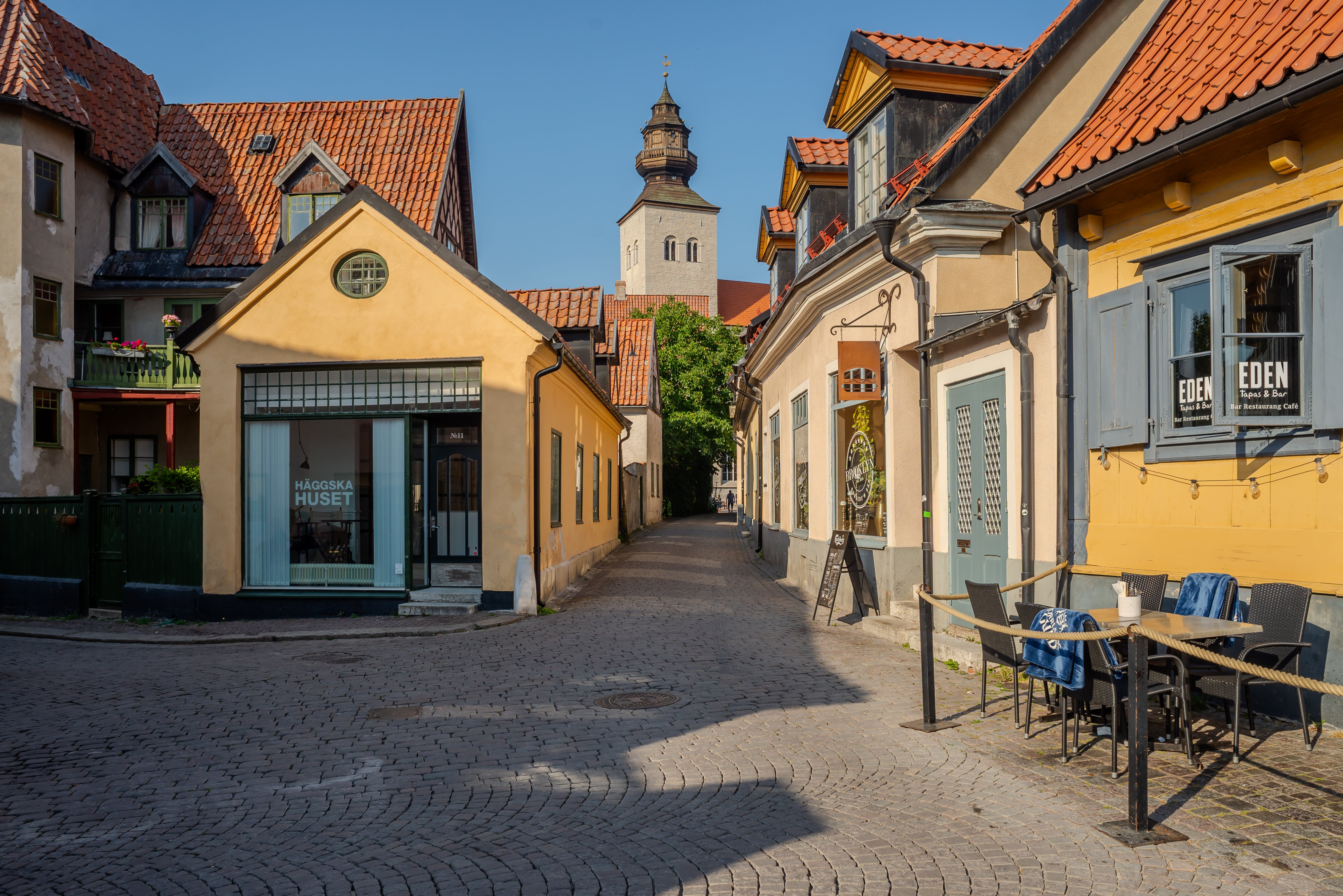
Visby is the best-preserved medieval city in Scandinavia, and one of the most atmospheric in all of Europe. Ringed by a 3.5-kilometre circuit of 13th-century limestone walls — with 44 towers still standing — the old town within feels genuinely frozen in time, in the best possible way. It sits on the western coast of Gotland, Sweden's largest island, an hour's flight or five hours by ferry from Stockholm.
The city was a major Hanseatic trading port from the 12th century, and the wealth of those centuries shows in the ruins of a dozen roofless medieval churches scattered across the town, which were never rebuilt after Danish king Valdemar Atterdag sacked the city in 1361. The most evocative shells — Sankt Karin on Stora Torget and Sankt Lars — frame the daily street life, while the Gotlands Museum puts the Viking and medieval finds in context. Together those rose-window facades and crumbling towers give Visby a melancholy grandeur that no purpose-built attraction could replicate.
Just outside the wall at the southern edge of town, the Visborg Castle Ruin — a 15th-century fortress razed by Swedish forces in 1679 — makes a good extension of a walk along the seawall. Beyond Visby, Gotland is flat, forested, and dotted with Bronze Age burial mounds, Viking runestones, and remote fishing villages. In summer — the season when most visitors come — the island fills with Stockholm weekenders and festival-goers. The Medieval Week in August, with jousting, markets, and costumes, is spectacularly popular. Come in May or September if you want the atmosphere without the crowds.