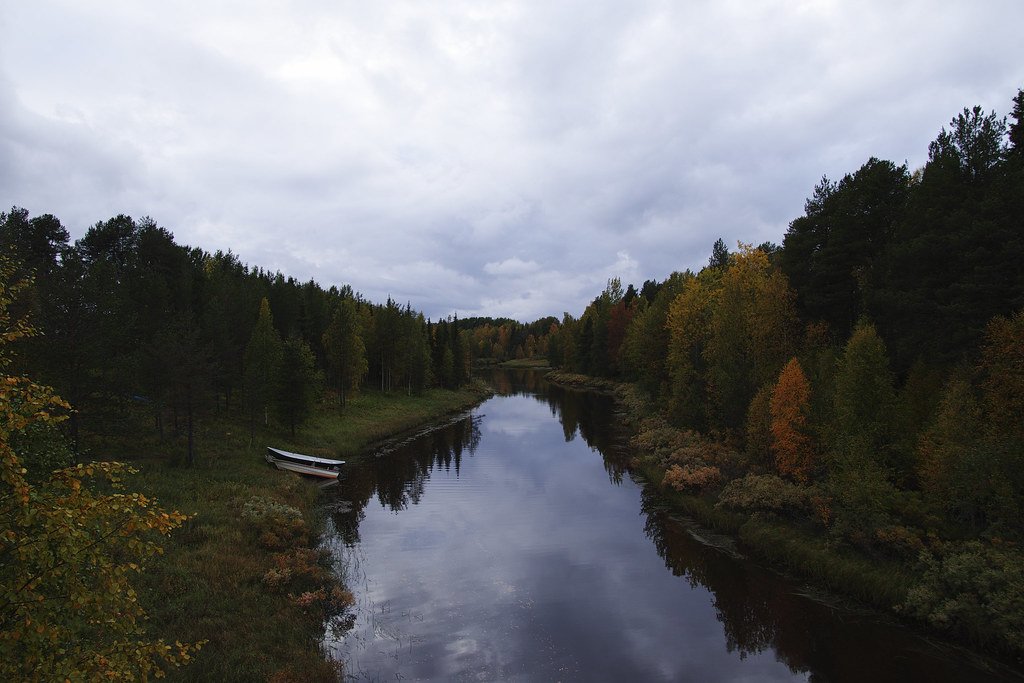
Pajala
©
Pajala

Pajala

Far northern Swedish town on the Torne River, associated with Laestadian history.

Pajala is a small town in the far north of Sweden, close to the Finnish border on the Torne River. It sits well above the Arctic Circle, which means midnight sun in summer and deep cold and darkness in winter.

The town is best known for two things. The first is Lars Levi Laestadius, the 19th-century priest whose revivalist movement still has followers across northern Scandinavia — the Laestadius Museum in town covers his life and the movement he founded. The second is Mikael Niemi's novel Popular Music from Vittula, which put Pajala on the literary map and captures the peculiar character of this bilingual Swedish-Finnish border region with dark humour and warmth. A few kilometres north, the village of Lovikka displays the world's largest knitted mitten — a monument to the Lovikka mitten craft tradition invented here in the 1890s.

Pajala is not a place many travellers pass through, but if you are exploring Swedish Lapland it offers an authentic look at life in the far north — Tornedalen culture, vast forests, and the kind of quiet that only the Arctic provides.

Guide

Things to Do

Pajala's attractions are few but specific: the Laestadius museum, the Torne River, and the landscape of the Arctic Tornedalen. For visitors with time and interest, the town is also a starting point for exploring the unique bilingual culture of the Swedish-Finnish border region. Most travellers pass through on their way further north or as part of a Swedish Lapland circuit.

Guide

When to Go

Summer — June to August — brings the midnight sun, with the sun above the horizon continuously around midsummer. This is the time for salmon fishing, hiking, and experiencing the extraordinary quality of Arctic light. Midsummer (the weekend nearest June 21st) is celebrated enthusiastically across the north; celebrations are public and visitors are welcome.

Winter is long, dark, and cold — temperatures regularly reach -30°C. The aurora borealis is visible on clear nights from October to March. Snow typically covers the ground from November to April. Winter visitors need proper Arctic clothing and a rental car with winter tyres; cross-country skiing and snowmobiling are the main activities.